
Kansas City’s Historic Westport District is the true gateway to the west.


The two words just might as well be synonyms. Not only do we eat while we travel, but I travel while I eat. Food brings back memories of where I’d been, even if I’m just in my kitchen.
Kansas City’s Historic Westport District is the true gateway to the west.
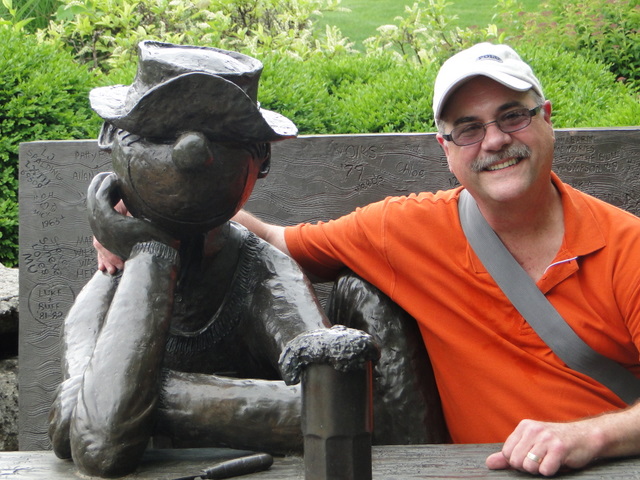
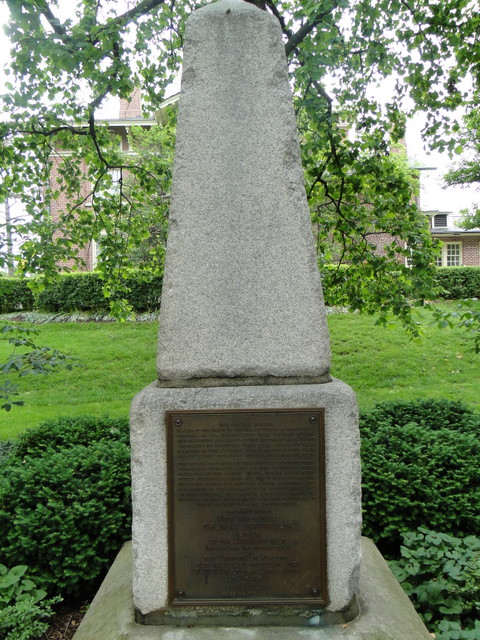
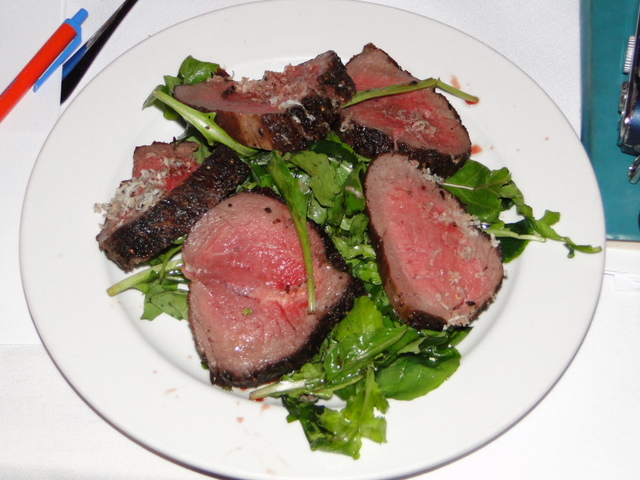


Great dining experiences in Missouri: the heartland of America has more to offer than just being “that empty space” one flies over from coast to coast.

We were startled awake at 5:30 AM by a loud rapping on the bedroom window with shouts of “tsunami…evacuate.” Stunned, we learned that a Pacific wide warning, following Chili’s catastrophic 27 February 2010 earthquake, had been issued. Throwing our clothes into the car, not knowing if we’d see the beautiful Japanese-style beach rental house again, we decided to drive the 40 minutes up the mountain into Volcano National Park.

Stopping first for gas, my wife, Jill, went into the store next door for bottled water while I waited in line. Hawaii’s beautiful pink dawn was breaking as I observed the locals in no particular rush, certainly no panic. Jill returned with water and a 12-pack of toilet paper. “Toilet paper?” “Everyone was buying toilet paper so…” her voice trailed off. Was she in shock? Laughter convulsed us both as relief replaced fright. At least if we had to camp …

Volcano National Park on the Big Island of Hawaii is home to one of Earth’s most active volcanoes – Kilauea – in an island chain born of volcanoes. We stood on an observation platform, in the middle of the devastating lava field caused by Kilauea’s most recent eruptions, with a sweeping view of the stunning coastline. Then it struck. No, not the waves, the realization we had fled to the safety of an active volcano to escape a possible tsunami.

Nine hours later, as the evacuation order was lifted, there was audible disappointment among the other tourists – no photo ops. Fortunately, Hawaii was spared that time, but that hasn’t always been the case.
Later in the week we drove into Hilo for a day at its famous market. A substantial swath of land forms a buffer between the historic commercial center and the Pacific Ocean. It makes for attractive park land and athletic fields but that’s not the reason for its existence.

For nearly a century before 1946 that same swath of land had been Japan Town, a warren of immigrant shanties. It lives on in Hawaii’s superb Asian fusion cuisine. Yet in a brief time frame on April Fool’s Day 1946, Japan Town and many of its residents were swept into the sea by a tsunami created by another catastrophic earthquake thousands of miles distance in Chile.
 The Pacific Tsunami Museum is a short walk from the Market. Staffed mostly by volunteers – many who survived the devastating 1946 tsunami – they showed no sympathy for the tourists that lost photo ops a few days before.
As long as the carbon dioxide and sulphur gas levels from Kilauea’s simmering crater do not force its closure, Volcano National Park is open 24 hours. We drove one night to the observation area that’s closest to the caldera. There in the pitch blackness of an overcast Hawaii night, we looked in awe at the vast, blood-red glowing cauldron of Halemaumau, the eternal home of Pele, goddess of volcanoes. The fragility of paradise, Pele is indeed home, prepared to remodel the land at her pleasure.

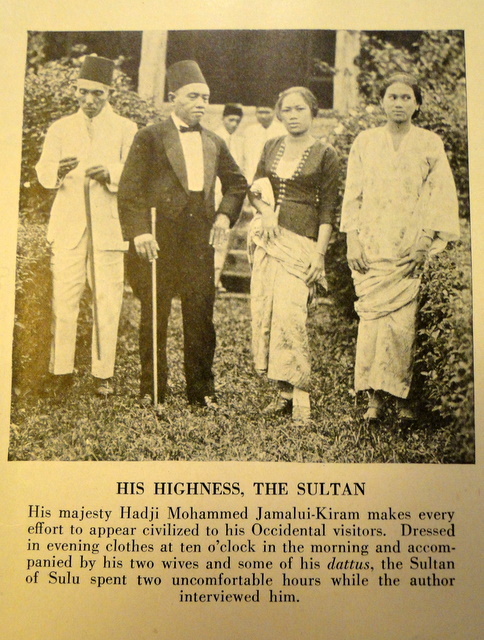
You are reading that correctly: “…every effort to appear civilized.” The author was Aleko E. Lilus and the article, “The Old Seaport of the Sulu Pirates,” appreared in the highly popular monthly magazine Travel, October 1931 (Robert M. McBride & Co., Camden, NJ). I did not seek out this magazine. This classic of Western mores illustrated through travel was a recent gift knowing full well my interest in antiques and popular culture through the ages.
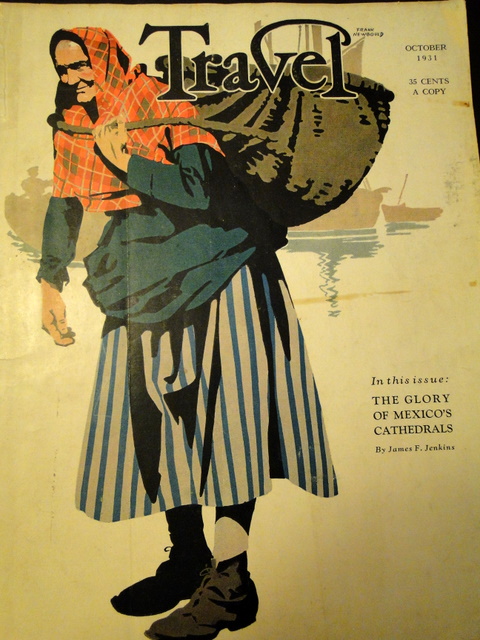
Travel (1902-2003) “…was reflective of the world at the time…” (Contextualization, Clay Dillon) and let’s remember the time. 1931: the depth of the greatest world economic depression ever, Fascism was flourishing in Italy with many European and American supporters, the Nazi Party was gaining ground in Germany, the Western empires controlled most of Asia, Africa and South America. In the USA the Klu Klux Klan was terrorizing and murdering African Americans, Jews and Catholics – and not just in the south – and the United States shut the immigration door to all but white Christian Western Europeans.
Yet for the affluent who could travel, and the majority that could only dream through films and lavishly illustrated magazines, this was the “Golden Age” of Aryan dominance – the opportunity for the “savage” to rise above his station. Travel writers could transport minds from a three room Hoboken apartment to exotic lands, “educating” their audience that there were people that had it “far worse” than you had it at home.


The articles run the gamut from the cathedrals of Mexico, the American Southwest, the vineyards of France, a once great Medieval European city to the wilds of Australia. Yet the language used to describe non-Western cultures was far different than those used for lands closer to home.
“The sultan’s niece…became a co-ed of the University of Illinois. She was thoroughly Westernized, but on her return…she promptly forgot her pretty American ways…and went native…As an educational and social experiment she must be considered a complete failure.” (p.25).
“Some of them…have bought Fords…but in the back country they still shoot bows and arrows and have never heard they belong to a vanishing race…” (p.28 “Exploring the Southwest in Your Own Motor” by Harry Fergusson).
“They love their children but they are inclined to spoil them for discipline comes hard to the southern mind..” (p.17 “Malta – Stronghold of the Sea King” by Francis Mc Dermott).
“The Spanish Colonials…upon this land they called “New Spain” … lavished their genius, endowing it with…civilization…” (p.7 “The Glory of Mexico’s Cathedrals” by James Jenkins).
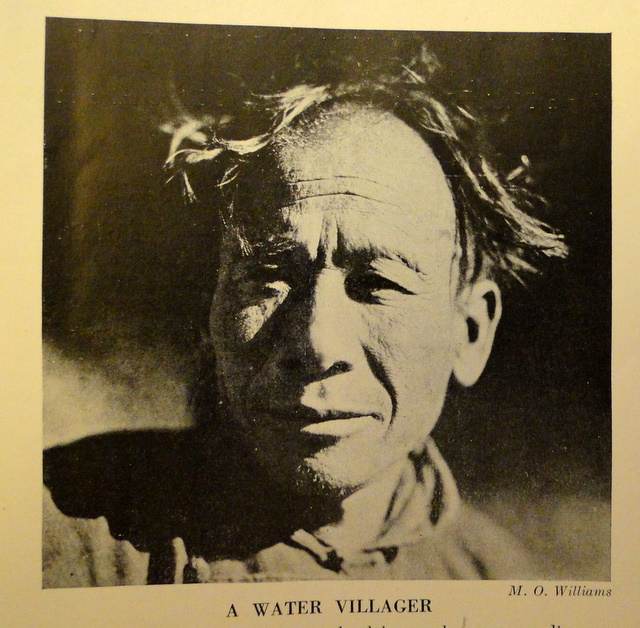

Travel was a gorgeous magazine, especially its stunning black and white photography and its advertising illustrations. In researching the history of Travel, it was second only to The National Geographic in readership for an audience interested in the world outside the United States. Indeed the last article in the October 1931 issue was on Australia’s unique animal life, “Nature’s Side Show in Australia” by Georgia Maxwell.

Naturally, for any modern traveler, 1931 prices for hotels and steam ships seem absurdly inexpensive until one factors what a 1931 dollar purchased compared to today – $16.00 for what $1.00 was worth during the Great Depression.


The queen of Philadelphia’s hotels, the Bellevue-Stratford Hotel, had rooms as low as $4/day in the depth of the Depression – cheap but these were teaser rates especially if you didn’t have a job. A 12-day cruise to the Bahamas started at $125 ($2,000 in 2011 dollars) and the French Railways campaign that “Everybody’s back” speaks to today’s ads urging the weary to travel once more.
I well remember this anticipated magazine that arrived at my home every month as a child. I also believed for many years that Mark Twain was correct, “Travel is fatal to prejudice, bigotry, and narrow-mindedness,” but life has taught me that even the great Twain was a victim of wishful thinking.
As a travel journalist I’ll be the first to praise the work I’m fortunate enough to enjoy, yet I’m well aware of the fine line that separates being the eyes of the reader from the human that may color the picture with their own cultural prejudices.

“With time and patience the mulberry leaf becomes a silk gown.” ancient Chinese proverb.
The allure of silk: its soft feel, its shimmer, its character to absorb vibrant colors, its legend of luxury, its power. No other fabric has caused the rise and fall of empires or led legions of adventurous merchants to risk life and fortune. For centuries the Silk Road linked the fabled kingdom’s of Asia with the Mediterranean and Western Europe. The expensive, arduous and dangerous journey fed into the mystique of an enigmatic Orient – a land of meditation and mass murder, tea and opium, the Buddha and Pol Pot.

Yet during 19th and 20th century domination by European empires over Asia’s economies, silk was overshadowed by more lucrative commodities – opium, tea, rubber. By the end of the Second World War, large scale manufacture of silk cloth in Southeast Asia had been reduced to a cottage industry, a victim of hard economic times, war and changing fashion – synthetics. It took an entrepreneurial visionary – a risk taker – to revive Asian silk.

As an artist Jim Thompson was drawn to the rich colors and expressive designs of what was by the mid-1940’s a tiny cottage industry in the Muslim provinces of southern Thailand and northern Malaysian jungle villages. These villagers were using centuries old silk worm farming techniques, natural dyes and ancient tools to produce stunning yards of intricately woven fabric – and selling them for a pittance.
Born into a Delaware clothing manufacturing family in 1906, educated at prestigious schools, a successful and well connected architect and designer, Jim Thompson chucked it all after becoming disillusioned with life by the late 1930’s. Joining the army at the start of World War II, he was recruited into the OSS, forerunner of the CIA. Sent to Thailand late in the war to infiltrate the Japanese occupation, he was assigned to head American intelligence in Bangkok. The war ended shortly after parachutting into the country, but Thompson liked Bangkok and made the decision to stay. That’s when he discovered the Muslim silk weavers.
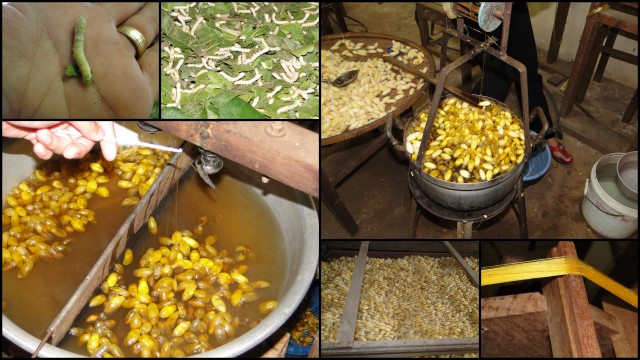
Jim Thompson cultivated personal relationships with the village weavers assuring them of markets for their cloth which did not yet exist. He encouraged the weavers not to give up the old methods and tweaked traditional designs for western clientele. (He later established a Muslim weaving quarter next to his compound across the canal. Today, wandering the Thompson House grounds, you can clearly hear the daily calls to prayer). Ensconced in Bangkok’s legendary Oriental Hotel, he effortlessly, it’s said, schmoozed with wealthy ex-patriots and visitors personally marketing Thai silk cloth. Within a few years his Thai Silk Company attracted the patronage of Vogue magazine and Irene Sharaff, fashion designer for the musical The King and I. By the early 1950’s Thai silk was an international rage, silk weaving was once again a vibrant home industry and Jim Thompson was dubbed the Silk King.

Thompson became a celebrity in Bangkok and a confidant to the rich and famous. His parties at the unique compound he created in the city were frequent with an eclectic mix of the business and art worlds. Using his considerable skills in architecture and design, he melded together six antique teak wood houses brought from various areas of Thailand into a compound including his home, workshops and retail space. It doesn’t hurt that he filled the grounds with gardens, pools and priceless Oriental antiques.


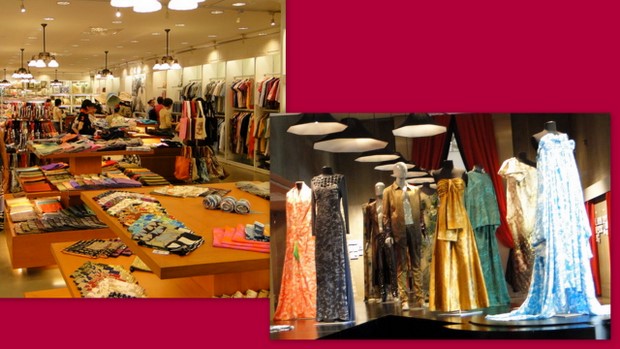
Although Thai Silk Company products are legendary today and available in elegant shops, Jim Thompson himself is simply a legend – or an enigma. In 1967 while visiting friends at their country house in northern Malaysia, Thompson went for a walk and within minutes had disappeared. No word was ever heard, his body never found. Speculation/conspiracy theories run rampant even today – a truck hit him and the driver took the body, a large animal ate him, he was still working for the CIA and was either eliminated by them or Communist guerillas (although he questioned the wisdom of the Vietnam war), or perhaps he simply wanted to chuck it all again and went native. Oddly, only 6-months later his wealthy sister was mysteriously murdered at her Pennsylvania estate – no robbery, no alarm, even her dogs didn’t bark.
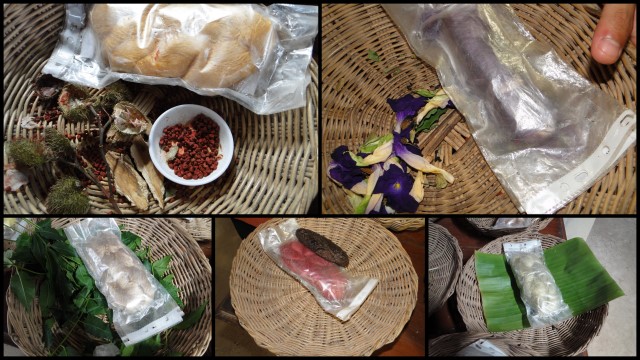
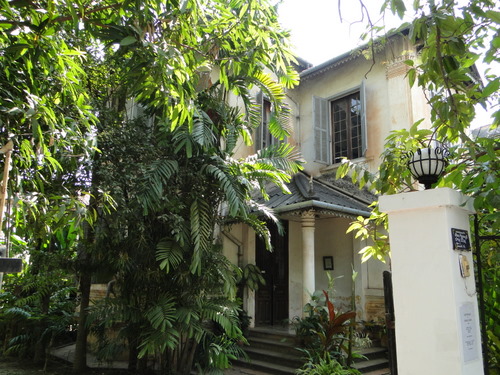
Carol Cassidy, on the other hand, is hearty, alive and well in Vientiane, Laos. When I met her for the first time a couple of months ago, she took me back to the workshop with a very worried expression saying she’d ruined a run of silk. Not the first words I expected from one of the world’s most renowned women in the art. She showed me this beautiful skein of shimmering teal silk. That was a mistake?? It just wasn’t the exact shade she wanted for the project, and considering silk is made by a worm, it’s not like she can run down to the local 7/11. Traditional arts for a contemporary clientele are long, serious work.

The scion of a prominent Connecticut family, Carol was the first American allowed to establish a business in post-1975 Laos, Lao Textiles, in 1990. This was after a career with a variety of NGO’s world-wide as a textile expert. Although she’s frequently compared to Jim Thompson’s Thai Silk Co., their business model is the only similarity. Both use traditionally trained weavers, pay fair wages and build personal relationships with the craftspeople. Yet where Thai Silk’s designs are for a mainstream international market, Cassidy specializes in made-to-order art hangings and clothing utilizing traditional Lao patterns. This carries over to the very limited runs of products available in the atmospheric 19th century French Villa showroom/workshop. Most are one of a kind Carol Cassidy wearable art in Lao silk and a terrific memory of that beautiful country.

Local non-profit organizations dedicated to the preservation of traditional arts exist in all Southeast Asian countries. In Vientiane, the capital of Laos, the Phontong Handicraft Cooperative has been organizing village craftspeople and marketing their work since 1976.
Artisans d’Angkor in Siem Reap, Cambodia, has a large vocational school complex for carving and graphic arts in town and a sizable silk farm and weaving operation just outside the city. The school particularly trains the disabled.
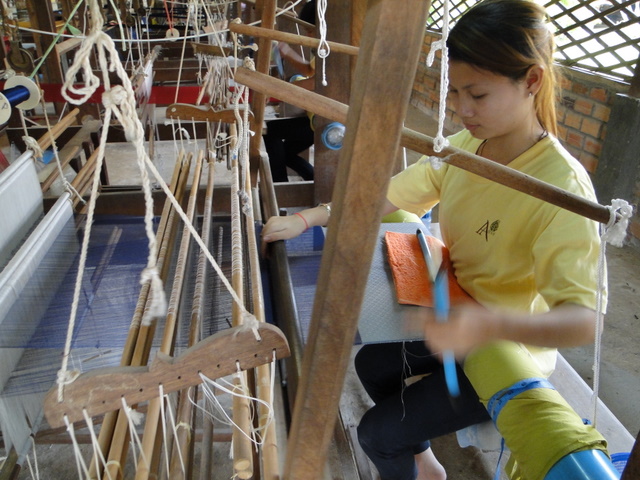

Whether it’s adventure, fortune, art or simply a way to make a living, silk has never ceased to fascinate:
“Upon them shall be garments of fine green silk and thick silk interwoven with gold, and they shall be adorned with bracelets of silver, and their Lord shall make them drink a pure drink.” ~the Quran
“He who has little silver in his pouch must have the more silk on his tongue.”~ Edward Bulwer-Lytton (1803 – 1873)
“Once a guy starts wearing silk pajamas it’s hard to get up early” ~ Eddie Arcaro (1916 – 1997)

That’s two-time Academy Award winning actor, Sir Michael Caine,* listening to a profound statement on the necessity of Western intellectuals to adopt an enlightened vision of the future…no. It’s the response on asking a resident of Ho Chi Minh City (Saigon) the best way to cross the street. From recent personal experience, this is a profound – some might say life affirming Q & A.”

Although far more people walk than in any American city I know – pedestrian friendly is an alien concept in Asian consciousness. Sidewalks do exist but, even if they are wide, nearly every square meter is occupied by vendors or motor bikes using the space as parking lots. Congestion on these sidewalks frequently made me use the street sharing the often narrow space with cars, trucks, motor bikes and other forms of public transportation in a devil-may-care free-for-all.
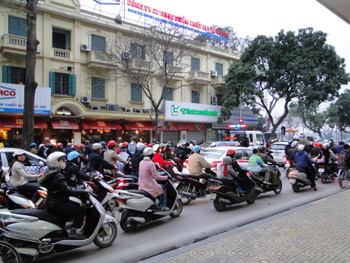
To cross the street a pedestrian simply crosses the street into the traffic which on the many 2-way streets or 3-street intersections comes from all directions. Although daunting at first, this is exactly what the on-coming traffic expects as it, usually, avoids both pedestrians and other vehicles with deft agility. The gentleman’s response to Michael Caine’s question was not flippant. It takes a sturdy centeredness gained through Buddhism, or tenacity, to calmly sense the correct timing and enter the traffic. The worst action a pedestrian can take is to get spooked and hesitate halfway across several lanes of traffic – that’s when the cars and motor bikes get spooked and accidents occur.
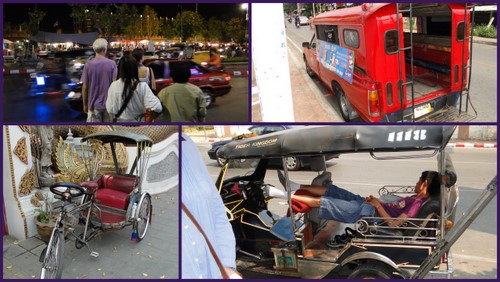
I knew none of this when I arrived in Bangkok. Six weeks later, leaving Saigon, perhaps I’d become a Buddhist as I simply spent no more than a ½-second contemplating my move across the street.

My wife, on the other hand, followed Michael Caine’s plan of action, “We looked for groups of Buddhist, inserted ourselves into the very center of them and crossed when they did. If I was going to be mowed down, at least I’d be in the right company.” * Except Jill looked for any vendor pulling (yes, pulling) a cart – frequently old women – and, using them as a human shield, crossed when they did.
Was it fun at first? No. Did I react negatively? Yes. I “threw the finger” at one SUV in Hanoi, after a particularly disappointing meal. He was shocked. After all, he was only going 35/mph 10 feet from me, but I lost my cool and failed to realize he’d never want to splatter me across the street – not as long as the Lord Buddha was watching over us all.

* “The Elephant to Hollywood,” by Sir Michael Caine
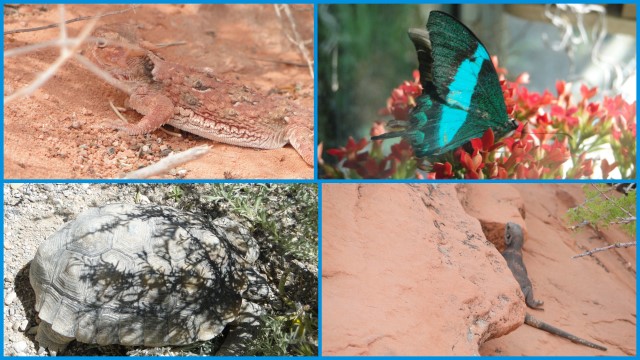
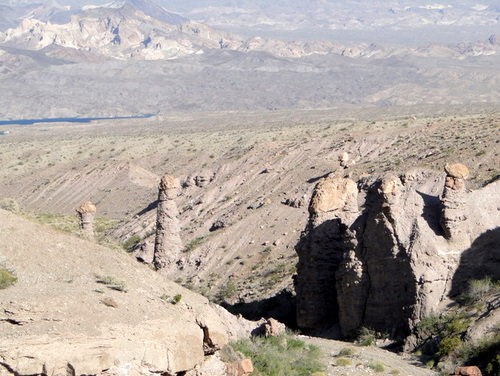
My photos of southern Nevada illustrating the musings of Edward Abbey, – the “Thoreau of the American West” – from his collection of essays, Desert Solitaire (copyright 1968).



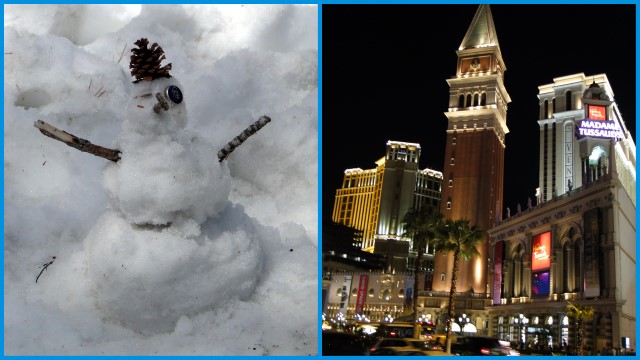


The fries, burgers, dogs, cheese steaks and grease were the aromas of fun for a ten-year-old’s sensibilities. The carney music concussed ears, the vision of whirling skaters circling the rink like an undulating snake, all added to the heat of innocent sin.

I sat with my buddies, hot, sweaty, exhilarated, and drank cold water from cone shaped paper cups. Billy said, “One day will have to pay for a cup of water.” “What!! Never. Dumb…why?” the rest of use were stupefied. Being a ten-year-old at the Trevose Roller Rink, with the noise of music, cling of the pinball machines, smell of the cheap food and sweaty smiles, my innocence suffered its first doubt as to the future.

Along the road to Canyonland National Park, a ribbon of a river winds for miles through the surreal sandstone, wind and water sculpted canyons in hues of red, orange, green, tan and whites. A snake of invasive Cottonwood trees define the river. Water bubbles from an underground spring fed from rain that fell a thousand years ago on top of surrounding mesas and filtered through the limestone. Isolated ranches, images of the nineteenth century, conjure romantic notions of simpler times, but in this geography of awesome beauty, quiet and dryness, the fantasy evaporates as rapidly as a drought or gets washed away as quickly as a flash flood. Ten inches of annual rainfall create precarious conditions.

Pre-historic pictographs, wisely preserved by state and national parks, may have warned the unfortunate Mormon settlers, if anyone could have read them. To me they’re 4,000 year old graffiti – seriously humorous gripes of being an organism that’s 70% water living in a land lacking that most important element. The park gates display large signs detailing to hikers the necessity to carry a daily minimum of one gallon of drinkable water per person. At the entrance to most park information centers are vending machines. They only sell 16 oz. plastic bottles of spring water – at $2.00 each.

The truth of my friend’s prediction is in Las Vegas amidst the clings, clang, clanks, smells, tired smiles, perfume and shimmering air of innocent sin. Nearly two-million Clark County residents, forty-million annual tourists, computerized undulating fountains, artificial beaches with waves, pirate galleons in Caribbean lagoons, tropical jungle rivers, Venetian canals and two-hundred acre golf courses all suck water from the desert’s less than 10″ of annual moisture and the underground aquifer that remains from a three-hundred million year old ocean. It’s not free, and it may not be forever.

Mesa Verde, Colorado, is awesome. To generations of Native Americans it is sacred ground. Until the 13th century it was home to hundreds of people. The First Americans choose this, and other mesas, for a variety of practical reasons. They were easily defensible, were covered with trees, had fertile soil and due to altitude and wind currents, received the lion’s share of rainfall in this otherwise parched region. The soft limestone rock both filters and traps precious water supplies rather than allowing it to simply run off the cliff. This confluence of advantages created the environment for a flourishing agrarian society over a millennium ago. Walking through the ruins of interconnecting rooms that served as both warehouses for grain and ceremonial centers for the political and religious elite several hundred feet below the mesa summit on a blisteringly hot, dry day, it felt cool within these ancient walls. It wasn’t just shade. Many places on the interior cliff walls were moist and moss-covered. Small trickles of water emerged from these glistening patches dripping down the walls into thin channels carved into the rock floor (picture above: bottom right). At the end of each channel was a small three to four-inch diameter by six-inch deep collecting well carved into the rock. No source of water was too small to be ignored.
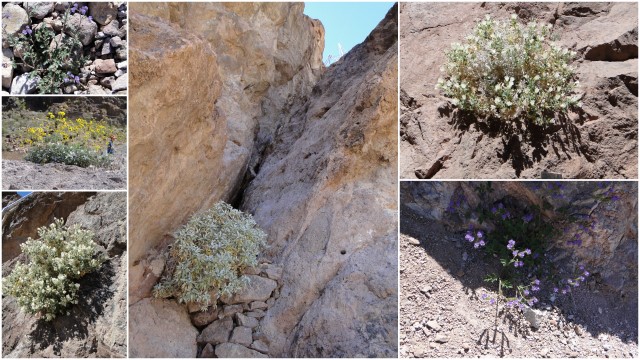
Yet the ingenuity of this culture could not prevent its demise. The success of agriculture allowed the population to exceed nature’s ability to sustain human activity. The trees on the mesa’s summit created a temperature differential in the atmosphere that encouraged the formation of life-giving thunder storms, but they also provided fuel and building material for the thriving agrarian economy. By 1150, the very success of that economy had denuded the mesa resulting in a precipitous drop in rainfall. Archaeological evidence tells a disastrous story of drought, increasing civil strife and, finally, abandonment. There is even evidence of defensive fortifications being the last building projects in the cliff towns. Within a century, human habitation on the mesa top and the cliffs came to an end.

Lake Mead – over 130 feet below original levels
Every day in the Southwest the newspapers print articles concerning water. Legal battles are fought over resource rights among farmers, ranchers and land developers. Political battles rage among municipalities, states and the Federal government over river allocations and who’s going to pay for the projects. Environmentalist and economic growth interests ask Courts to rule on the advantages or damages caused by past and future dam projects.

The national and state park services not only take vigilant preservation seriously but make scientific research of these complex ecosystems a high priority. Practical applications from this research are evident in both water conservation technology used in Park facilities and eradication of water sucking invasive plants, such as Cottonwood trees, that were introduced to the environment in the last century by well-intentioned economic interests.

cottonwood trees
On the outskirts of Taos, New Mexico, is the elegant El Monte Sagrado Resort . It’s a modern hacienda with artistically appointed guest rooms, expensive spa and stunning dining facilities. Everything surrounds an oasis of native and tropical plants complete with a wide meandering creek crossed by bridges and punctuated with fountains and waterfalls. But appearances can deceive. Among the magnificent vegetation are odd, sculpted metal “trees” whose “flowers” are photo electric cells. The collected energy operates the pumps and the extensive decorative lighting. The hotel has its own on-site treatment facility that purifies and recycles all waste water. It’s used to irrigate the garden and create all its water features. Brochures explaining the green philosophy of management are conspicuously placed for guests to read. Yet resorts like this are the exception. Las Vegas’ Bellagio with its massive water fountain display within an artificial lake are more the norm.
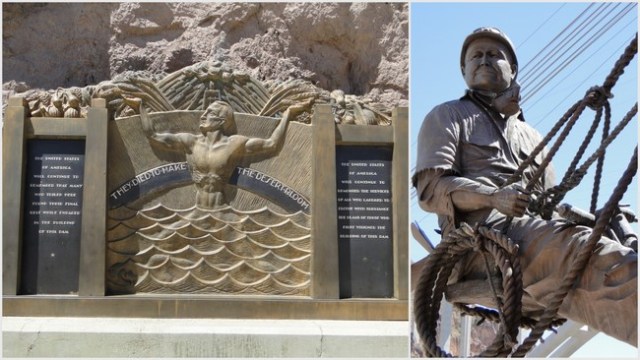
monument at Hoover Dam to workers who died on construction – 1931-35
Acoma Pueblo in New Mexico is one of the oldest continuously inhabited communities in North America and sacred ground to the Puebloan culture. Only a limited number of outsiders are allowed to visit the mesa and must be accompanied by a native guide who conducts a well-disciplined tour. Because of the sacred nature of the site, visitors must adhere to strict rules governing photography and following the directions of the tour guide. Only in modern times has electricity been available and a road built allowing cars and trucks access to the top of the mesa. In previous centuries, the plains that surround the mesa were farmed providing food for the Pueblo. Now the food comes from grocery stores on the reservation. Coal fueled electricity, in this land of perpetual sun that could generate both solar and wind energy, run the air conditioners in the adobe dwellings. The Mesa is devoid of all vegetation. It’s hot, dusty and crowded. Blue plastic port-o-potties dot the village. In ancient days, farm fields were fertilized with both animal and human waste. Port-o-potties use chemicals that without proper treatment contaminate ground water. The Mesa of Acoma is sacred, photography of most sites, as well as lingering after the tour, is forbidden, but port-o-potties are a fact of modern Native American life.
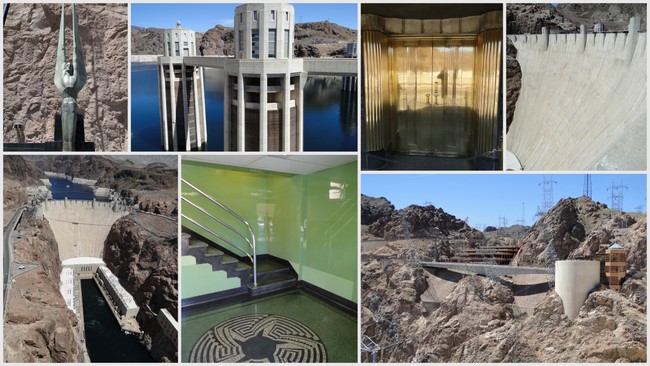
Hoover Dam – a Great Depression make-work government project
Hoover Dam is a modern cathedral radiating energy in a most tangible form. Throngs of visitors make a pilgrimage to this art deco monument to 20th century engineering. Graceful angels are poised on the very rim of the dam in testimony to the beauty and power that silences the crowds as they stare, transfixed, at the silver glint on the blue water of Lake Mead. Like the trees of Mesa Verde, this dam is the economic engine of a culture. This tax-payer built Federal Depression-era make-work project was a resounding success for Sin City’s boom and is the artery through which Las Vegas lives today. It’s sacred ground. Yet water levels in Lake Mead have been declining since 2000 and are nearly at historic lows. In a 2008 report on the status of Lake Mead, scientists at the Scripps Institution of Oceanography predict there is a 50% probability that Lake Mead will be completely dry by 2021 due to climate change, population growth and unsustainable overuse of Colorado River water. The report concluded “Today, we are at or beyond the sustainable limit of the Colorado system. The alternative to reasoned solutions to this coming water crisis are a major societal and economic disruption in the desert southwest; something that will affect each of us living in the region”.
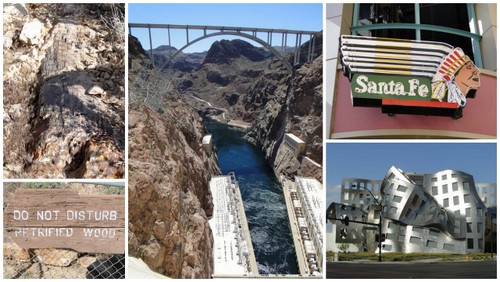
The clings, clang, clanks, smells, tired smiles, perfume and innocent sin still clung to the hot air in the Las Vegas airport as I watched both arriving and departing passengers drop seemingly endless quarters into the slot machines. It all made sense. Whether it’s two bucks for a pint of water, wave machines in a desert, Court battles over water rights, port-o-potties on sacred land, a dam to sustain a city or villages built a thousand feet into the sky, we humans like to gamble. We’ll continue to take a chance at beating the odds.
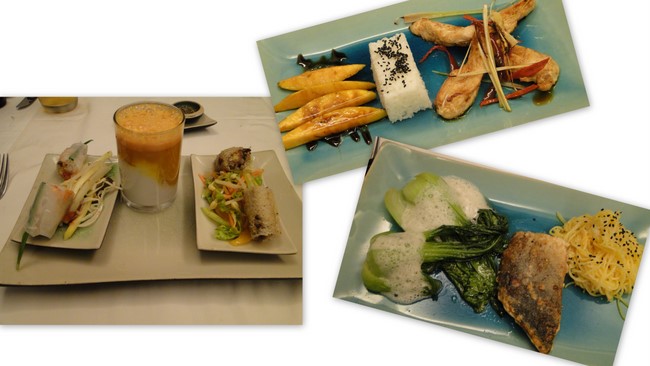
For a tourist town, Hoi An has a surprising number of decent restaurants at some of the lowest prices outside the major cities. My first dinner in this city of 200 + year-old-buildings was at a hip new boutique hotel and café, River Lounge (35 Nguyen Phu Chu). The simple, modern white interior provides a nice foil for imaginative interpretations of traditional Vietnamese cuisine.
Take simple cream of pumpkin soup, found on so many menus, River Lounge serves a cream foam topped with the seasoned pumpkin puree in a swirl on top in a tall clear glass. The textures of hot puree mixing with cooler cream, as well as the visual, is a nice touch. The rest of the meal was equally satisfying.
An assortment of spring rolls, an entrée of grilled river fish with steamed morning glory greens and lime foam and fresh noodles and one of boneless chicken in a sesame/soy/ginger reduction accompanied by a block of rice and grilled mango. Dessert was a perfectly executed creme caramel topped with a crunchy ginger sugar glaze.

Cafe Can(74 Bach Dang St.) is one of many Hoi An river front restaurants that all basically offer the same menu. Cafe Can caught my eye for both its pleasing outdoor dining and its large wood charcoal grill off to the side with fresh fish and seafood for dinner. In simple large pots of aerated water are freshly caught giant prawns, crabs and clams.
Sold by weight, they are best grilled napped with a variety of herb/garlic/ginger/soy sauces. The meal was accompanied by a large platter of steamed vegetables and mushrooms, with a large local beer.
A variety of other preparations, from fish baked in banana leaves to fried as well as non-fish dishes are available. Being open to the street directly across from the river, don’t be surprised when more than one street vendor wander in selling bracelets, the English language Vietnam Times, dried fruit and homemade candies. It’s all part of Vietnam.

Dem Hoi Bar & Restaurant, just down the block from Cafe Can, has the advantage of a beautiful French colonial building with a large open second floor that offers stunning views of the river and Hoi An harbor. The menu is decent – nothing surprising but well prepared.
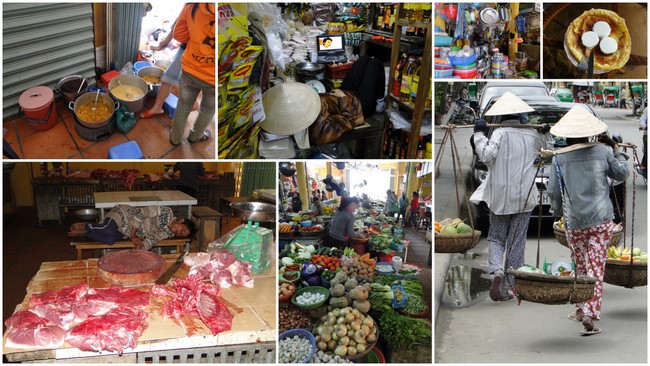
Over on the French Quarter are several cafes that serve, if lucky and they are available at the market, Vietnamese delicacies such as pig’s brain and eel. The brain was unavailable but the eel was nicely fried in a light batter – tasted a lot like trout (see, not chicken!) The Hoi An Market is classic offering everything from hot soup to wonderful French crepes topped with coconut ice cream (top right).

When it comes to hotels there is a large selection of accommodations with many moderately priced first class venues. The newest choices are on the expanding residential island of Cam Nan, a 10 minute walk across the bridge from the Old City. Cam Nan Island is quiet with a pleasant mixture of old wooden houses with vegetable plots to the larger homes of new middle class residents.
Windbell Homestay Villa has an established reputation for comfort, service and a good restaurant. Set around a central garden and beautiful blue tiled swimming pool, this family run hotel offers spacious rooms with lots of windows that open onto nice private vistas letting in the sea breeze. Including a full breakfast, strong Wi-Fi, double rooms average in the low US$100s.

Serving all meals, the Windbell Homestay is one of the rare small hotels with a full service restaurant with everything freshly made to order. A Hoi An specialty, White Rose, (bottom left) is a delicate dumpling filled with savory mixtures which the Windbell does particularly nice as well as spicy shrimp, Beef Pho (upper left) and a great herb calamari sauté on mint and watercress (upper right). Add a bottle of white or red from Vietnam’s largest winery, Vang Dalat and you’ll enjoy a pleasant meal overlooking the lit gardens and pool. (Vang Dalat will not win any awards soon).

The Hoi An Folk Art Museum is well worth a visit. It has a fine display of traditional tools, everyday life items, artistic and musical traditions, the important silk weaving industry and some contemporary art. The large 18th century structure is a treasure in itself.
 Hoi An is one of those rare villages tourism has revived that, as of yet, has not been destroyed by its success. Perhaps it’s the strong merchant background of old Hoi An – sails and a port still equals sales. It doesn’t hurt having a strong preservation ethic among the town leaders. New construction in the Old City was following strict building codes using the same materials and methods of construction as 200 years ago. That commitment bodes well that even though it will remain a tourist town, Hoi An’s real, still going about its business and beautiful.

 Travel with Pen and Palate
You must be logged in to post a comment.