A hundred years! A hundred years are gone
Of Grecian mornings and of Grecian sunsets!
Make them a coffin wide, O carpenter,
And bury them, the hapless dead, in silence!
(Kostas Palamas 1859-1943)
By the dawn of the 20th century the three major regional kingdoms bordering what would become the First World War’s Macedonian Front (Greece, the Ottoman Empire and Bulgaria) were players in a grand game of thrones. Britain, France and Germany would dictate the script. The chess pieces in this first round of what would be an ever more deadly 20th century spiral would be a generation of young men.
Please read more of the most difficult to write and heart wrenching article I’ve ever been assigned…
What may seem an oxymoron, an agnostic recognizing the sacredness of Mt. Athos, is perfectly normal to me. I do not believe in a divine being, but freely accept the holiness of humanity and creation, whatever caused the big bang. I accept holiness because it’s impossible to deny visceral emotions when immersed in surroundings that dwarf ordinary human expression.
There are certainly impressive mountains that tower over 2,033 meter/6,670 foot Mt. Athos, even in Greece. It’s not about size. It’s all about perception.
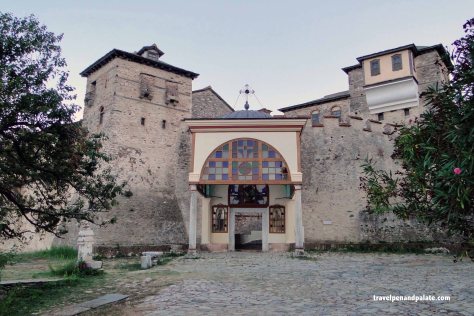
Great Lavra Monestary, 10th Century
Read more about my experiences on Mount Athos in the Hellenic News of America…
Nowhere in the southern Balkans has a region been so coveted by empires than Croatia with over 1,100 miles of photogenic Adriatic coastline. Although the ethnic Croats were themselves 7th century northern invaders, they could not stop a historical process that would come to an end only in late 20th century. The Romans, Venetians, Hungarians, Austrians, Ottomans, Mussolini’s Italy and Serbs all lusted over this beautiful and strategic land akin to the biblical neighbor’s wife.
Today Croatia is invaded not by empires but by golden hordes of tourists…
Dubrovnik July 2017
Read more on my travels to Croatia in the Hellenic News of America
We’ve all been there – that small panic when utterly lost, a sudden illness in a strange land or after 17 hours of hot, dusty travel an unexpected kindness makes clear why we call ourselves members of the human race.
If you’re a travel journalist, you’ve been in unexpected difficulties numerous times in some of Earth’s iconic locations. If you’re an active traveler, exploring and taking risks, getting out of one’s comfort zone is taken for granted. Getting back in often requires help – unexpected kindness.
“The eagerness of destroying books and libraries has been executed by judges, lawyers, literate and uneducated people, rich and poor and priests of all gods. The peculiar book hatred has been growing in parallel with the desire for knowledge.” (The introduction to the disturbing exhibition on book burning at Casa de Sefarad, Cordoba, Spain.)
In 1817 Heinrich Heine witnessed young German nationalist students burn books in Wartburg and later wrote, “It was only the prelude, where they burn books, at the end they will also burn people.” In 1933 his books were among the thousands destroyed in the infamous Nazi book burning, which was the prelude to the Holocaust. Yet Adolph Hitler was far from the first leader to inspire biblioclasm – the pathological urge to destroy the written word and erase collective memory.
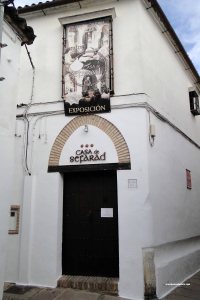
It’s appropriate that the small but exquisite Casa de Sefarad in Cordoba should mount such a disturbing exhibition. From the 8th through the 13th century Cordoba had been Western Europe’s most enlightened and advanced city. As the capital of an Al-Andalus Moorish kingdom it excelled in urban technology, the sciences, arts and religious tolerance.
Casa de Sefarad is the Jewish cultural center in Cordoba preserving the legacy of what was once a thriving Sephardic community protected by the Moorish state. Today the former Jewish Quarter is the heart of Cordoba’s UNESCO World Heritage District abutting the magnificent Mezquita Mosque. Islamic Al-Andalus generally tolerated all beliefs as long as they did not openly denounce Islam although individual rulers interpreted tolerance differently.
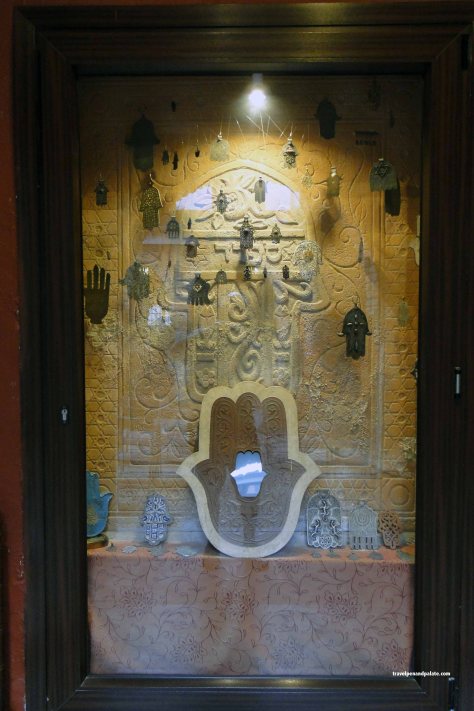
The Hamsa is a symbol to ward off evil shared by both Islamic and Sephardic Jewish traditionAll that changed when Cordoba, and eventually all Al-Andalus kingdoms, fell to the feudal Christian lords from what is today the northern Spanish provinces between the 13th and 15th centuries. Fueled by doctrinal certainty, an ethnic cleansing of both people and thought commenced for the next three centuries. Eventually most of Spain’s Jews and Muslims were murdered, expelled from the country, migrated to the New World or granted protection in Morocco and the Ottoman Empire.
Yet intellectual and ethnic persecution has a long history, and Casa de Sefarad presents highlights in a chilling timeline within the walls of this former Jewish merchant family townhouse.
416 BC Athens: The great Greek philosopher and mathematician, Protagoras was condemned by the city of Athens. His book, “On the Gods,” and his belief that “Man is the measure of all things,” prompted his persecution. In 416 his works were burnt and he fled, unfortunately dying on his way to Sicily.
213 BC China: Li Si, Prime Minister for the Qin Dynasty, ordered the burning of all books by Confucius on the grounds that the philosopher favored individual thought preeminent over obeying the State.
170 BC: The Seleucid King Antiochus IV forbade the practice of Judaism. He commanded the destruction of all books in Jerusalem. This act motivated the Maccabean rebellion against the Hellenistic Syrian Kingdom (the festivity of Hanukah)
260 AD Athens: The Goths invaded Athens. One of their generals prevented the burning of the city’s libraries claiming that, “As long as the Greeks are slaves to reading they won’t be good at fighting.” Later the libraries were destroyed.
637 Syria: The library of Ctesiphon in present day Syria was burnt destroying thousands of ancient scientific works by Persians, Chaldeans, Assyrians and Babylonians.
Maimonides, Cordoba, Spain, in front of his home1233 Montpellier, France: The orthodox Jewish community reported the works of Maimonides to the Roman Inquisition. All the works of Maimonides, the towering intellect of Jewish Cordoba, were burnt in the main square of the city.
1530 Tetzcoco, Mexico: thousands of scholarly, literary and religious Aztec books were burned on the orders of Bishop Fray Juan de Zumarraga – founder of the University of Mexico.
1553 Rome: The Talmud was condemned as blasphemous. Thousands of Jewish books were burnt in the Campo dei Fiori.
1600 Rome: the intellectual Giordano Bruno was burnt at the stake in the Campo dei Fiori. Giordano Bruno was an Italian Dominican friar, philosopher, mathematician, poet, and cosmological theorist who conceptually extended the then novel Copernican model.
Casa de Sefarad, Cordoba, Spain1826 St. Petersburg: Tsar Nicholas I decreed the Law of Censorship consisting of 220 categories of banned topics.
1873 Washington DC: Congress past the Comstock Law defining obscene literature. Banned books included the Arabian Nights, the Decameron, Canterbury Tales, Lysistrata, and Moll Flanders.
1909 Rome: Filippo Tommaso Marinetti (1876-1944) writer, poet and playwright was a promoter of the Futurist Movement. In his 1909 “Futurist Manifesto” he affirmed industrialization and technology as the engine of creativity and that, “we have to tear down the museums and libraries.” Marinetti became a favorite of Italian fascist leader Benito Mussolini.
10 May 1933 Nazi Book Burning, Berlin: Three days after Adolf Hitler was appointed Chancellor, any book containing “inaccurate information” (aka “fake news”) was forbidden in Germany. With the assistance of the German Students Association and professors of the University of Berlin over 25,000 books were burned including the works of Andre Gide, Franz Kafka, Sigmund Freud, Karl Marx, Voltaire, Einstein, Jack London, Marcel Proust, Maxim Gorky and Ernest Hemingway.
When Sigmund Freud heard that his books had been burned in the OpernPlatz his reaction was, “How has the world advanced! In the Middle Ages they would have burnt me instead.” Freud fled Austria in 1938 after that country’s union with Germany and died in London the following year escaping the Holocaust.
courtyard of Casa de Sefarad1961 Munich: The German state of Bavaria banned the broadcast of Aristophanes “Lysistrata” citing that its subject matter – wives withholding sex in order to force their men to stop war – “offends the moral sensibility of the population.” (Hitler started his rise to power in Bavaria).
1978 Buenos Aires: One million books printed by Argentina’s Latin American Publishing Center were burned by the military dictatorship.
Mid-1960s through early1970s China: the Cultural Revolution under Mao Tse-Tung saw the destruction of many libraries and institutions housing the priceless patrimony of over 5,000 years. As a young man Mao had worked as a librarian.
1992 Sarajevo: Literature professor Nicola Koljevic, Vice President of the short lived Republic of Srpska during the former Yugoslav civil war, ordered the fire bombing that destroyed the National and University Library of Bosnia-Herzegovina. The following day a Serbian sniper murdered Aida, a young librarian trying to save books that remained. The library has since been rebuilt but countless works by scholars from antiquity through the Ottoman Empire were lost.
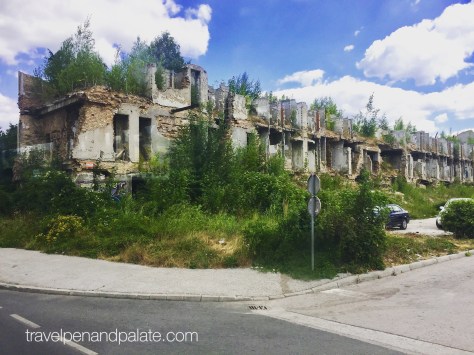
2017: still reminders of the destruction wrought on Sarajevo 1992-19952002 Ramallah: The Israeli Army inflicted massive damage on the library of Al-Bireh Ramla destroying thousands of Palestinian works of art, science and literature. It has since been rebuilt.
And yet not all was horror. There were windows of hope in this timeline.
1775 Leipzig: Goethe’s novel, “The Sorrows of Young Werther,” was banned in Saxony for obscenity. It became an instant, and German literature’s first, bestseller.
1985 Cairo: A Lebanese edition of “The Arabian Nights” was declared obscene – 3,500 copies are burned. The ban was lifted a year later.
2012 Tumbuktu, Mali: Then biblioclasm comes full circle. An Islamic extremist militia attempted to find the collection of thousands of manuscripts on the history of Al-Andalus written by Moorish, Jewish and Christian scholars known as the Kati Collection. They failed since supporters had hid the collection.
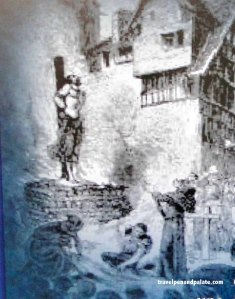
Michael Servetus VilleneuveHow did this exhibit affect me? I lost it when I came upon the fate of Michael Servetus Villeneuve. Heinrich Heine had made a historical error in his comment; authors had already been burned for their writing. In Geneva, 1553, Free Thinker philosopher Michael Servetus Villeneuve was condemned by both Catholic and Protestant leaders including John Calvin. He was burnt to death on a pyre made from his own books.
The curator noticed my reaction and any attempt on my part to explain failed. I left Casa de Sefarad in a fruitless effort to compose myself. Returning I engaged in an emotional conversation with the curator on why, as a writer, I’ll live with this image the rest of my life. Censorship, the attempt to erase collective cultural memory, is the eighth deadly sin.
poster at Casa de Safarad: “Music banned by the Holy Inquisition”
You can read more articles by Marc d’Entremont at:
Nothing significant about the number 100 just a human penchant for symmetry. Although I continued to write for publications for which I had deadlines, since February I took time away from my own website to reorganize a significant facet of life – to be settled or wander. Necessity for the change was partly dictated by the end of a long relationship – isn’t that the truth in literature.
But as a life-long traveler – I was barely 20 years old when I went off on a solo year in Europe – the decision I made did not cause much loss of sleep. Okay, a little. Perhaps it was loosing the relationship that caused more sleepless nights, but that’s more for a romance novel than a travel web site, and besides, it ended amicably.
Old & new in the Principality of Andorra
Being a full-time culinary and cultural travel writer since 2009 after a long and varied career as a chef, educator and historian, relocating – having a permanent address – in any number of suitable American locations appeared an oxymoron. (I’m doing my best not to bring politics into this.)
on Paros Island, Greece
Except for frequent transportation connections – aka waiting – I freely admit being turned-on by the road. Why have an apartment when I don’t have to clean a hotel room? Why cook for myself when as a culinary writer it’s the cuisine of others that I seek? Why agonize over choosing among Earth’s beautiful locations when passport in hand I can be on a beach, hiking in a mountain or rambling through a vibrant urban space.
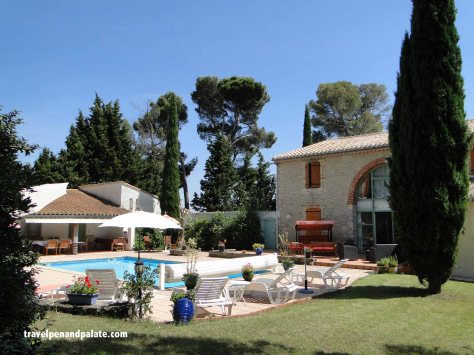
French House Party, Carcassonne – a loyal sponsor for 3 trips.
That doesn’t mean I seek the life of a wandering gypsy. I do have commitments to publications, fine public relations firms and tourism boards that work with me and my own interests that have already helped shape life for the foreseeable future.
One month ago, after considerable research and several invitations, I embarked on an ambitious seven month schedule that has already taken me to Mexico, France, the Pyrenees Mountain Principality of Andorra and, after several days in Barcelona, currently a long train ride through the beautiful Spanish countryside for a return visit to the ancient Roman/Visigoth/Moorish/Spanish city of Cordoba – a personal favorite.
Walls of the 9th century Mezquita mosque, Cordoba
By mid-June I’ll make a long-anticipated visit to Morocco. Having extensive life experiences with Spanish and Latino cultures and cuisine, Morocco – the wellspring of Moorish civilization – is essential in understanding the interplay of cultures that has so influenced the Western Mediterranean, Central and South America.
From Morocco I’ll fly east to the Balkans and a third return to beloved Greece. My smart sponsors for two months in Greece – September and October – not only admire my writing on Greek culture and cuisine, but also recognize my keen interest in history. I’ve always taken a holistic view that the life experiences of people in any region help determine its fascination as a travel destination.
Basilica Sagrada Familia, Barcelona, Spain
1917 was the turning point for the Balkans and Greece during the First World War. Thessaloniki in particular is honoring this pivotal year that saw Macedonia and Thrace reunited with southern Greece after centuries of separation during Ottoman rule. Besides continuing culinary and cultural explorations in the north and Halkidiki – including Mount Athos – the Corinthian coast in the south will be a new region that’ll only add to my Greek experience.
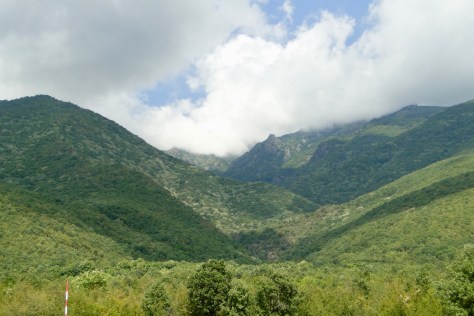
Mt. Athos as seen from Sithonia, Halkidiki, Greece
Prior to my Greek return in September there are the months of July and August which will be filled with culinary and 1917 experiences in the heart of the Balkans including first time visits to Croatia, Serbia, Romania, Bulgaria and the city that sparked the world changing conflagration, the Bosnia-Herzegovina capital of Sarajevo.
raw oysters, quail egg, sea urchin & golden caviar in Puerto Vallarta
By the 1st of December I’ll have made a full circle from where this adventure started returning to Mexico where I already signed a year-long lease on a beautiful apartment in Puerto Vallarta with stunning views of the Pacific Ocean – and weekly maid service (I still don’t have to clean!) It’s fortuitous that just as life was changing, invitations for two culinary press trips to Puerto Vallarta occupied a month of my life last Autumn. Not only did the city’s excellent cuisine and vibrant culture win me over but solidified my acceptance that being on the road is the life meant for me.
Puerto Vallarta, Mexico
So a year in one city is not like being on the road? Not necessarily since exploring Central and South America has been part of my writing life since 2009 and Puerto Vallarta will become a hub.
After 2018…I don’t yet need to know. That’s the freedom of being on the road. The hundred days of silence are over, and a hundred articles are sure to follow.
sunset over the Bay of Banderas, Puerto Vallarta, Mexico
The nearby medieval city of Carcassonne welcomes throngs of visitors inside its fortified walls, but at the Domaine St. Raymond, small groups of intellectually curious travelers gather for residential workshops at a house party in southern France’s Languedoc.
Domaine St. Raymondsunflowers blowing in the wind
Domaine St. Raymond, home of the French House Party, sits among gently rolling hills of golden wheat and sunflowers. Within this bucolic setting, small groups of intellectually curious travelers gather for all-inclusive four to seven day creative residential workshops in southern France’s Languedoc ranging from culinary adventures with Michelin starred chefs, literature and graphic arts to song writing.
Chefs Robert Abraham and Jean-Marc Boyer
“I’m not sure if I really know how to write a song” is not what a guest at a songwriting workshop would expect to hear from an acclaimed New York writer/performer. But the creative process is nebulous.
Dean Friedman
Just like in a good ballad, disaster fell for Dean Friedman in the 1980s when England banned the delightful “I’m in Love With a McDonald’s Girl” in the 1980s because it mentioned a brand name and therefore was deemed akin to an advertorial.
Please go to my travel column in the Hellenic News of America to read all about the French House Party’s creative workshops.
The three peninsulas of Halkidiki – Kassandra, Sithonia and Athos – are the summer playgrounds of Macedonia. Blessed with numerous and secluded beaches, surrounded by the clear blue Aegean sea with pine forested mountains of wild flowers, olive trees and vineyards, it’s no wonder Halkidiki has been favored by Greeks since antiquity. Only a couple hours drive from the nation’s second largest city, Thessaloniki, and within a day’s drive from the Balkans, its many resort hotels especially draw a plethora of Eastern Europeans, Ukrainians and Russians seeking sun, sand, hospitality and Greek cuisine.
The Halkidiki penninsula Athos – Mount AthosOuranoupolis
The Alexandros Palace is located just outside Ouranoupolis, one of many towns built in the 1920s as a result of the traumatic exchange of Greek and Turkish populations that took place after the fall of the Ottoman Empire and the merger of Macedonia into Greece. Once the site of an ancient village – its 14th century tower fortress is a landmark – and still the gateway to 7,000 ft. Mt. Athos, today Ouranoupolis is a tourist and fisherman’s town.
pool: Alexandros Palace Hotel
The Alexandros Palace Hotel, within site of the autonomous and sacred Monastic State of Mt. Athos, is a self-contained 250-room resort village rising from its wide beach up the hill and spreading over 90 acres. Like most of Halkidiki’s resorts an all-inclusive meal plan includes extensive buffets for breakfast and dinner and offers something for everyone from meat lovers to the devoutly vegan. Yet true Greek cuisine shines in Halkidiki hotels a la carte restaurants for those not desiring a buffet.
Chef Giorgos KosmidisFresh fish/seafood at Alexandros Palace
Chef Giorgos Kosmidis commands the poolside Taverna at the Alexandros Palace Hotel. Having enjoyed several meals over two separate trips, it has taken this chef journalist a year to convince chef Giorgos to part with his intensely flavored yet simple shrimp creation. The Aegean is a seafood lover’s supermarket and the shrimp may well have been caught that very day off the coast of Ouranoupolis.
Chef Giorgos Kosmidis Halkidiki shrimp – four servings
Ingredients:
clockwise from far left: unpeeled shrimp, strained shrimp stock, Greek oregano, ingredients for stock
1 pound large shrimp (reserve shells for the stock)
2 bay leaves
1/8 teaspoon grated nutmeg
1/4 teaspoon oregano – preferably Greek oregano
2 tablespoons sweet butter
1 cup dry white wine
1 garlic clove, minced
2 cups chopped parsley
1 cup heavy cream
1/8 teaspoon cayenne pepper
salt and white pepper to taste
1/4 teaspoon sweet paprika
Preparation:
Clockwise from top left: ingredients for sauce in pot, cooked sauce, sauteed shrimp, prepared Halkidiki shrimp
Remove the shells from the shrimp and reserve the shrimp in the refrigerator while making the stock.
Place the shells in a quart size saucepan and add the bay leaves, nutmeg, oregano and a little salt and white pepper. Add cold water just to the level of the shells. Place the saucepan over medium high heat and bring to a boil. Cook until the liquid is reduced to 1/4th of a cup (2 ounces). Strain and discard the shells reserving the reduced shrimp stock.
Melt the butter in a sauté pan and cook the shrimp for one minute turning once.
Add the wine to the shrimp, bring to a simmer and cook for one minute.
With a slotted spoon remove the shrimp from the wine and keep warm.
To the wine add the 1/4th cup shrimp stock, parsley and garlic. Bring to a simmer and cook for two minutes.
Add the heavy cream, cayenne pepper and sweet paprika. Bring to a simmer and cook for five minutes.
Add the reserved shrimp and warm for one minute.
Divide among four plates and serve with crusty bread used to absorb the sauce and a dry Greek white wine such as Mt. Athos ΙΕΡΑ ΜΟΝΗ ΑΓΙΟΥ ΠΑΥΛΟΥ (Holy Monastery of St. Paul), Monoxilitiko, a blend of 90% sauvignon blanc with local varieties. It had a nose of honey and sage followed by summer floral notes with a surprisingly dry finish.
While at the Alexandros Palace Hotel, don’t pass up the luxurious Panalee Spa and the new specialty shop selling Mt. Athos wines, skin care products and local foods. In the evening, the spacious Theater Bar with its lower level dance floor and stage might as well be the town square of this village resort. Twin brothers Thomas and Janis Aslanidis, the musically talented and genial young heirs to the Alexandros Palace Hotel, might just be tending bar and don’t be surprised either if managers Yiannis Misopapas and Kyriakos Mandouvalos are mingling among the guests. After all this is Greece with hospitality and cuisine as legendary as its mythology.
When you go:
Ouranoupolis is an easy 2 – 3 hour drive (busier on weekends) on modern roads from Thessaloniki International Airport.
I’ve made Spanakopita most of my life. As a chef it’s been part of my repertoire my entire career. It’s flavorful, a classic vegetarian dish and easy once you become familiar using phyllo dough.
In North America phyllo is found in the freezer section of many grocery stores. (Making the same paper thin dough at home requires skill and helpers). Once you’re familiar handling phyllo its versatility is amazing.
I have wrapped anything and everything into attractive phyllo packets especially for hot hor d’oeuvres. They have graced many a buffet and cocktail party. Yet it wasn’t until I started traveling to Greece that I discovered not all phyllo is paper thin and difficult to prepare.
Flora and Nikos Kratzeskaros have operated Tsikali Taverna
The village of Vathi on the Cycladic Island of Sifnos is a classic beauty. The winding road descends from the hills and one’s first glimpse is the gleaming white buildings clustered in a crescent on a white sand beach in front of the clear aqua water of the Aegean. Cars are parked at the entrance to the village because there’s nowhere else to drive. The few narrow streets – more stone paths than roads – were made for goats and donkeys.
After passing through the 17th century Church of Evangelistria Taxiarches, which creates part of the seawall, you walk a short distance on the beach to a grove of trees shading Tsikali Taverna. Nearly as many tables are directly on the sand as under the roof of the open-air restaurant. Flora and Nikos Kratzeskaros have operated Tsikali Taverna for decades.
Knowing that a chef culinary journalist was visiting that day Flora demonstrated how easy it was to make phyllo dough that isn’t the paper thin variation. Except for many dessert pastries, Greeks don’t use the paper thin sheets familiar to me. For savory dishes they roll fresh dough to the thickness of a thin pizza crust.
Flora Kratzeskaros rolling phyllo & wrapping Spanakopita
I developed this variation on classic Spanakopita decades ago and have used it my entire career. It calls for the frozen dough familiar to most outside of Greece, but you can certainly substitute this New York Times recipe for the dough Flora Kratzeskaros taught me.
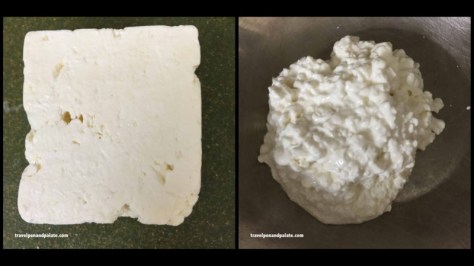
Feta & cottage cheeses
I add cottage cheese along with feta because I like the mix. Sometimes I include a couple tablespoons of toasted pine nuts and a grating of fresh nutmeg. All are ingredients traditional to Greece and Eastern Mediterranean cuisine therefore as authentic as any dish can be that has existed for thousands of years and is part of several regional cuisines.
Spanakopita – 6 entrée portions
Ingredients:
1/3rd pound defrosted phyllo dough
8 tablespoons unsalted butter
1 cup diced sweet onion
1 teaspoon dried basil
½ teaspoon dried oregano
¼ teaspoon salt
½ teaspoon black pepper
2 pounds fresh spinach or 20 ounces of loose frozen chopped spinach
2 cups crumbled feta cheese
2 cups cottage cheese
5 eggs
Procedure:
Defrost filo dough still wrapped for 24 hours in the refrigerator. DO NOT unwrap until instructed in step #8.
If using frozen spinach: remove from the bag and place in a colander over a bowl large enough to fit the colander. Thaw the spinach for 24 hours in the refrigerator. Discard the collected spinach water or reserve for other uses. Place the spinach in a large square of cheesecloth or a kitchen towel and press out as much liquid as possible.
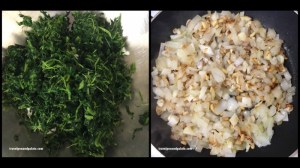
If using fresh spinach: remove the stems and chop the leaves. Rinse in a colander and place in a large pot. Cover the pot and steam, stirring several times, until soft, approximately 5 minutes. Place the spinach in a large square of cheesecloth or a kitchen towel and press out as much liquid as possible.
Preheat oven to 375°
Melt 2 tablespoons unsalted butter in a sauté pan and add the onions, basil, oregano, salt and pepper. Sauté until lightly browned.
In a large mixing bowl combine onion, spinach, feta cheese, cottage cheese and eggs.
Melt the remaining 6 tablespoons unsalted butter in a small pan.
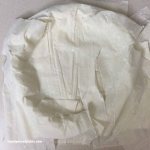
thawed phyllo arranged in flan pan
Remove the thawed phyllo from its wrapping and unfold onto a kitchen towel or waxed paper. Cover immediately with a slightly damp kitchen towel (phyllo dries and crumbles quickly when exposed to dry air).
Brush the bottom and sides of a deep pie or flan pan (10” X 2”) lightly with butter.
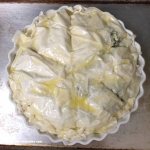
Spanakopita ready for baking
Arrange 8 sheets of phyllo overlapping in a circular pattern. The phyllo will larger than the diameter of the pan. (cover the remaining phyllo with the damp towel) Brush the phyllo with half of the remaining melted butter. Spread the spinach mixture into the pan and overlap the phyllo over the spinach one piece at a time. Gently press the phyllo onto the spinach and with a serrated knife score the phyllo into 6 wedges – do not cut through the spinach – this makes it easier to serve without the flakey dough breaking apart after baking. Brush the top with the remaining butter. (Wrap the remaining phyllo dough in waxed paper and then in aluminum foil sealing well. You can place that in a plastic bag. Refrigerate up to 3 weeks for later use.)
Place the dish on a sheet pan and bake for 45 minutes to 1 hour until the phyllo is light golden brown. Allow the Spanakopita to rest for 10 minutes before serving.
A 9” X 13” cake pan can be used for the Spanakopita and it can be scored into smaller portions to be served as a first course.
Flora Kratzeskaros’s Spanakopita with fresh phyllo dough
You can read more articles by Marc d’Entremont at:
Greek students at the Archaeology Museum of Thessaloniki
As Thessaloniki has been at the crossroads of Greek history for 2,500 years then by all means walk the city. It’s not a small city but easy for anyone who enjoys a good low-impact hike. When that stroll includes stops at world-class historic sites, vibrant centuries old markets and unique cafes, the discoveries that are in store can be amazing.
What to visit:
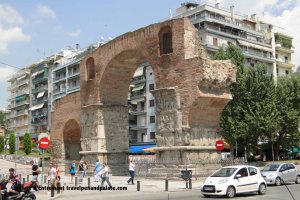
triumphal arch of the Emperor Galarius
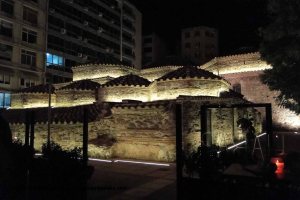
Roman archeological sites: the 4th century triumphal arch of the Emperor Galarius still has a direct road connecting his palace to the Rotunda. For over 2,000 years the Rotunda served as a Greek/Roman temple, Christian church, mosque and now an Orthodox Church treasure.
Archaeology Museum of Thessaloniki
The Archaeology Museum of Thessaloniki houses a wealth of culture that both Macedonia and the city fostered from pre-historic times to the golden age of Alexander.
Heptapyrgion
Towering above downtown Thessaloniki up the foothills of Mount Chortiatis where the ancient acropolis was located, the massive fortress of the Heptapyrgion guarded the city for nearly two millenniums. Started by the Romans in the late 4th century it was substantially expanded by the Byzantine Empire in the 12th century and Ottomans in the 15th.
Monastery of Vlatadon
Down the hill the Monastery of Vlatadon in Ano Poli was built on a site already sacred where St. Paul preached to the Thessalonians in the year 51.
Ladadika
Until its near destruction in the great fire of 1917 the historic Ladadika district was the heart of Thessaloniki’s commercial activity and Jewish heritage. What survived both the fire and Nazi extermination is the heart of tradition and the city’s elegant beaux-arts pre-World War II rebuilding. Today it’s a trendy neighborhood of cafes and shops. Centuries old market arcades, the Modeano and Bezesteni in particular, still ply traditional goods such as textiles, flowers and jewelry.
Bey Hamam
Cafes surround the 15th century Bey Hamam, a preserved Ottoman public bathhouse.
The White Tower
The White Tower, built by the Ottoman Empire in the 15th century on Roman and Byzantine foundations, is a popular icon and focal point of the new seaside promenade.
Restaurants:
Ouzou Melathron
Ouzou Melathron is classically Greek as well as trendy Ladadika.
Agioli Restaurant
Agioli Restaurant serves fusion Greek on Thessaloniki’s seaside promenade.
Oval Cafe
Oval Café is surrounded by the city’s Parisian style architectural splendor.



















 Travel with Pen and Palate
You must be logged in to post a comment.