The Bahía de Banderas is a sport fisherman’s dream and Puerto Vallarta is heaven for lovers of fish and seafood. At the shelf of the Sierra Madre Mountains and the mouth of three fresh water rivers the bay is an ecological reserve for whales, manta rays, coral reefs and sea birds. At it’s deepest points not far from the shore it plunges thousands of feet. From mid-November to April it’s the popular breeding ground for both humpback and grey wales – seems all mammals like to escape cold weather.
Marina Vallarta
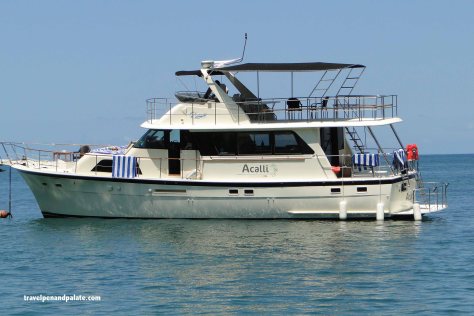
Bonita, skipjack, jack crevalle, sierra mackerel, pargo, red snapper, grouper and mahi mahi are all available for sport and at Puerto Vallarta’s restaurants and street vendors. Among the many charters available Mike’s Fishing Charters offers a wide variety of daily options and multi-day trips. A day excursion on Mike’s Fishing yacht Acalii embarks from Puerto Vallarta’s trendy Marina Vallarta residential and resort district.
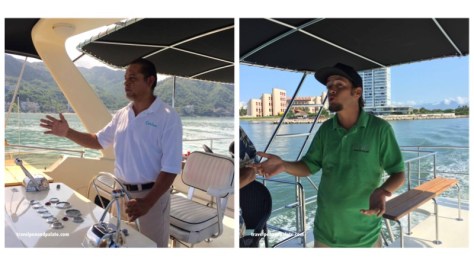
Capitan Jose & first mate/tour guide Hassam
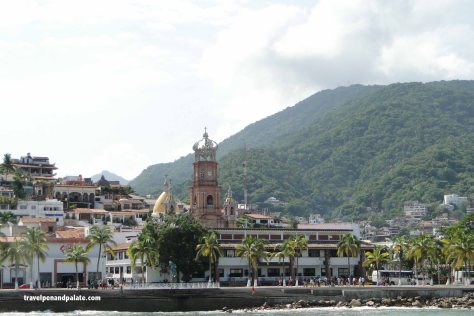
Capitan Jose and mates Hassam and Jueith offer a relaxing day. Hassam provides running commentary of Puerto Vallarta sites as the yacht sails the coast – far more picturesque than from a bus. The Sierra Madre Mountains provide a dramatic backdrop to view this city that hugs the beaches of the Bahía de Banderas.
Vallarta historic zone from the Acalli
The elegant yacht Acalli has a spacious air conditioned lounge and ample deck space. A covered top deck is perfect for the bay’s natural wonders while avoiding sunburn. Two well appointed cabins and a modern bath would make an overnight trip a true luxury cruise.
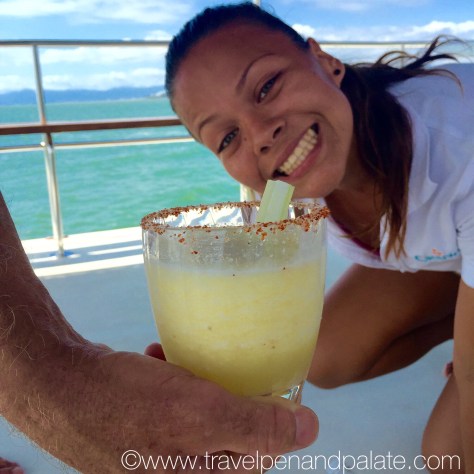
Jueith with one of her excellent Margarettas
Jueith is an accomplished mixologist. Her margarita of cucumber, basil, lime, golden tequila with a dash of orange liquor is outstanding. It’s refreshing, not overly sweet and free from ice laden artificial flavor mixes. Jueith uses only real fresh ingredients in her cocktails. It’s common in Puerto Vallarta to rim a margarita with a mix of salt and chili pepper adding an additional flavor note.
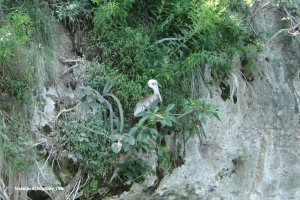
Los Arcos Marine Parksea birds nesting on cliffs of the islands, Los Arcos Marine Park
The prize destination in the Bahía de Banderas is the national preserve of Los Arcos Marine Park. Dramatic granite outcroppings topped with a profusion of plant life are the breading grounds for dozens of sea birds that make their nests precariously (it seems to humans) on the sheer rock cliffs. Bedecked with plants as if designed by gardeners, this series of small rock islands have arched tunnels carved by the pounding surf. Their environs are a favorite for snorkelers and divers.
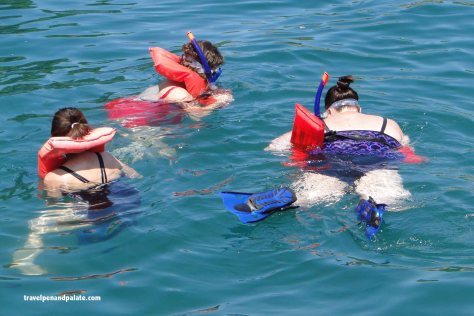
snorkling at Los Arcos Marine Park off the Acalli
Mike’s Fishing Charters provides all the equipment needed for guests wishing to explore the islands.
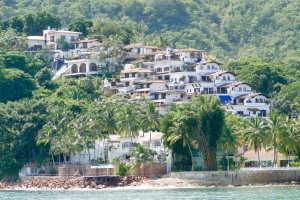
Not too many miles south of Puerto Vallarta the lush foothills of the Sierra Mardre tumble into the bay. Villas and boutique hotels cling to the hillsides while thatched palapas dot secluded beaches. Secluded is the operative term because the single north/south highway along the coast is at points up to a mile and a half inland. Many beach locations are accessible only by boat.
Mike’s Beach Club
Mike’s Fishing Charter’s private beach restaurant – Mike’s Beach Club – is one such venue. The long thatched roof restaurant hugging a white sand beach is a quintessential retreat from the modern world – although wifi is available. Among the menu offerings is superb seafood ceviche, made to order wood fired tortillas with grilled meat fillings and a variety of salads.
Mike’s Beach Club
After lunch it’s siesta time. Guests can enjoy the clear blue waters of the bay, lounge under a beach palapa or, best yet, nap in one of the colorful hammocks. A day on board a Mike’s Fishing Charter yacht is a relaxing time warp into days before mass tourism.
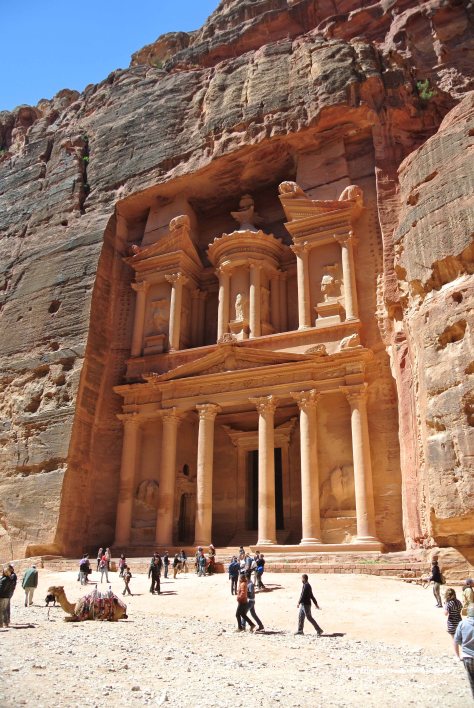
The treasury, Petra, Jordansandstone cliffs, Petra, Jordan
Petra was carved into multi colored mineral laden sandstone by the Nabataeans c. 300 B.C., yet this geographically strategic region in present day Jordan generated wealth for whoever had control long before the city existed. As a center for long-haul caravans, some stretching for 700 camels, Petra was an ideal junction for the distribution of goods on their way south, west and north into the Levant, Egypt and the Eastern Mediterranean. As for security, Petra was a natural bank vault.
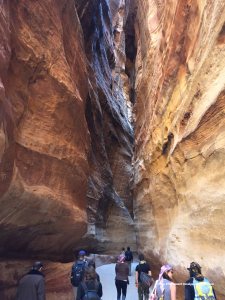
The massive city was carved into the red sandstone cliffs on the flanks of Jordan’s vast dry Wadi Araba. The dramatic main entrance through a long towering and narrow gorge – a Siq – was a defensive and psychological tour de force. The eyes are focused on the first building that comes into view, the impressive Al Khaznch. Popularly known as the Treasury, its purpose was more likely ceremonial – shock and awe.
entering Petra, Jordan
Named a UNESCO World Heritage Site in 1985, chosen in 2007 as one of the New 7 Wonders of the World and discovered by Hollywood in the Indiana Jones franchise, Petra deserves its reputation as the top tourist attraction in the Hashemite Kingdom of Jordan. With an international mix of visitors, the carriage, horse, donkey and camel rides, the craft and trinket stalls, local musicians and water hawkers add a visceral caravan atmosphere to a serious archaeological site.
Petra, Jordan
Petra’s dominance of the Spice Route in the Levant continued well into the Roman era when the city became the capital of the empire’s Arabian province. Although it’s not clear what use the Nabataeans meant for many structures, the Romans added obvious flourishes – an impressive theater, colonnaded market and freestanding temples. Yet if it were not for the genius of three human accomplishments, the glory of Petra would have been impossible.
Roman era temple, Petra, Jordan
Petra’s wealth and life in the Cradle of Civilization were based on wheat, sheep and water. The domestication of a wild grain and a feisty animal in prior millenniums allowed for settled life and the rise of towns. Yet all life was dependent on water, especially in regions prone to drought. The Nabataeans mastered an efficient system of dams, cisterns and water channels carved in rock that provided this desert city with a profitable surplus of water.
preparing Bedouin bread
While Petra declined after the 5th century A.D. due to changing commercial routes and serious earthquakes, wheat, sheep, people and the need for water remained. The cuisine of Jordan’s Bedouin culture harken back to the basics of ancient settled life. Flat ash bread is still buried under the hot coals while goat, lamb and poultry may be grilled or baked in a hot sand pit. Vegetables of all types are pickled and dried fruits, nuts and cheese round out the basics.
baked Bedouin flat bread
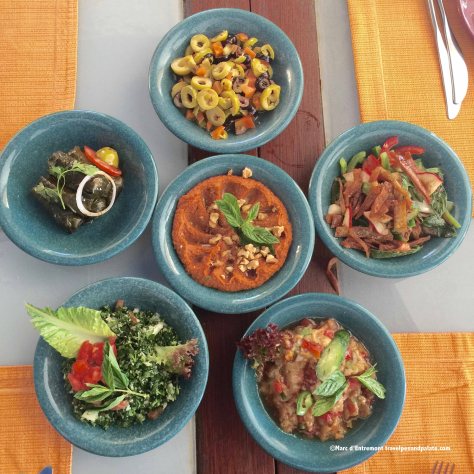
Who knows when humans first discovered that slathering toppings on flat rounds of bread and baking them were tasty and had infinite possibilities? Among the many dozens of mezze – small plates – that dominate Jordanian cuisine, Araies Iahma is a favorite among locals and visitors. Known as Bedouin Pizza, araies lahma is easy to prepare.
Bedouin pizza ready for the oven
Araies Iahma (Bedouin Pizza) – 8 servings
Ingredients:
1 pound ground meat – any combination of lamb, beef, mutton or goat
1 medium onion, diced
½ cup olive oil
1 green chili pepper, seeds removed, diced
2 cloves garlic, crushed and diced
2 tomatoes, blanched, skinned and diced (see preparation)
1 teaspoon ground cumin
1 teaspoon sea salt
pita bread
Bedouin pizza meat mixture
Preparation:
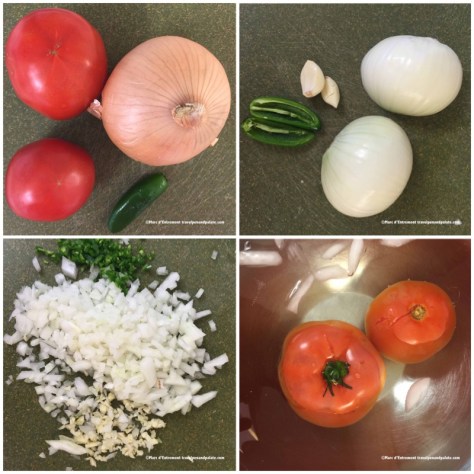
vegetable ingredients (note: blanched tomatoes lower right ready to have skin slipped off)
Preheat oven to 350°F (180°C)
Blanch the tomatoes for 45 seconds in boiling water and plunge into a bowl of ice water. Using a sharp knife slit the sides of the skin and slip off the skin
Finely dice the tomatoes, onion, chili pepper and garlic
Add the salt, cumin, and diced vegetables to the ground meat and mix well.
Cut each round of pita in half, and spread a thin layer of meat inside each pocket.
Brush the stuffed pita halves with olive oil and arrange on a sheet pan.
Bake for 7 minutes, turn each pita over and continue for 5 minutes more.
Serve hot with a salad as a light lunch, as an appetizer or part of a festive and elaborate Jordanian mezze buffet.
Cooking class at Petra Kitchen, Petra, Jordan
Araies Iahma is just one of a dozen dishes a visitor can participate in preparing at the Petra Kitchen. The staff of the Petra Kitchen under manager Ali and chef Mustafe have created a participatory dinner that introduces guests to the top tastes of Jordanian cuisine. Couple this with its location at the very epicenter of ancient human achievement, and dining in Petra becomes a bonding experience with the ancestors.
When you go:
Non-stop flights are available from major North American hubs to Amman, Jordan.
Petra is a 3-hour drive south from Amman on modern highways. Although day excursions can easily be arranged from Amman, to give Petra its due, an overnight in one of the new town’s attractive hotels is recommended.
As in all hot arid regions, visitors to Petra are urged to carry and drink plenty of water. Visiting the entire site entails walking 6 to 9 miles round trip, but carriage, horse, donkey and camel transportation is available. Bottled water is easily purchased in the historic site from numerous vendors.
A nighttime candle light illumination of the Al Khaznch (the Treasury) is not recommended. Candlelight at its base fails to do the vast edifice justice. Save your energy for the daylight.
This article on the cuisine of Jordan – with recipes – has little to do with almonds; it has everything to do with the misunderstood terms of authenticity and fusion when it relates to national cuisines. Yet let’s take almonds as an example, in Jordan they do not coat this delectable nut in a tooth breaking armor of sugar. The reason is simple; Jordan Almonds are an invention of the Roman Empire and the Kingdom of Jordan didn’t exist until the 20th century – let’s not get into the derivation of the name.
tomatoes & shredded cucumbers
Salatat Khyar and Fatoosh are ubiquitous and refreshing cucumber salads, part of the common repertoire in Jordan. Yet their main vegetable, the cucumber, probably didn’t make its way into Levantine cuisine from India until circa 1000 B.C.E. – long after a thriving food culture had developed. The Spice Route and the Silk Road, legendary commercial links between Europe and Asia, intersected in Jordan and the greater Levant resulting in today’s timeless fusion Middle Eastern cuisine.
mint & lemon
The many variations on classic cucumber salads found throughout the Middle East and the Mediterranean mimic the layers of cultural influence made possible through commerce on the Spice Route and the Silk Road. Research Salatat Khyar and often the Algerian recipe appears, significant for the absence of yogurt in the recipe despite that dairy staple being otherwise well utilized. Why the Berbers and Moors of North Africa left yogurt out is a mystery.
raw almonds
Still this article is not about cucumbers, yogurt or almonds – although Jordan has wonderful raw almonds that are another story altogether. National cuisines – aka authentic – are a myth simply because cooking is regional; it’s all about what’s available. For most that was a 50-mile radius from one’s village. Yet for the Middle East that was the known world.
Pomegranate molasses
The delectable smoky flavor of baba ganouj – Jordan’s spelling – is known throughout the Middle Eastern culinary world. Except in Jordan tahini (sesame paste) is absent. Yet tahini was common in the region. Pomegranate molasses on the other hand was an import from Persia brought in by caravan. Concentrating juices of perishable fruits (dibs) was common. The addition of mint is a regional Jordanian variation as well not found in the more commonly known Lebanese baba ghanoush. The result for Jordan’s baba ganuj is a recipe for chopped salad rather than a dip. It’s a refreshing mezze (small plate) with notes of mint and sweet/sour pomegranate.
roasted eggplant & roasted peppers
Baba Ganuj (serves 8)
Pomegranate molasses is available in better markets (Whole Foods, Trader Joes, etc) and Middle Eastern groceries. This recipe comes from The Petra Kitchen, Petra, Jordan.
Ingredients:
2 pounds eggplant (approximately 2 medium size)
1 green bell pepper
2 garlic cloves
1 tablespoon chopped fresh mint
2 tablespoons lemon juice
1 large tomato
1 medium sweet onion
1 tablespoon salt
1 tablespoons olive oil
1 tablespoons pomegranate molasses
Preparation:
Prick the eggplants with a fork and roast on a baking dish in a 375° oven for 45 to 60 minutes until very soft. (Roasting over charcoal in a baking dish will impart a better smokey flavor. Turn the eggplants several times.) Allow the eggplants to cool. Split the eggplants and scoop out all the flesh discarding the skins. Place in a stainless steel or ceramic mixing bowl.
Add olive oil, lemon juice and salt and mash with a fork until a chunky puree.
Dice the tomato, pepper and onion. Crush and dice the garlic and add all to the eggplants.
Stir in mint.
Garnish with parsley and/or additional mint and serve with flat bread.
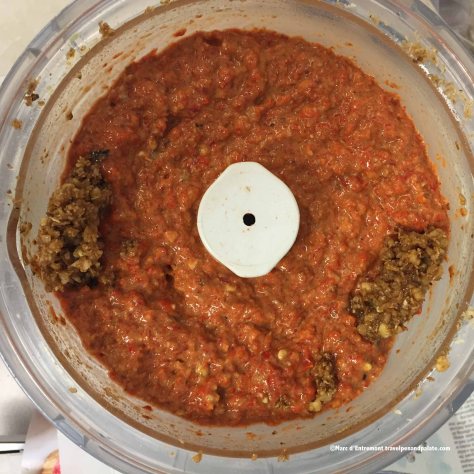
ingredients for Muhammara in food processor
Muhammara, redolent of roasted red peppers and walnuts, means brick colored in Arabic because that’s the color of the dip – the color of Wadi Rum sand. Yet variations are all over the world of the Spice Road and Silk Route as far north as Georgia in the Caucuses. It’s rich tasting yet light in texture, and this Jordanian recipe is simple to prepare.
Muhammara – 8 servings
Ingredients:
2 ½ pounds red bell peppers
1 or 2 small hot chili peppers
6 ounces walnuts
½ cup wheat crackers
1 tablespoon lemon juice
2 tablespoons pomegranate molasses
½ teaspoon ground cumin
¾ teaspoon salt
½ teaspoon sugar
2 tablespoons olive oil
Preparation:
Roast the red peppers until skins are blistered and charred using one of these three methods – (1) on a baking dish in a 400° oven for 10 – 15 minutes (2) over charcoal turning the peppers several times, or (3) over the open flame of a gas stove holding the peppers with tongs or a long fork like marshmallows.
Place the peppers in a bowl and cover or in a paper bag for 15 minutes. This will steam the peppers allowing the charred skin to easily slip off. Discard the skins, seeds and membranes.
In a food processor, grind the walnuts, crackers, lemon juice, pomegranate molasses, cumin, salt and sugar until smooth.
Add the red peppers and process until smooth.
With the machine running, add the olive oil in a thin stream and then the chili peppers. If too thick add 1 to 2 tablespoons water.
Scrap the puree into a stainless, glass or ceramic bowl, cover and refrigerate overnight for best flavor, although it’s fine to eat it right away.
Serve drizzled with extra olive oil and/or pomegranate molasses garnished with walnuts or pine nuts and accompanied by wheat crackers or flat bread.
smoked salmon on flatbread with labna, dill & capers
Labna (soft yogurt cheese) is more common than butter as a spread especially on traditional flat breads. It’s frequently on the breakfast table along with smoked fish. Flatbread with labna, smoked salmon, red onion, capers and dill is as common in Jordan as bagels and lox in America. Fusion isn’t the adulteration of cuisine; it’s evolution and creativity.
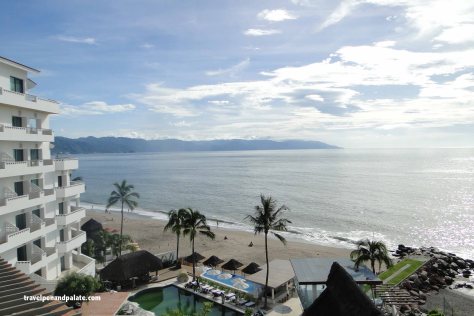
View of Bay of Banderas from room at Villa Premiere Boutique Hotel & Romantic Getaway
As a chef I usually shy away from all-inclusive resorts. Being a captive audience for a resort’s desire to maximize profits too often results in forced acceptance of less than stellar quality. Yet Villa Premiere Boutique Hotel proves that excellence is by design.
Villa Premiere Boutique Hotel & Romantic Getawayhand painted inspirational quotes on the interior walls throughout the hotel
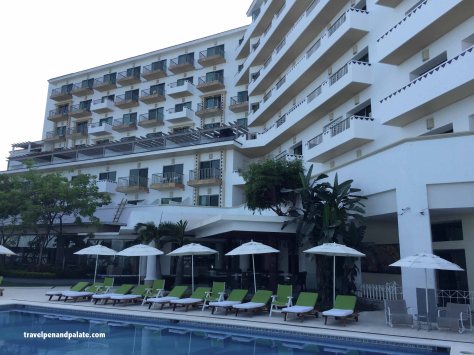
Hoteles Buenaventura group was founded over 30 years ago in Puerto Vallarta by a family of engineers and architects with three generations now actively involved. A flair for design is evident in the liberal use of original art that decorates public spaces and rooms as well as the ergonomic comfort that dominates the furnishings. Villa Premiere is one of three resorts under the group’s umbrella along the vibrant shore of the Bay of Banderas.
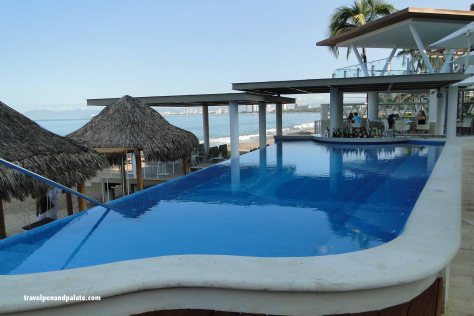
Infinity pool & barprivate hot tub/pool on balcony of a corner suite
Villa Premiere, built in 1999, completed a multi-million dollar renovation in September 2016 under the direction of the second generation family CEO and architect José Abel Villa Fernandez. Not only were all 60 rooms and suites refurbished but the public areas including pools and the three restaurants received major improvements. The adult only Villa Premiere Boutique Hotel & Romantic Getaway exudes comfort, serenity and extraordinary customer service even before you arrive. Upon making a reservation an email is sent with a list of pillow, room scent and mini-bar preferences.
Guests receive a complimentary neck massage upon registrationsweets
Guests are presented with glasses of champagne before sitting at the reception desk. After the necessary formalities of registration they’re whisked to one of two masseuses who provide a complimentary neck massage. By the time they’re thoroughly relaxed a staff member escorts the guest to their room where the baggage has already been delivered. A platter may await in the antechamber of the room next to the espresso machine with an attractive arrangement of welcoming sweets. That’s all within the first hour.
pool
the hotel gym
If a guest has opted for the all-inclusive package – highly recommended – the discrete pampering will continue during their stay. An extensive room service menu and a well-stocked mini-bar may entice one to remain in their room gazing out on the pounding surf of the Bay of Banderas from the balcony. Yet the glass walled and open air restaurants, beachfront pool bar, luxurious Mind & Soul Spa, the spacious well equipped gym and the soft sand beach are equally enticing.
exquisite dishes & presentations
From breakfast to late night cocktails, the Villa Premiere’s chefs and mixologists never cease to amaze. Each dish whether it’s traditional mechaca – northern Mexican dried beef scrambled with eggs – a tropical fruit plate, extraordinary seafood soup or a fanciful dessert of faux sweet fried egg with tulle cookie bacon, the skill, quality and imaginative presentations are outstanding. Cocktails are made with the freshest ingredients from superb fresh fruit margaritas (no mixes here!) to the finest scotch.
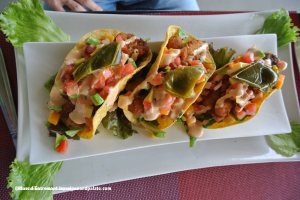
Trio of breakfast quesadillas: Huitlachoche (mushrooms that grow on local corn) Squash blossom & Mexican sausage
Yet the Villa Premiere/Hoteles Buenaventura’s commitment to service goes beyond the paying guest. I met staff members that have been in the family’s employ for years. The young executive chef has been in charge of the kitchen for five years – since he was 24. In an age when longevity in the hospitality industry is often measured in months, that’s a lifetime.
La Orquesta Escuela de Puerto Vallarta with Villa Premiere GM Allesandro Stifani
One evening we were serenaded at Villa Premiere by the La Orquesta Escuela de Puerto Vallarta, a youth orchestra consisting of at risk Puerto Vallarta teens. Under the direction of an equally youthful Daniel Oliveros and the patronage of Hoteles Buenaventura, these children are learning life skills equal to their newfound musical talents. The success of La Orquesta Escuela de Puerto Vallarta bodes well for both the city and Mexico.
Luxury linens & appoinments
Puerto Vallarta, unlike many resort cities that I’ve visited worldwide still maintains the charm of its humble beginnings as just another village on the Mexican coast. When discovered in the 1960s it attracted artists, writers and sport fishermen looking for tranquility. Although luxury resorts, condos and beachfront nightlife along the Malecon now entertain thousands, it’s still the gentle rhythmic sound of the surf while drifting off to sleep at Villa Premiere that’ll remind you life is good.
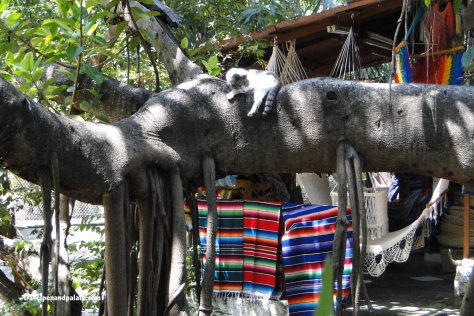
contented cats & craft sellers on La Islita del Rio Cuale, Puerto Vallarta
Greek students at the Archaeology Museum of Thessaloniki
As Thessaloniki has been at the crossroads of Greek history for 2,500 years then by all means walk the city. It’s not a small city but easy for anyone who enjoys a good low-impact hike. When that stroll includes stops at world-class historic sites, vibrant centuries old markets and unique cafes, the discoveries that are in store can be amazing.
What to visit:
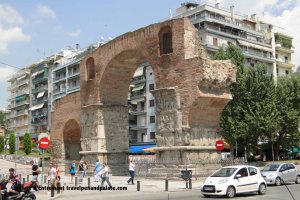
triumphal arch of the Emperor Galarius
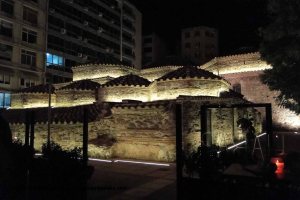
Roman archeological sites: the 4th century triumphal arch of the Emperor Galarius still has a direct road connecting his palace to the Rotunda. For over 2,000 years the Rotunda served as a Greek/Roman temple, Christian church, mosque and now an Orthodox Church treasure.
Archaeology Museum of Thessaloniki
The Archaeology Museum of Thessaloniki houses a wealth of culture that both Macedonia and the city fostered from pre-historic times to the golden age of Alexander.
Heptapyrgion
Towering above downtown Thessaloniki up the foothills of Mount Chortiatis where the ancient acropolis was located, the massive fortress of the Heptapyrgion guarded the city for nearly two millenniums. Started by the Romans in the late 4th century it was substantially expanded by the Byzantine Empire in the 12th century and Ottomans in the 15th.
Monastery of Vlatadon
Down the hill the Monastery of Vlatadon in Ano Poli was built on a site already sacred where St. Paul preached to the Thessalonians in the year 51.
Ladadika
Until its near destruction in the great fire of 1917 the historic Ladadika district was the heart of Thessaloniki’s commercial activity and Jewish heritage. What survived both the fire and Nazi extermination is the heart of tradition and the city’s elegant beaux-arts pre-World War II rebuilding. Today it’s a trendy neighborhood of cafes and shops. Centuries old market arcades, the Modeano and Bezesteni in particular, still ply traditional goods such as textiles, flowers and jewelry.
Bey Hamam
Cafes surround the 15th century Bey Hamam, a preserved Ottoman public bathhouse.
The White Tower
The White Tower, built by the Ottoman Empire in the 15th century on Roman and Byzantine foundations, is a popular icon and focal point of the new seaside promenade.
Restaurants:
Ouzou Melathron
Ouzou Melathron is classically Greek as well as trendy Ladadika.
Agioli Restaurant
Agioli Restaurant serves fusion Greek on Thessaloniki’s seaside promenade.
Oval Cafe
Oval Café is surrounded by the city’s Parisian style architectural splendor.
Hotel El Faro’s Executive Chef Ali Garita Fonesta makes the finest seafood bisque that I as a chef journalist has ever tasted in all my international travels. Besides the talent necessary to create such a delectable dish, location to the freshest fish and seafood is essential. Quepos on Costa Rica’s central Pacific Coast is that ideal location.
The Pacific Ocean coastline of Costa Rica is a veritable super market for some of the freshest sustainable seafood available. Costa Rica has strict laws governing commercial fishing – catch and release only for sports fishing.
Only forty some miles south of Costa Rica’s capital of San Jose, the Central Pacific Coast has been popular with locals and expats for decades. Besides the warm water of Manuel Antonio National Park and the shrikes of the holler monkey, Quepos is a quintessential beach town. Lush vegetation surrounds a jumble of beach houses, B & Bs, hotels, restaurants and bars.
Beach at Manuel Antonio National ParkEl Faro, lighthouse, off Quepos, Costa Rica
From the waterfront the landscape rises dramatically up tropical forested hills. Sitting high up the hills is Costa Rica’s unique shipping container Hotel El Faro. From every balcony is a view of the dramatic swimming pool and its namesake the El Faro (lighthouse) clearly visible on its small rock island in the harbor.
Hotel El Faro
The use of shipping containers as unique modular housing, given the tiny house movement, is in line with Costa Rica’s drive for ecologically sensitive living. The repurposed containers provide all the amenities any guest would desire. Sizes range from compact to suites with efficiency kitchens.
stream at El Faro
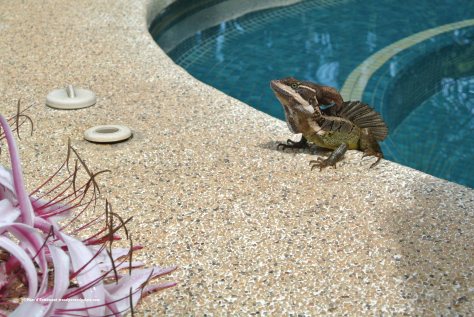
Although the location is positioned on a dramatically steep location the hotel provides transport from its reception area and parking lot to the hotel rooms. The reception area is at the base of an impressive tropical plant and rock landscaped stream that flows from the hotel high on the hill. It’s a favorite habitat for Costa Rica’s impressive garrobo lizards which are virtual pets of the El Faro.
Yet it’s the restaurant that’s the El Faro’s most impressive feature. Under the talented hands of Chef Ali Garita Fonseca this open air venue at the edge of the hotel’s infinity pool is ideal. The location is perfect and the cuisine equals the view. All the selections I sampled were superb, but the Pacific Seafood Bisque was outstanding.
garrobo lizards at El Faro
Chef Ali Garita Fonseca’s El Faro Seafood Bisque – 2 to 4 servings depending if it’s a first course or the entrée.
Notes: This is not inexpensive for the average North American but well worth the cost, time and effort. Although a cook can substitute packaged seafood stock, the dish’s unique flavor begins with a home made fish stock. Since it’s best to purchase a whole small red snapper simply ask the fish monger to give you the head and tail after filleting the fish.
Ingredients:
For the fish stock:
Head and tail of a filleted red snapper or other firm white fish
medium onion peeled and chopped
2 to 3 stalks of fresh celery
small bunch of rinsed cilantro
1 to 2 chopped tomatoes
1 peeled carrot
6 cups cold water
salt and pepper to taste
Preparation:
Add all the ingredients to a pot and cover with the cold water. Bring to a simmer, cover and cook for 40 to 60 minutes. Strain and reserve the stock. Discard the solids.
Soup ingredients:
4 tablespoons sweet butter
1 large sweet bell green pepper chopped
1 large chopped onion
4 chopped celery stalks
4 garlic cloves chopped
1/2 cup white wine
4 cups fish stock
2 ounces chives chopped
1 ounce of fresh chopped cilantro
4 ounces shrimp in the shell
8 to 12 ounces of red snapper fillets or other firm white fish
4 ounces of cleaned clams in the shell
4 ounces of cleaned mussels.
8 ounces of lump crab meat or 16 ounces of crab legs in the shell
6 ounces of sliced octopus – tubes &/or tenticles
Salt and pepper to taste
Preparation
Melt the butter in a large soup pot. Add the peppers, onion, celery and gently cook for 5 to 8 minutes until soft but not browned.
Add the white wine, fish stock and herbs. Bring to a gentle simmer.
Add all the fish and seafood. Cover and gently simmer for 5 to 8 minutes or until the clams and mussels open.
You may want to garnish the bisque with additions of steamed rice, common in Hispanic cuisine, and spritzes of fresh lime.
El Faro restaurant & pool
When you go: Juan Santamaría International Airport (SJO) is served by many airlines worldwide and is within an easy 20 minute drive of downtown San Jose.
Disclaimer: The author was a guest of Hotel El Faro, ENroute Communications and Revista Ander de Viaje. Special thanks to my guide throughout my stay in Costa Rica Mauricio Aymerich, director Small Distinctive Hotels. Transportation within Costa Rica was provided by Toyota Rent a Car of San Jose. A Rav4 made Costa Rica’s mountain roads, especially the few unpaved, safe and comfortable.
Additional articles on Costa Rica by Marc d’Entremont:
Denis Roy emigrated from France with a dream somewhere in his head that materialized into creating a fantasy in Costa Rica. On over 700 acres of improbable, undeveloped coastal and mountain wilderness, using building methods that hearkened back to the days of the pyramids, the hotel, restaurants and spa complex of Villa Caletas and the Zephyr Palace emerged over time. A fusion of river stone castle and tropical Victorian architecture, the 50 rooms range from stunning to awe inspiring.
Villa Caletas amphitheater
Sunsets from the amphitheater are legendary and views encompass forested hills and ocean from many angles. Yet those beautiful hills required total reforestation due to cattle overgrazing. The lush peaks of today were barren, rocky and eroding into the clear Pacific below. Fifteen hundred trees were planted from the beach up the mountain, and Villa Caletas continues to spearhead major reforestation projects in the region.
Ten percent of electricity is solar powered and all hot water is provided through a system of air conditioner heat transfer. Each room’s air conditioning system uses smart technology reducing the temperature automatically when no one is present and increasing it to a guest’s pre-set comfort zone when they enter their room.
Villas Caletas ocean front
Twenty-five years ago this lush location had no roads, no water and no electricity. Denis had an initial concept to construct a 25 room hotel on this spectacular site with its panoramic views of the Pacific Ocean’s Herradura Bay on Costa Rica’s Central Coast. But cost and engineering reality limited his first venture to eight rooms. Yet Denis was not deterred.
view from suite 88
Denis Roy is a dreamer who understands that demanding clients will pay for luxury if unique. Waking in the king size bed of my suite, room 88, a panoramic view unfolded through the expansive glass wall overlooking Herradura Bay. After a quick call to the front desk I was picked up in an electric golf cart to meet General Manager Frederick Nepveu and whisked off in a four-wheel drive car down the mountain to the beach for breakfast.
Villa Caletas room 88
The slow drive down the steep hill passed Villa Caletes’ hydroponic farm growing herbs and produce. No contact with soil controls pest infestation of the produce. The lush forest teemed with animals and birds in the cool of the early morning.
El Pelicano Snack Bar on the Beach, Villa Caletas
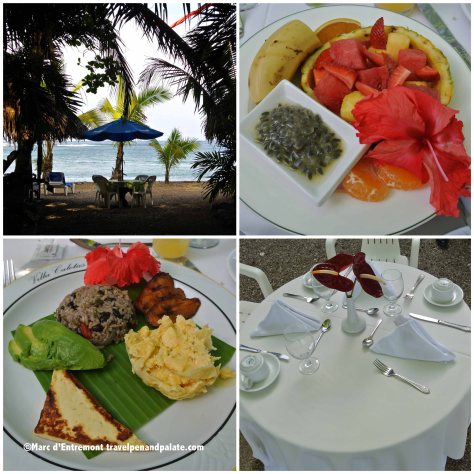
The beach complex offers privacy, the well designed El Pelicano Snack Bar on the Beach and an array of comfortable beach chaise lounges. The shuttle runs every 30 minutes from 9:00 a.m. to 4:00 p.m. Breakfast included fresh extracted organic kale juice, an artful fruit salad and a typical Costa Rican breakfast plate – gallo pinto (black beans and rice) eggs, sautéed sweet plantains, fresh avocado and a wedge of fried white cheese. The gentle lapping of Pacific Ocean waves was the only music necessary.
breakfast at El Pelicano Snack Bar on the Beach, Villa CaletasMirador Restaurant, Villa Caletas
Villa Caletas is a complex of buildings set among the lush restored mountain landscape. Small Distinctive Hotels are not for the budget traveler, but if seeking bang for the buck, Villa Caletas delivers in spades. While river stone buildings dominate most of the complex, a graceful Victorian glass and wood filigree building with the Mirador Restaurant tops a jungle of exotic plants and expansive window walls that bring the outside indoors.
Palapa & Serenity Spa, Villa Caletas
A massive traditional open air palapa with hand carved wood pillars set on the edge of a cliff is dedicated to Denis’ passion for yoga, yet has become popular for events up to 300 guests. The Serenity Spa, tucked behind the palapa, is a haven of calm. Providing all the services one expects from a luxury spa, I nearly drifted off to sleep under relaxing hands, scented oils and the soft sounds of water fountains.
The Zephyr Palace at Villa Caletas
The Zephyr Palace is the crown jewel of this luxe property. Seven massive individually designed and decorated suites provide luxury befitting a palace. Private dining rooms, hand painted ceilings, in room exercise equipment, hand crafted furniture, exotic woods, marble tiles, original art, private infinity pools and televisions that slide into the foot of king size beds at the touch of a button are among just a few of the luxuries in the Zephyr Palace. On the day of my visit the suites were fully booked by a wedding party, not an uncommon occurrence.
Zephyr Palace at Villa Caletas
Providing an atmosphere of effortless comfort requires attention to detail from the eyes and hands of dedicated employees. Many of the managers live on site, including Denis Roy and general manager Frederick Nepveu. Over 150 employees, including 20 gardeners, maintain the 50 room Villa Caletes/Zephyr Palace complex.
wine & civiche, Anfiteatro Bar and Restaurant, Villa Caletas
For a culinary travel journalist Denis Roy, Frederick Nepveu, Chef Fernando Adaniz and food and beverage manager Pablo Lombardo oversee a cuisine that matches the style of Villa Caletas. Lunch started with a trio of ceviche: mango, sea snails and fish paired with a light and lemony chardonnay. Grilled rare yellow fin tuna was accompanied by a timbal of yucca and napped with pipian sauce – roasted pumpkin seeds. A salad included flor de Itavo (yucca) leaves that taste like artichoke hearts. Dessert was a light and cooling sorbet of nancy mirabelle plum.
Lunch at Anfiteatro Bar and Restaurant, Villa CaletasSunset cocktail at Villa Caletas
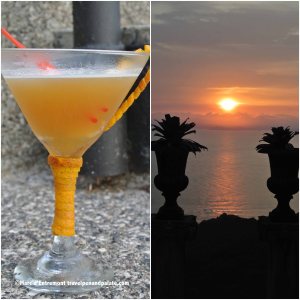
Pre dinner drinks at sunset commenced with an orange martini cocktail created especially for me. A long peel of orange rind twisted around the stem of the glass and dipped into the fragrant drink. Its color mimicked the setting sun’s display. The steep Greek inspired Villa Caletas amphitheater adjacent to the open-air Anfiteatro Bar and Restaurant is a local destination for observing beautiful sunsets for which Costa Rica has a well deserved reputation. Soft ambient music added to the charm.
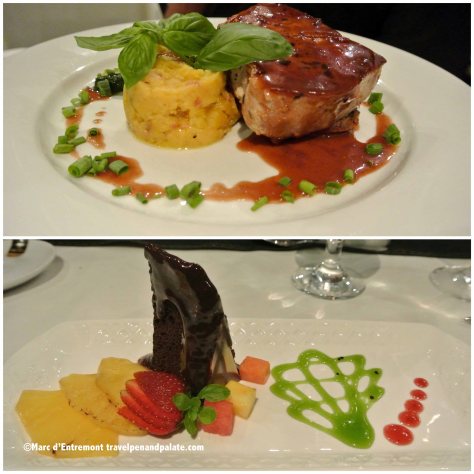
Segueing to a cliff side table Chef Fernando Adaniz opened dinner with an amuse bouche of avocado and salmon with crème fraîche on toast. Seafood terrine of lobster, shrimp and mussels with chipotle mayonnaise was followed by an entrée of red snapper rolled around lobster. It was napped with a light egg and mustard seed sauce. A smooth pinot grigio with citrus hints tied together this dinner of fresh seafood.
Dinner at Anfiteatro Bar and Restaurant , Villa Caletas
Befitting a luxe hotel dinner, dessert was preceded by a mouth cleansing sorbet of passion fruit. Dessert was an appropriately dense chocolate cake garnished with strawberry and kiwi sauce and cubes of fresh pineapple, papaya and watermelon. Did you know that Costa Rica is the world’s largest grower of pineapples? Villa Caletas, naturally, makes all its breads, pastries and desserts in house. Food and beverage manager Pablo Lombardo’s Mexican roots shined when he presented an after dinner tasting of smooth premium tequilas.
Dinner at Anfiteatro Bar and Restaurant , Villa Caletas
I had to remind myself that with the gentle evening breeze and lush vegetation surrounding all that it was not long ago that this site was a barren wasteland. That’s why the many infinity pools dotting Villa Caletas become a metaphor for the group of Small Distinctive Hotel owners, managers and chefs this travel journalist interviewed during an eight-day tour – the visions they conjure gazing into infinity. Villa Caletas and Small Distinctive Hotels of Costa Rica provide luxury with a conscience transforming what we destroy into what we desire.
Frederick Nepveu, GM, Chef Fernando Adaniz & Denis Roy, owner/founder Villa Caletas & Zephyr Palace
When you go: Juan Santamaría International Airport (SJO) is served by many airlines worldwide and is within an easy 20 minute drive of downtown San Jose. Hotel Villa Caletas on the Central Pacific Coast region of Puntarenas is an hour and fifteen-minute drive from Juan Santamaría International Airport.
(left) Marco Montoya, GM, (right) Executive Chef Francis Canal Bardot
Executive Chef Francis Canal Bardot is also a farmer. He not only grows many of the organic produce used in the dining room of the Hotel Grano de Oro but also raises the geese for his exquisite foie gras. Yes I’m well aware that will immediately raise controversy, yet that’s due to a common misconception.
Force-feeding geese to grow plump livers is never necessary. Allowing the geese to roam free-range eating healthy food produces the tender succulent livers Chef Bardot uses in creating such imaginative taste bites as his amuse bouche of foie gras topping a scallop. This sensitivity is at the core of Hotel Grano de Oro and tourism in Costa Rica.
Hotel Grano de Oro
The Small Distinctive Hotels of Costa Rica of which Hotel Grano de Oro is a member commit themselves to leaving the smallest possible negative environmental impact on the planet – nothing we humans do is devoid of all negative impacts. From the point of view of creating a luxurious boutique hotel, Canadians Eldon and Lori Cooke used methods well established in that sector of economic development. They became enamored with the beauty and life style of Costa Rica in the 1980s, but disappointed in hotel offerings in its capital San Jose.
Private fountain courtyard for room #6
Eldon and Lori Cooke transformed an early 20th century Victorian mansion into a 21 room boutique hotel. Several years later they added the adjacent house owned by the same family expanding to today’s 34 rooms. Each room has a unique interior including number 6 with its own private courtyard garden complete with a fountain.
Connecting the two structures by a modern lobby, original interior courtyard gardens and maintaining many original features such as a second floor hallway of windows overlooking the dining courtyard melds the two structures while adding 21st century conveniences. A rooftop garden in the newer house overlooking downtown San Jose is complete with hot tubs. Discrete signage remind guests to keep noise at a minimum to maintain the Grano de Oro’s atmosphere of being a house guest in a grand home.
Grano de Oro interior gardens
That’s the luxury side of Hotel Grano de Oro, but this is a Small Distinctive Hotel and, besides the culinary excellence of Chef Bardot, there’s another dimension. Eldon and Lori Cooke became concerned with a social problem that plagues many areas of the world, not just Costa Rica, the sexual abuse of young women. Beyond the abuse were the issues of abandonment, especially of the children that often resulted from abuse, and life long psychological scars.
Eldon and Lori Cooke were instrumental in creating the Asociacion Reaccion en Cadena por Nuestra Ninez and opened Casa Luz (“House of Light”) in San Jose. Casa Luz provides multi-year residential programs for abused teenage mothers and their children and a safe home. The program includes all necessary monetary, emotional and psychological support victims need. Just ask and the front desk will be pleased to discuss this significant humanitarian project while you enjoy the elegance of Grano de Oro, knowing a portion of the hotel’s profits help support this house of light.
(far left) Mauricio Aymerich, director Small Distinctive Hotels, (top left) Michelle Cooke , (top right) Ciro DeAngles, (far right) Marc d’Entremont
I had the great pleasure over several breakfasts, lunches and dinners in conversations with Marco Montoya, Michelle Cooke and Ciro DeAngles to learn about Eldon and Lori Cooke’s vision for Grano de Oro. In an age when employee loyalty in the hospitality industry is measured in months, the hotel’s staff are lifers. Marco Montoya, general manager, started his career 25 years ago when the hotel opened. Chef Francis Canal Bardot has been in charge of the restaurant for 23 years and many of the chambermaids will eventually retire after life long careers.
Eldon and Lori now concentrate on Casa Luz while their daughter Michelle and her Italian husband Ciro DeAngles, a certified sommelier, continue to improve Grano de Oro maintaining the hotel as San Jose premier accommodation. That takes work in Costa Rica, which is blessed with a vibrant tourist industry. Success is in the details and remembering that nothing should be taken for granted. For myself as a chef and culinary travel writer the details are discovered in the dining room.
Grano de Oro restaurant & dining courtyard
A relaxed yet elegant atmosphere with a staff well trained in the best of European service is the setting for extraordinary cuisine. Chef Bardot misses nothing in creating an international menu that utilizes Costa Rica’s abundance of superb products prepared with classic precision and presented for perfect photo opps. Menu items satisfy all from omnivores such as myself to the most committed vegan.
Not only does Chef Bardot maintain his own small farm, but also most items undergo their fabrication from the foie gras to the smoked salmon in house. The pastry chef – she’s also a lifer at the hotel – makes all the breads and desserts in a dedicated air conditioned pastry kitchen.
Grano de Oro wine celler & grappa in a dedicated glass
Ciro DeAngles personally oversees the Grano de Oro’s select wine cellar. Selections range from Le Garde Malbeck 2014, an Argentine full bodied wine with distinctive cherry notes, Spain’s La Atalaya del Camino, a garnacha tintorera and Monastrell old vine red blend to smooth and fiery grappas that pair well with desserts such as an excellent cheese selection or artistically arranged frozen orange soufflé.
Dinners begin with an amuse bouche, daily special mini dishes created from the chef’s fertile imagination served on spoons. Papaya with salmon and herbs and salmon tartar encasing hard boiled egg at another dinner are meant to make a diner smile.
from top left: papaya with salmon and herbs, foie gras topping a scallop, country pate, timbal of smoked salmon
As a chef I love appetizers. The imagination and artistry in creating a small plate that satisfies both the eyes and the taste buds is the true test of a skilled chef. Chef Bardot exceeds with the selections I enjoyed: mini empanadas with buffalo mozzarella and balsamic reduction, suckling pig rillettes wrapped in homemade brioche with Nubosa Costa Rican craft beer sauce, in house smoked salmon, fennel salad and a creamy tarragon vinaigrette and house made country pate with pistachios accompanied by pickled red cabbage, mushrooms, gherkins and red grain mustard.
from top left: stuffed saddle of rabbit, quinoa cake w/octopus, Duck breasts w/caramelized fig, prosciutto & porcini mushroom mousse chicken breast
Locally raised braised saddle of rabbit stuffed with a mousseline, red wine reduction and potatoes dauphinoise was but one choice in a select entrée menu. A prosciutto and porcini mushroom mousse was encased by a chicken breast. Perfectly grilled rare duck breasts were accompanied by caramelized fig, grilled butternut squash and a pate crostini.
Cream of Pejibaye
There are an abundance of fish dishes and some vegetarian options on both the lunch and dinner menus. The lunch menu tantalized with that most iconic of Costa Rican soups, cream of pejibaye. Nearly impossible to have outside of Costa Rica this smooth, tasty palm fruit is a must have when visiting the country. Fortunately, good latino markets in the United States carry preserved palm fruit, and you can follow my recipe for this classic.
A quinoa cake on the lunch entrée menu shined with imagination and taste. Tender chunks of grilled octopus, peas, scallions and herbs blended with the ancient South American grain of quinoa accompanied by a tomato relish was light yet filling but most of all perfectly executed.
from top left: Eggs Benedict, omelet w/spinach & mushrooms, poached eggs in truffle cream, fresh local fruit
Breakfast receives the same attention to detail. Freshly squeezed organic juices, plates of glistening fruit and homemade sweet breads certainly provide energy for a day of exploring. Yet poached eggs in truffle cream with oyster mushrooms and asparagus or eggs benedict with a white hollandaise may make you question whether you should just remain at Grano de Oro and eat all day.
When you go: Juan Santamaría International Airport (SJO) is served by many airlines worldwide and is within an easy 20 minute drive of downtown San Jose and Hotel Grano de Oro
The fresh butter spread easily onto whole grain bread. Rich in chia seeds, the tender yet appropriately dense bread was yet another tasty creation of Tina, Hotel Cuna del Angel’s pastry chef. If gluten intolerant, everything served at Cuna del Angel is safe to eat and to all other guests it’s simply delicious.
A quick read of the classic European inspired menu at the La Palapa restaurant gives guests not a clue their dining health is being guarded. An array of breads vies with such classics as spinach tagliatelle with artichokes, beef tenderloin accented by porcini mushrooms, and a presentation of greens in the Jungle Salad that’s an evocation of the surrounding forest. Deeper reading reveals the pastas are made from cassava, lentil and garbanzo bean flours and many of the salad’s greens are sustainably harvested.
Gluten free spinach tagliatelle with artichokes
German by birth, Tom Nagel’s passion for natural healthy eating developed over time and was accelerated by organic farm ventures in Spain. Drawn over a decade ago to the climate, business potential and progressive farming methods practiced in Costa Rica, Tom’s vision for Cuna del Angel’s La Palapa dining room was to be a discrete haven of healthy eating. Second hand experience with celiac disease made the 100% gluten-free decision easy.
Hotel Cuna del Angel, Costa Rica
The Small Distinctive Hotels of Costa Rica, of which Cuna del Angel’s a member, take pride in living sustainable tourism. Hotel Cuna del Ángel has the highest recognition – five leaves – by the Costa Rica Tourism Board through its Certificate for Sustainable Tourism program. To Tom, caring for the cradle (cuna) of the angels is a reciprocal arrangement with the guardians of human life.
Demonstrating this commitment to local, organic and sustainable foods and sources is as close as Tom Nagel’s own farm. Many of Cuna del Angel’s vegetables, greens, herbs, legumes – and eggs – are grown using hydroponics or permaculture agricultural methods. The farm produces its own natural fertilizer utilizing a bio digester with its methane gas byproduct channeled to other uses. A natural wood vinegar herbicide is made through a distillation process that condenses a smoldering fire of wood and banana leaves.
Tom’s organic chocolate, Cuna del Angel
Honey for Cuna del Angel’s kitchen is harvested from the farm’s hives but only from the upper layers so as to minimize disturbance to the colony. Four hundred cocoa trees discovered on the farm produce the dense, smooth dark Tom’s Chocolate Bar, but they’re not for sale. Tom donates the bars for charity fundraisers and uses them as a delicious business card.
La Palapa dining room
All of these techniques take time, but to Tom the alternatives are not debatable. Even the hotel’s design is an expression of a vision that it is possible to find balance in life and space. La Palapa dining room is homage to the traditional indigenous culture’s sense of orienting life according to energy points – the web site has a complete explanation. The soft ambient lighting in the open walled dining room that overlooks the jungle and Pacific Ocean is certainly conducive to calmly enjoying fine cuisine.
Gluten free bread at Hotel Cuna del Angel
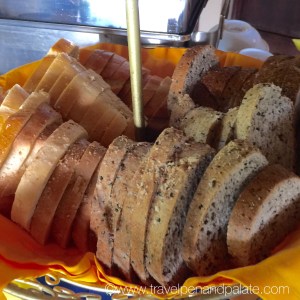
Meals usually start with bread and a gluten-free menu easily complies. Cultures worldwide have been making bread products from non-gluten flours for millenniums. Chef Tina at Cuna del Angel uses corn, rice and yucca flour blends. All baked items, ice creams and other desserts are made in house. Gluten-free hors d’oeuvre bread with a chewy cracker texture was served with a seasoned butter of capers and olives. Whole grain bread speckled with chia seeds was indistinguishable from its wheat flour compatriots. It was simply an excellent slice of bread.
Jungle Salad, Cuna del Angel
The aforementioned Jungle Salad featured kutuk leaf, Jamaica leaf, organic spinach and watercress with oil and balsamic. The variations in texture and color are as interesting as their source. All grow as bushes so harvesting is by trimming as the plant continues to produce.
Fillet of snook in basil sauce
Soups included an earthy cream of porcini and truffle that tasted like the forest after a summer rain. Bright reddish orange cream of pajibaye is a true Central American treat. The fruit of the Peach Palm, cooked pajibaye has a dense butternut squash texture and color. Its flavor has notes of pumpkin with a touch of lemon juice. Classic entrees of baked fillet of local snook was bathed in a bright green basil sauce, while the flavor of pork tenderloin – only prepared well done – was sparked by tangy tamarind sauce.
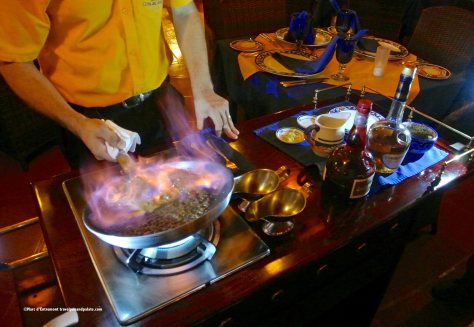
flambé mangoes Cuna del Angel
The imaginative dessert creations are impressive especially given that they are prepared as a component to a balanced meal and not just an extravagant indulgence – but don’t remind your endorphins. Nothing is more iconic of formal dining than French table service and Roberto Bonilla Campos did appropriate justice with flourishes to table side flambé mangoes in brown sugar butter sauce with Grand Marnier and Courvoisier. Gluten-free crepes are available, but the rich mango was terrific with house made vanilla bean ice cream.
Sorbets at Cuna del Angel
Fortunately it was possible to taste the desserts over several meals, so the chocolate, pistachio, passion fruit and honey ice creams are as luscious as the vanilla. Tart Tartin had as flakey and buttery a crust as any Parisian patisserie, and passion fruit pie had a firm but creamy chiffon-like texture with a zing of citrus to compliment its natural perfume.
Hotel Cuna del Angel has sixteen spacious rooms with balconies facing the ocean in the main building and seven in the Jungle Villa. The Jungle Villa has a tree house vibe as the balconied rooms are built into the forest. Wellness at the hotel extends beyond gluten-free foods to the attractive spa and the extensive list of outdoor activities in the southern Pacific coast of Costa Rica.
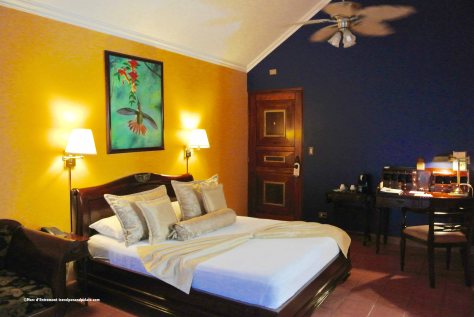
Guest room, Cuna del Angel
Located in the hills above a quiet and secluded stretch south of Playa Dominical, the hotel is ideally situated for half and full day excursions for a plethora of activities including Corcovado National Park, Manuel Antonio National Park, forest hiking and canopy tours, sport fishing, snorkeling, scuba diving, horseback riding, whale and dolphin watching as well as ten nearby beaches. The front desk will help with any arrangements. Or relaxing at the hotel’s infinity pool surrounded by the jungle with the chirping of birds might be the best prescription for wellness. Active or passive, a guest will be cradled at Hotel Cuna del Angel.
View of the Pacific from Hotel Cuna del Angel
When you go: Juan Santamaría International Airport (SJO) is served by many airlines worldwide and within an easy 20 minute drive of downtown San Jose. Getting around: Costa Rica has an extensive inter city bus system and many tourist van options. The easiest transportation is renting a car. Costa Rica’s road system is generally in good condition.
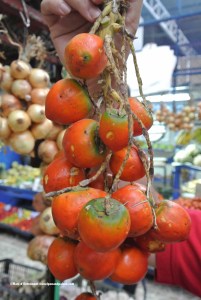
Pejibaye (pronounced pay-hee-by-yay) is the fruit of the Peach Palm tree. It’s indigenous to Central and tropical South America and for centuries has been a staple before and after European invasions in the 16th century. About the size of a plum, the bright reddish orange fruit is packed with vitamins, minerals and carbohydrates and remains wildly popular, especially in Costa Rica.
pejibaye on the vine
The Peach Palm tree (bactris gasipaes) not only produces large clusters of fruit for 50 to 75 years but also is a major source for heart of palm that’s favored worldwide. From street vendors to top chefs Costa Ricans adore pejibaye. The thick-skinned raw fruit must be simmered in salted water from one to three hours before eating – it’s difficult to over cook the dense butternut squash like textured fruit.
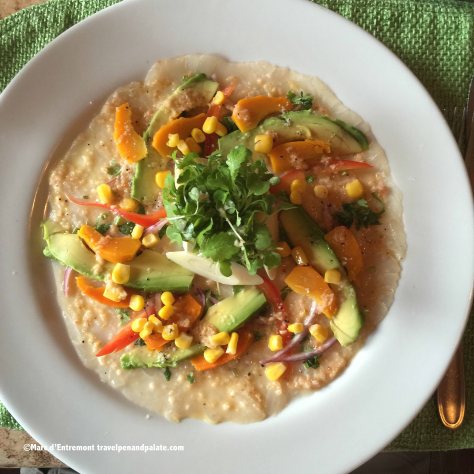
Costa Ricans enjoy cooked pejibaye as a snack sliced and dipped in mayonnaise and sometimes coated in corn meal and fried. Chef Diego Seitour at Peace Lodge adds thin slices to his incomparable Ceviche Tucurrique of sea bass. Chef Francis Canal Bardot of San Jose’s premiere hotel and restaurant Grano de Oro, features the fruit in its most popular incarnation as cream of pejibaye soup.
Chef Diego Seitour at Peace Lodge Ceviche Tucurrique of sea bass with garnish of thin slices of pejibaye
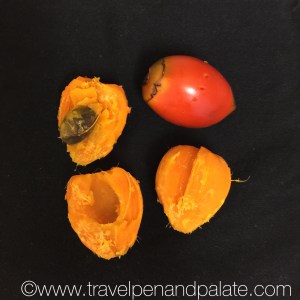
pejibaye with mayonnaiseCooked pejibaye
The dense texture of pejibaye ideally lends itself to soup. Yet as is common with a national dish, there is no one authentic recipe. The simplest are purees of cooked fruit with onions, water, a little milk and perhaps some garlic and cilantro. Other recipes include chicken or vegetable stock, cream and any number of additions such as celery, bell peppers, butter, carrots, rosemary, thyme and bay leaves.
What I’ve created is in keeping with my culinary belief that a recipe should enhance and not mask the natural flavor of the prime ingredient. I also like the silky mouth feel of adding heavy cream and the depth of flavor from a good chicken stock.
pejibaye
In North America it’s nearly impossible to find fresh pejibaye, even in Latino markets – the raw fruit is little known and perishable. In Florida, where I live, it is available in Latino markets preserved in jars ready to eat – after peeling the skin, splitting the fruit and removing the seed.
Cream of Pejibaye Soup – 4 servings
Ingredients:
12 pejibayes
4 cups of well flavored chicken stock
1 cup of heavy cream
4 tablespoons unsalted butter
1 medium sweet onion, diced
½ cup diced celery
3 cloves of garlic, diced
¼ teaspoon ground white pepper
1 roasted red pepper plus a couple tablespoons cream
¼ cup minced fresh cilantro
Preparation:
If you happen to have raw pejibayes, cover with cold water and add ½ teaspoon salt. Bring to a boil, reduce heat, cover and simmer for at least one hour. Cool enough to handle and peel off the skin with a small sharp knife. Cut the fruit off the seed – the fruit will be dry and easy to separate from its seed. If you’re using ready to eat pejibayes in a jar, drain, rinse in cold water, peel and slice.
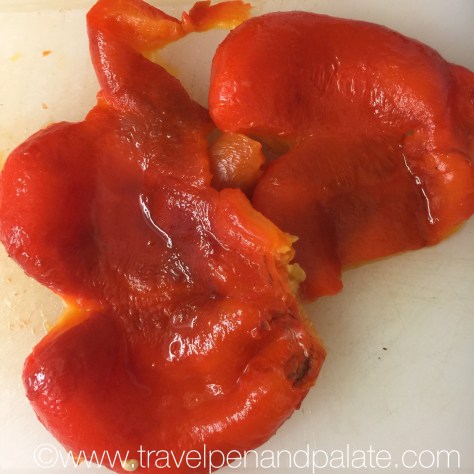
Preheat the oven to 400° and place the whole red pepper in a small baking dish. Roast the pepper for 30 to 40 minutes, turning every 10 minutes, until soft and the skin is slightly brown. Remove the pepper to a small bowl, cover and let cool. When cool enough to handle slip off the skin, remove the seeds, slice in strips and set the roasted pepper aside.
Melt the butter in a heavy four quart saucepan.
Add the diced onion and celery and cook over medium low heat until the onion is soft, transparent but not browned. Add the garlic and cook for two additional minutes.
Add the sliced pejibayes and chicken stock. Raise the heat and bring to a boil. Reduce the heat and simmer for 30 minutes.
While the soup is simmering, heat the heavy cream in a small saucepan over low heat just until small bubbles appear in a ring around the pan. Add the cream and white pepper to the soup and turn off the heat.
Puree the soup with an immersion blender or transfer in batches to a blender and liquefy – I prefer using an immersion blender directly in the pot.
Puree the roasted red pepper in a blender or with an immersion blender adding just enough cream to make a smooth sauce.
Ladle the soup into bowls, garnish with a flourish of red pepper puree and a sprinkle of cilantro.
Roasted sweet red pepper, skin & seeds removed to be pureed with cream
There are conflicting Internet statistics on the caloric content of pejibaye. The calorie counts on sites range from an outrageous 1,100 calories per fruit to a low of 56. On the jar of prepared fruit I’m using the nutritional label indicates 190 calories for three pejibaye – 65 per fruit. Considering the fruit is not sweet, I find it difficult to believe any higher figure. Regardless, it’s an easy, nutritious and flavorful national icon of beautiful Costa Rica – ps: and farm animals love pejibaye.
Chef Francis Canal Bardot cream of pejibaye soup, hotel and restaurant Grano de Oro, San Jose



 Not too many miles south of Puerto Vallarta the lush foothills of the Sierra Mardre tumble into the bay. Villas and boutique hotels cling to the hillsides while thatched palapas dot secluded beaches. Secluded is the operative term because the single north/south highway along the coast is at points up to a mile and a half inland. Many beach locations are accessible only by boat.













 From breakfast to late night cocktails, the Villa Premiere’s chefs and mixologists never cease to amaze. Each dish whether it’s traditional mechaca – northern Mexican dried beef scrambled with eggs – a tropical fruit plate, extraordinary seafood soup or a fanciful dessert of faux sweet fried egg with tulle cookie bacon, the skill, quality and imaginative presentations are outstanding. Cocktails are made with the freshest ingredients from superb fresh fruit margaritas (no mixes here!) to the finest scotch.








 The Pacific Ocean coastline of Costa Rica is a veritable super market for some of the freshest sustainable seafood available. Costa Rica has strict laws governing commercial fishing – catch and release only for sports fishing.






















 Travel with Pen and Palate
You must be logged in to post a comment.