Exquisite Pacific Bisque at the El Faro Hotel, Costa Rica

El Faro Seafood Bisque

Hotel El Faro’s Executive Chef Ali Garita Fonesta makes the finest seafood bisque that I as a chef journalist has ever tasted in all my international travels. Besides the talent necessary to create such a delectable dish, location to the freshest fish and seafood is essential. Quepos on Costa Rica’s central Pacific Coast is that ideal location.
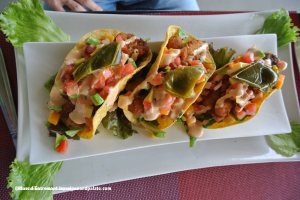
fish tacos El FaroThe Pacific Ocean coastline of Costa Rica is a veritable super market for some of the freshest sustainable seafood available. Costa Rica has strict laws governing commercial fishing – catch and release only for sports fishing.

Only forty some miles south of Costa Rica’s capital of San Jose, the Central Pacific Coast has been popular with locals and expats for decades. Besides the warm water of Manuel Antonio National Park and the shrikes of the holler monkey, Quepos is a quintessential beach town. Lush vegetation surrounds a jumble of beach houses, B & Bs, hotels, restaurants and bars.

Beach at Manuel Antonio National Park
El Faro, lighthouse, off Quepos, Costa Rica

From the waterfront the landscape rises dramatically up tropical forested hills. Sitting high up the hills is Costa Rica’s unique shipping container Hotel El Faro. From every balcony is a view of the dramatic swimming pool and its namesake the El Faro (lighthouse) clearly visible on its small rock island in the harbor.

Hotel El Faro
Hotel El Faro

The use of shipping containers as unique modular housing, given the tiny house movement, is in line with Costa Rica’s drive for ecologically sensitive living. The repurposed containers provide all the amenities any guest would desire. Sizes range from compact to suites with efficiency kitchens.

stream at El Faro
stream at El Faro

Although the location is positioned on a dramatically steep location the hotel provides transport from its reception area and parking lot to the hotel rooms. The reception area is at the base of an impressive tropical plant and rock landscaped stream that flows from the hotel high on the hill. It’s a favorite habitat for Costa Rica’s impressive garrobo lizards which are virtual pets of the El Faro.

Yet it’s the restaurant that’s the El Faro’s most impressive feature. Under the talented hands of Chef Ali Garita Fonseca this open air venue at the edge of the hotel’s infinity pool is ideal. The location is perfect and the cuisine equals the view. All the selections I sampled were superb, but the Pacific Seafood Bisque was outstanding.
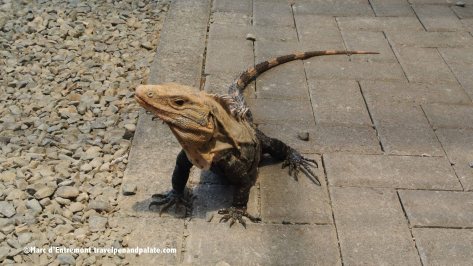
garrobo lizards at El Faro

Chef Ali Garita Fonseca’s El Faro Seafood Bisque – 2 to 4 servings depending if it’s a first course or the entrée.

Notes: This is not inexpensive for the average North American but well worth the cost, time and effort. Although a cook can substitute packaged seafood stock, the dish’s unique flavor begins with a home made fish stock. Since it’s best to purchase a whole small red snapper simply ask the fish monger to give you the head and tail after filleting the fish.

Ingredients:

For the fish stock:

  • Head and tail of a filleted red snapper or other firm white  fish
  • medium onion peeled and chopped
  • 2 to 3 stalks of fresh celery
  • small bunch of rinsed cilantro
  • 1 to 2 chopped tomatoes
  • 1 peeled carrot
  • 6 cups cold water
  • salt and pepper to taste

Preparation:

  1. Add all the ingredients to a pot and cover with the cold water. Bring to a simmer, cover and cook for 40 to 60 minutes. Strain and reserve the stock. Discard the solids.

Soup ingredients:

  • 4 tablespoons sweet butter
  • 1 large sweet bell green pepper chopped
  • 1 large chopped onion
  • 4 chopped celery stalks
  • 4 garlic cloves chopped
  • 1/2 cup white wine
  • 4 cups fish stock
  • 2 ounces chives chopped
  • 1 ounce of fresh chopped cilantro
  • 4 ounces shrimp in the shell
  • 8 to 12 ounces of red snapper fillets or other firm white fish
  • 4 ounces of cleaned clams in the shell
  • 4 ounces of cleaned mussels.
  • 8 ounces of lump crab meat or 16 ounces of crab legs in the shell
  • 6 ounces of sliced octopus – tubes &/or tenticles
  • Salt and pepper to taste

Preparation

  1. Melt the butter in a large soup pot. Add the peppers, onion, celery and gently cook for 5 to 8 minutes until soft but not browned.
  2. Add the white wine, fish stock and herbs. Bring to a gentle simmer.
  3. Add all the fish and seafood. Cover and gently simmer for 5 to 8 minutes or until the clams and mussels open.

You may want to garnish the bisque with additions of steamed rice, common in Hispanic cuisine, and spritzes of fresh lime.

El Faro restaurant & pool

When you go: Juan Santamaría International Airport (SJO) is served by many airlines worldwide and is within an easy 20 minute drive of downtown San Jose.

Disclaimer: The author was a guest of Hotel El Faro,  ENroute Communications and Revista Ander de Viaje. Special thanks to my guide throughout my stay in Costa Rica Mauricio Aymerich, director Small Distinctive Hotels. Transportation within Costa Rica was provided by Toyota Rent a Car of San Jose. A Rav4 made Costa Rica’s mountain roads, especially the few unpaved, safe and comfortable.

Additional articles on Costa Rica by Marc d’Entremont:
It begins with scented hand towels
Cuna del Angel is discretely gluten-free in Costa Rica
Monteverde Biological Reserve is a climate change laboratory
Costa Rica and the vision of Pedro Belmar
Cream of Pejibaye: a Costa Rican national dish
Hotel Grano de Oro: ethics and luxury in Costa Rica
Villa Caletas: luxury with a conscience in Costa Rica


You can read more articles by Marc d’Entremont at:

Hellenic News of America

Original World Insights

Save

Save

Save

Save

Ca’ d’Zan: an impresario’s palace

Ca' d'Zan
Ca’ d’Zan

John Ringling was the greatest impresario of his day. He created the iconic circus venue of 20th century legends,  and he knew how to make money.

(left) grand hall with original Waldorf Astoria Hotel crystal chandelier, John as cover story in a mid-1920s Time magazine, John's sterling silver office phone at Ca' d'Zan
(left) grand hall with original Waldorf Astoria Hotel crystal chandelier, John as cover story in a mid-1920s Time magazine, John’s sterling silver office phone at Ca’ d’Zan

Commenting on a huge portrait of Ringling in the grand hall of Ca’ d’Zan, the incisive social commentator of the 1920s, Will Rogers, said it was the first time he saw John’s hand in his own pocket…

(left clockwise) dining room, built in electric refrigerator, painted ceiling in the grand hall and pillars in the game room

The love of his life, Mabel, was also a savvy art lover especially of the popular Italian Venetian Renaissance era. With unlimited funds, John and Mabel prodigiously purchased great master artist of the era , furniture and a queen’s entire opera house. They employed top artist to paint original works of art throughout Ca’ d’Zan on ceilings, inside bathroom cabinet doors, on pillars – every square inch of this Venetian palace is art.

interior of every bathroom cabinet was painted with original art

Ca’ d’Zan was Mabel’s project. It was meant from the outset to be a showplace, just like her husband’s circus. At a cost of $1,500.000 ($20,000,000 in 21st century dollars) the mid 1920s Venetian palace on the shore of Sarasota Bay is a palace.

Ca' d'Zan
Ca’ d’Zan

Although Mabel died nearly a decade before John, he respected her wishes donating Ca’ d’Zan  and its priceless art collection in his will to the state of Florida. Florida State University maintains the mansion, its art museum and the opera house as an integral component of its Sarasota campus.

Final resting place of Mabel, John and his sister at Ca d'Zan
Final resting place of Mabel, John and his sister at Ca d’Zan
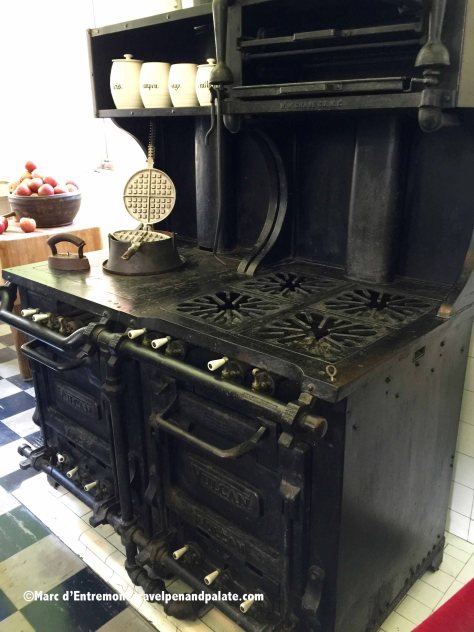
original Volcun gas stove in Ca' d'Zan kitchen
original Volcun gas stove in Ca’ d’Zan kitchen
Sarasota Bay from the roof top terrace of Ca' d'Zan
Sarasota Bay from the roof top terrace of Ca’ d’Zan


You can read more articles by Marc d’Entremont at:

Hellenic News of America

Original World Insights

Save

Louis Comfort Tiffany: reinventing interior design

Garden doors, 1905, August Heckscher house

Tiffany conjures images of ultimate luxury. Diamonds and gleaming silver flood our minds at the sound of that name. Yet Louis Comfort Tiffany, son of Tiffany & Company founder Charles, was an artistic polymath who put his stamp on paintings, shimmering glass, mosaics, architecture, pottery, bronze and objet d’art. He was the genius that reinvented interior design for the generation of the Gilded Age.

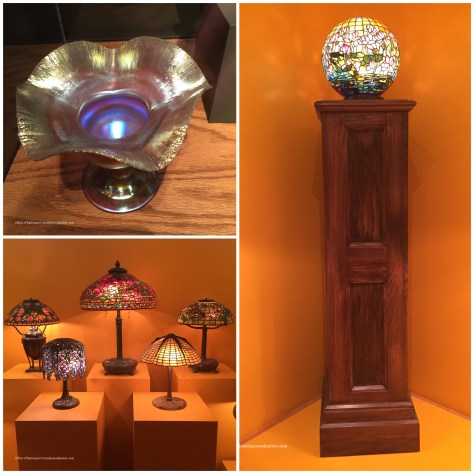
Louis Comfort Tiffany glass & lamp, Morse Museum

For lovers of Art Nouveau in America as envisioned by Louis Comfort Tiffany (1848 – 1933) mecca is the Morse Museum in Winter Park, Florida. The Charles Hosmer Morse Museum of American Art owns the largest and most comprehensive collection of Tiffany art in the world. Like the era that fostered both Louis Comfort Tiffany and affluent Winter Park, the museum is the product of a vast Gilded Age fortune.

Louis Comfort Tiffany at the Morse Museum, Winter Park, FL

Jeannette Genius (1909-1989) was the granddaughter of Chicago industrialist Charles Morse. Charles had a keen appreciation for art and warm Florida winters. First wintering and then retiring to this wealthy suburb of Orlando in the late 19th century, Charles Morse became a major benefactor and real estate baron in Winter Park.

A glimpse at Winter Park, FL

Jeannette’s mother, Elizabeth Morse Genius, was an accomplished artist and patron of the era’s modern art – American impressionism, and Tiffany Studios. Jeannette inherited both wealth and an artistic passion, pursuing her own successful career as an interior designer. After spending much time with her grandfather in Winter Park she chose the town as her permanent residence.

recreation at the Morse Museum of the entrance fountain & display at Laurelton Hall

Her family’s philanthropy had already made a mark on Winter Park’s Rollins College, and at the age of 27 Jeannette started a decades-long association on the Board of Trustees. More importantly she met and married a dashing Rollins art professor, Hugh McKean (1908-1995) who himself had an intimate connection to Louis Comfort Tiffany.

Tiffany had designed his magnificent Long Island estate, Laurelton Hall, in 1903 as a showcase for everything he loved. He intended that it would eventually become a residential institution to foster young artists. In 1930 a young Hugh McKean spent months at Laurelton Hall as one of Tiffany’s students. Although Hugh’s family was well to do, it was the match of love, art and Jeannette’s vast fortune that allowed the couple to fulfill their dream.

(top) jewel mosaic necklace & detail (lower) Opel mosaic box & detail

It’s difficult to believe that even before the death of Louis Comfort Tiffany in 1933, his designs had become passé. During the 1940s and 1950s Jeannette and Hugh amassed a personal collection in every medium of  Tiffany Studios designs. They established the Morse Museum and the Charles Hosmer Morse Foundation, which owns and funds museum operations. More importantly, through their work they revived the keen international interest in Louis Comfort Tiffany that grows stronger as time passes.

Byzantine Chapel, 1893, at the Morse Museum

Upon hearing in 1957 of the tragic fire that destroyed Laurelton Hall they set out to salvage and restore everything they could from stained glass windows, architectural artifacts and Tiffany’s masterpiece, the Byzantine Chapel he designed for Chicago’s 1893 Columbian Exposition. The chapel was a creation of love and a marketing tour de force that catapulted Tiffany’s career to international fame. From its hand carved door, shimmering mosaics, stunning blue baptistery window to the revolutionary eight by ten foot, three dimensional Byzantine cross, the Electrolier, electrified with the aid of Thomas Edison, the chapel alone is worth a visit to the Morse Museum.

The Electrolier, Byzantine Chapel, Morse Museum
How Tiffany Studios assembled a lamp shade, Morse Museum

A visit to the Morse Museum is more than just gazing at beautifully displayed art. It’s meant to be an educational experience on Tiffany’s life and genius. Free detailed booklets in each gallery meticulously explain the exhibits. The lighting is stunning, illuminating objects in the manner intended for their original owners and eliciting sounds of awe as glass comes alive in shimmering glory. Archival videos and displays demonstrate the actual methods used by Tiffany Studio artists to create these magnificent objects.

The iridescence of Tiffany glass

An entire wing of the museum recreates as much as possible the feel of Laurelton Hall as Louis Comfort Tiffany would have wanted his guests to experience from the impressive entrance hall, his very modern dining room and what was salvaged of his beloved Daffodil Terrace. The Daffodil Terrace highlights Tiffany’s love for that flower and his skill in ceramics. In a glass walled enclosure complete with comfortable wicker chairs, the terrace invites museum visitors to relax, read and contemplate beauty. Contemplating beauty is the successful legacy of Tiffany, Jeannette, Hugh and the Charles Hosmer Morse Museum of American Art.

Daffodil Terrace installation at the Morse Museum, Winter Park, FL

When you go: Winter Park is 15 miles north of Orlando International Airport. The Charles Hosmer Morse Museum of American Art is open six days a week, closed on Monday and most major holidays. Parking is free.

Dragon Fly lamp shade, Louis Comfort Tiffany at the Morse Museum, Winter Park, FL


You can read more articles by Marc d’Entremont at:

Hellenic News of America

Original World Insights

Save

Save

Save

Save

Save

Save

Save

Save

Save

Villa Caletas: luxury with a conscience in Costa Rica

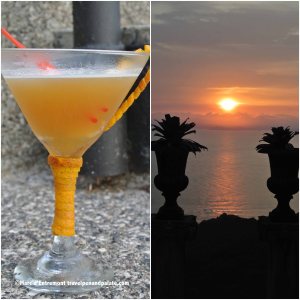
Sunset from Villa Caletas ampitheater
Sunset from Villa Caletas amphitheater

Denis Roy emigrated from France with a dream somewhere in his head that materialized into creating a fantasy in Costa Rica. On over 700 acres of improbable, undeveloped coastal and mountain wilderness, using building methods that hearkened back to the days of the pyramids, the hotel, restaurants and spa complex of Villa Caletas and the Zephyr Palace emerged over time. A fusion of river stone castle and tropical Victorian architecture, the 50 rooms range from stunning to awe inspiring.

Villa Caletas ampitheater
Villa Caletas amphitheater

Sunsets from the amphitheater are legendary and views encompass forested hills and ocean from many angles. Yet those beautiful hills required total reforestation due to cattle overgrazing. The lush peaks of today were barren, rocky and eroding into the clear Pacific below. Fifteen hundred trees were planted from the beach up the mountain, and Villa Caletas continues to spearhead major reforestation projects in the region.

Ten percent of electricity is solar powered and all hot water is provided through a system of air conditioner heat transfer. Each room’s air conditioning system uses smart technology reducing the temperature automatically when no one is present and increasing it to a guest’s pre-set comfort zone when they enter their room.

Villas Caletas ocean front

Twenty-five years ago this lush location had no roads, no water and no electricity. Denis had an initial concept to construct a 25 room hotel on this spectacular site with its panoramic views of the Pacific Ocean’s Herradura Bay on Costa Rica’s Central Coast. But cost and engineering reality limited his first venture to eight rooms. Yet Denis was not deterred.

view from suite 88
view from suite 88

Denis Roy is a dreamer who understands that demanding clients will pay for luxury if unique. Waking in the king size bed of my suite, room 88, a panoramic view unfolded through the expansive glass wall overlooking Herradura Bay. After a quick call to the front desk I was picked up in an electric golf cart to meet General Manager Frederick Nepveu and whisked off in a four-wheel drive car down the mountain to the beach for breakfast.

Villa Caletas room 88

The slow drive down the steep hill passed Villa Caletes’ hydroponic farm growing herbs and produce. No contact with soil controls pest infestation of the produce. The lush forest teemed with animals and birds in the cool of the early morning.

El Pelicano Snack Bar on the Beach, Villa Caletas

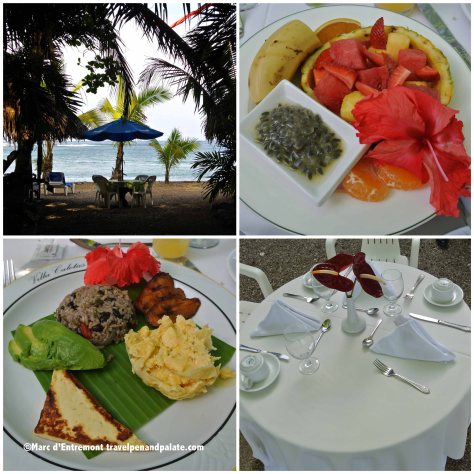
The beach complex offers privacy, the well designed El Pelicano Snack Bar on the Beach and an array of comfortable beach chaise lounges. The shuttle runs every 30 minutes from 9:00 a.m. to 4:00 p.m. Breakfast included fresh extracted organic kale juice, an artful fruit salad and a typical Costa Rican breakfast plate – gallo pinto (black beans and rice) eggs, sautéed sweet plantains, fresh avocado and a wedge of fried white cheese. The gentle lapping of Pacific Ocean waves was the only music necessary.

breakfast at El Pelicano Snack Bar on the Beach, Villa Caletas
Mirador Restaurant, Villa Caletas

Villa Caletas is a complex of buildings set among the lush restored mountain landscape. Small Distinctive Hotels are not for the budget traveler, but if seeking bang for the buck, Villa Caletas delivers in spades. While river stone buildings dominate most of the complex, a graceful Victorian glass and wood filigree building with the Mirador Restaurant tops a jungle of exotic plants and expansive window walls that bring the outside indoors.

Palapa & Serenity Spa, Villa Caletas

A massive traditional open air palapa with hand carved wood pillars set on the edge of a cliff is dedicated to Denis’ passion for yoga, yet has become popular for events up to 300 guests. The Serenity Spa, tucked behind the palapa, is a haven of calm. Providing all the services one expects from a luxury spa, I nearly drifted off to sleep under relaxing hands, scented oils and the soft sounds of water fountains.

The Zephyr Palace at Villa Caletas

The Zephyr Palace is the crown jewel of this luxe property. Seven massive individually designed and decorated suites provide luxury befitting a palace. Private dining rooms, hand painted ceilings, in room exercise equipment, hand crafted furniture, exotic woods, marble tiles, original art, private infinity pools and televisions that slide into the foot of king size beds at the touch of a button are among just a few of the luxuries in the Zephyr Palace. On the day of my visit the suites were fully booked by a wedding party, not an uncommon occurrence.

Zephyr Palace at Villa Caletas

Providing an atmosphere of effortless comfort requires attention to detail from the eyes and hands of dedicated employees. Many of the managers live on site, including Denis Roy and general manager Frederick Nepveu. Over 150 employees, including 20 gardeners, maintain the 50 room Villa Caletes/Zephyr Palace complex.

wine & civiche, Anfiteatro Bar and Restaurant, Villa Caletas

For a culinary travel journalist Denis Roy, Frederick Nepveu, Chef Fernando Adaniz and food and beverage manager Pablo Lombardo oversee a cuisine that matches the style of Villa Caletas. Lunch started with a trio of ceviche: mango, sea snails and fish paired with a light and lemony chardonnay. Grilled rare yellow fin tuna was accompanied by a timbal of yucca and napped with pipian sauce – roasted pumpkin seeds. A salad included flor de Itavo (yucca) leaves that taste like artichoke hearts. Dessert was a light and cooling sorbet of nancy mirabelle plum.

Lunch at Anfiteatro Bar and Restaurant, Villa Caletas
Sunset cocktail at Villa Caletas

Pre dinner drinks at sunset commenced with an orange martini cocktail created especially for me. A long peel of orange rind twisted around the stem of the glass and dipped into the fragrant drink. Its color mimicked the setting sun’s display. The steep Greek inspired Villa Caletas amphitheater adjacent to the open-air Anfiteatro Bar and Restaurant is a local destination for observing beautiful sunsets for which Costa Rica has a well deserved reputation. Soft ambient music added to the charm.

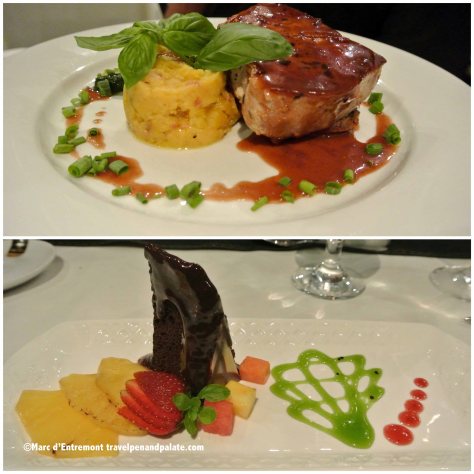
Segueing to a cliff side table Chef Fernando Adaniz opened dinner with an amuse bouche of avocado and salmon with crème fraîche on toast. Seafood terrine of lobster, shrimp and mussels with chipotle mayonnaise was followed by an entrée of red snapper rolled around lobster. It was napped with a light egg and mustard seed sauce. A smooth pinot grigio with citrus hints tied together this dinner of fresh seafood.

Dinner at Anfiteatro Bar and Restaurant , Villa Caletas

Befitting a luxe hotel dinner, dessert was preceded by a mouth cleansing sorbet of passion fruit. Dessert was an appropriately dense chocolate cake garnished with strawberry and kiwi sauce and cubes of fresh pineapple, papaya and watermelon. Did you know that Costa Rica is the world’s largest grower of pineapples? Villa Caletas, naturally, makes all its breads, pastries and desserts in house. Food and beverage manager Pablo Lombardo’s Mexican roots shined when he presented an after dinner tasting of smooth premium tequilas.

Dinner at Anfiteatro Bar and Restaurant , Villa Caletas

I had to remind myself that with the gentle evening breeze and lush vegetation surrounding all that it was not long ago that this site was a barren wasteland. That’s why the many infinity pools dotting Villa Caletas become a metaphor for the group of Small Distinctive Hotel owners, managers and chefs this travel journalist interviewed during an eight-day tour – the visions they conjure gazing into infinity. Villa Caletas and Small Distinctive Hotels of Costa Rica provide luxury with a conscience transforming what we destroy into what we desire.

Frederick Nepveu, GM, Chef Fernando Adaniz & Denis Roy, owner/founder Villa Caletas & Zephyr Palace
Frederick Nepveu, GM, Chef Fernando Adaniz &
Denis Roy, owner/founder Villa Caletas & Zephyr Palace

When you go: Juan Santamaría International Airport (SJO) is served by many airlines worldwide and is within an easy 20 minute drive of downtown San Jose. Hotel Villa Caletas on the Central Pacific Coast region of Puntarenas is an hour and fifteen-minute drive from Juan Santamaría International Airport.

Disclaimer: The author was a guest of Hotel Villas Caletas, Small Distinctive Hotels, ENroute Communications and Revista Ander de Viaje. Special thanks to my guide throughout my stay in Costa Rica Mauricio Aymerich, director Small Distinctive Hotels. Transportation within Costa Rica was provided by Toyota Rent a Car of San Jose. A Rav4 made Costa Rica’s mountain roads, especially the few unpaved, safe and comfortable.

An infinity pool view, Villa Caletas
Additional articles on Costa Rica by Marc d’Entremont:
It begins with scented hand towels
Cuna del Angel is discretely gluten-free in Costa Rica
Monteverde Biological Reserve is a climate change laboratory
Costa Rica and the vision of Pedro Belmar
Cream of Pejibaye: a Costa Rican national dish
Hotel Grano de Oro: ethics and luxury in Costa Rica


You can read more articles by Marc d’Entremont at:

Hellenic News of America

Original World Insights

Save

Save

Save

Save

Save

Save

Save

Save

Animals find refuge at Florida’s Homosassa Springs

Bald Eagle, Homosassa Springs Wildlife State Park, Florida

There are many parks in the United States but Homosassa Springs Wildlife State Park is an animal refuge. It’s also enjoyable to visit.

Great Horned Owl, Homosassa Springs Wildlife State Park

From the Florida brown bear to iconic bald eagles, these animals were rescued after injury. What may at first seem like a zoo is a haven for these beautiful creatures.

Lucifer, an African hippopotamus at Homosassa Springs Wildlife State Park
floating on the Homosassa River at Homosassa Springs Wildlife State Park

What was once a zoo-like Florida attraction starting in the 1940s became the Homosassa Springs Wildlife State Park in the ‘80s. The goal was to give refuge to animals indigenous to the tropics of the western hemisphere with one exception. Lucifer, the locally popular African hippopotamus, first purchased by the original developers, was designated a Florida citizen by the state legislature. The 50+ year old hippo enjoys a charmed life at the park.

Abundant varieties of fish at Homosassa Springs Wildlife State Park
some of Homosassa Springs Wildlife State Park's animals, such as this squirrel, simply enjoy living at the park
some of Homosassa Springs Wildlife State Park’s animals, such as this squirrel, simply enjoy living at the park

The Homosassa springs bubble up from the depths of the Earth at a constant 72° F. This warm water attracts an abundant variety of fish and aquatic animals. The Fish Bowl underwater observatory provides a unique experience to view life under sea level.

In some cases the animals heal enough to be released back into the wild. A park ranger told a story of one owl they thought would not be able to fly after its injury. To their surprise, it was gone one day. Yet the owl seems to miss this refuge. She returns frequently and sometimes stays the night.

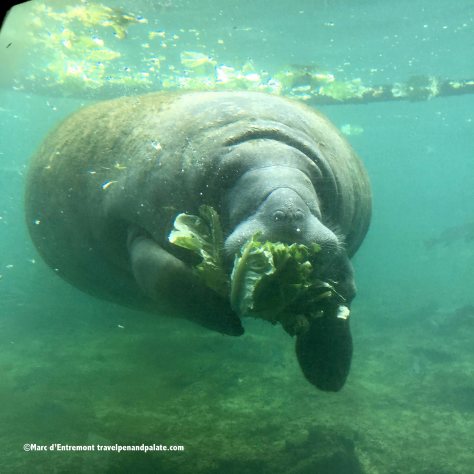
A manatee through the underwater observatory at Homosassa Springs Wildlife State Park

Of great importance is Homosassa Springs Wildlife State Park’s manatee program. The endangered manatee, the object of many fatal encounters with Florida pleasure boats, receive expert health care in a state of the art facility. The park is one of the finest locations to view this massive gentle mammal.

Your visit to Homosassa Springs Wildlife State Park starts with a slow and picturesque barge trip from the visitor’s center on the Homosassa River. Thickly lined with vegetation the fifteen minute trip is visually beautiful with sunlight creating mirror reflections in the slow moving water. The barge docks at the entrance to the mile-long path that meanders through the various wildlife habitats.

Barge from visitor's center to animal park at Homosassa Springs Wildlife State Park
Barge from visitor’s center to animal park at Homosassa Springs Wildlife State Park
Homosassa River at Homosassa Springs Wildlife State Park

The park is well designed for disabled visitors, and given the reality that Florida summers are hot and humid, there are sitting areas and concessions selling items from bottled water to ice cream. The air conditioned reptile house is a quiet place to cool down. Knowledgeable rangers are eager to share their stories.

A day at Homosassa Springs Wildlife State Park is an enjoyable education of what our Earth can be like when humans live in harmony with nature.

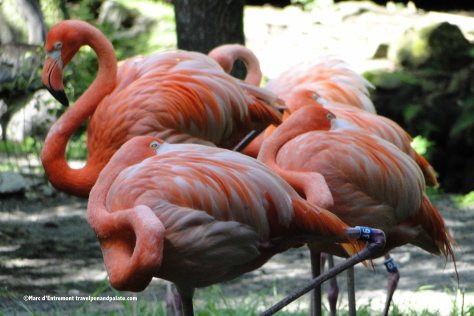
flamingos at Homosassa Springs Wildlife State Park

When you go:

Homosassa Springs Wildlife State Park is located 85 miles north of the Tampa Bay area  or 100 miles west of Orlando – both easy 90 min to 2 hour drives.

There are admission fees and the park is well equipped and accessible to accommodate visitors with a wide range of disabilities.

You can read more articles by Marc d’Entremont at:

Hellenic News of America

Original World Insights

Save

Save

Save

Save

Nature creates

Nature creates a “cubist painting” – reflection in the Homosassa River, Florida

Homosassa River, Florida


You can read more articles by Marc d’Entremont at:

Hellenic News of America

Original World Insights
Save

Save