Tag Archives: international travel

Monteverde Biological Reserve is a climate change laboratory

Giant Helicopter Damselfly

Costa Rica is a landmass equal to 0.03% of the Earth, about 20,000 square miles – the size of Vermont – but accounts for 5%-6% of the globe’s biodiversity. Yet within the Monteverde Biological Reserve, a mere 55 square miles, exists half of that diversity. Among its residents are 700 bee species, 10% of the world’s butterflies – 24,000 species – 300 species of mammals, 12,000 plants including 500 orchids, 360,000 insects, 75,000 mushrooms, 1,100 species of ferns and 915 species of birds, including 91 from North America that live in the reserve only during mating season.

One of 54 species of hummingbirds

“It’s never happened before,” says Giuliano Salazar Gigli. That was a surprise statement. Giuliano is one of the Monteverde Biological Reserve top naturalist guides. His life has been committed to the preservation of over 35% of Costa Rica’s biosphere. “We’re using the water in a bad way. If we can collect it in the rainy season we can make it through the dry months.”

A flowering palm branch turned red to attract pollinating insects

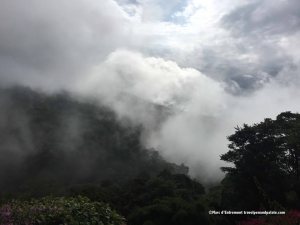
I’m eating breakfast at La Casona, the lodge in the Monteverde Biological Reserve,  gazing out at greenery so lush and thick I can barely see six feet into the Cloud Forest. Yet as Giuliano explains the amount of annual rainfall, 138 inches, remains the same. The change is in its pattern.

There are more dry days in the Cloud Forest than in the past – 96 in 2015. In the town of Monteverde, the eco-tourism center for this region of the Cloud Forest, there are water restrictions from noon to 3:00 p.m. Fortunately, Giuliano assures, that doesn’t affect hotels or restaurants since most have constructed their own water collecting systems.

Looking up to the Cloud Forest canopy

Yet a cloud forest thrives on mist. In a rain forest the precipitation is heavier in that it tends to occur in steady downpours, but a cloud forest is dependent on heavy mist – like a fog – to be captured by the thousands of ferns and air plants that make up the canopy. The precipitation is nature’s drip irrigation system slowly watering plants. That slow drip captures seeds, eventually making their way to the forest floor for germination.

The structure of the Cloud Forest is a prime example of the symbiotic relationships among nature that preserve our Earth. The density of vegetation growing on top of each other is essential. On one soaring tree alone, the weight of all the plants living on that tree exceeded 200 tons and included 150 species of plants among them 70 species of orchards.

Giuliano stressed it’s a misconception to assume these plants smother the tree – with the exception of the strangler fig which eventually encases its host yet provides an architecture to support the diversity. Air plants are not parasites. They do not rob the host of nutrients; they simply use them as a structure. There’s only one parasitic plant in all the cloud forests – mistletoe.

Symbiotic plant growth in the Monteverde Biological Reserve , Costa Rica

Costa Rica preserves 35% of its landmass as either national parks or private reserves, more than any other nation on Earth. This natural beauty attracts hundreds of thousands of visitors annually. Yet it has become the world’s laboratory for studying the effects of global climate change. Currently Dr. J. Alan Pounds, resident biologist at the Monteverde Biological Reserve, and the University of Georgia are conducting advanced computer studies on climate change within the Cloud Forests that will result in significant data.

One of 1,100 species of ferns in Monteverde Biological Reserve

“The winds are changing,” Giuliano explains. “It’s becoming windier – they clean the sky and dry it out. Deforestation in the coastal lowlands has altered wind patterns causing (higher velocity) winds that push clouds up and away from the mountain forest treetops.” This has diminished the gentle clouds that mist the Cloud Forest and affected the behavior of its wildlife.

Giuliano says there are possibly four jaguars living in the reserve – an extremely endangered and ultra shy species of cat. Yet in the past year the cats have killed 15 goats at night on farms – proof caught on film. This is unusual and indicates that the natural food supply in their habitat and the habitat’s size are diminishing, forcing the jaguars out of their usual secluded environment and closer to the source of people food.

That may be an extreme example but a more subtle effect can be found on the germination of the Cloud Forest avocado. Figs and avocados are essential food sources for forest mammals and birds. The avocado especially is dependent on the magnificent quetzal.

Female quetzal – possibly only 20 living in the Monteverde Biological Reserve

The feathers of the quetzal were prized by the ruling class of ancient Central American civilizations. Their plumes were harvested only from feathers that had naturally dropped onto the forest floor. Unfortunately European settlers after the 16th century conquest were not so patient, hunting the quetzal nearly into extinction while diminishing their natural environment.

Avocado seed, Monteverde Biological Reserve

It’s estimated there are only 300 quetzals in Costa Rica out of 900 total in Central America with perhaps 20 living in the Monteverde Biological Reserve. The quetzal enjoys avocados, but more important to the ecosystem, they enjoy their small seeds. For the avocado seed to germinate it must be swallowed by the quetzal and deposited through their digestive system on the ground – nature’s symbiotic relationship.

The over 90,000 annual visitors to the Monteverde Biological Reserve walk pristine trails on the 3% of the reserve open to the public. They experience a prime example of what can go right in the world when concerned citizenry, a committed government and the resources of the international scientific community work in harmony.

For me listening to Giuliano identify dozens of unseen birds by their sounds, getting a glimpse of the rare quetzal, explaining the cooperative layers of vegetation down to beautiful blankets of white mushrooms digesting fallen fauna that revert back into life giving soil was the experience of what the world can be in the absence of human conflict with nature.

Giuliano Salazar Gigli (left) & Mauricio Aymerich (right) director Small Distinctive Hotels

When you go: The town of Monteverde attracts over 250,000 annual visitors and is a center for ecological and adventure tourism. Juan Santamaría International Airport (SJO) is served by many airlines worldwide and is within an easy 20 minute drive of downtown San Jose and 3 hours to Monteverde.

Getting around: Costa Rica has an extensive inter city bus system and many tourist van options. The easiest transportation is renting a car. Costa Rica’s road system is generally in good condition.

Where to stay: There are of number of accommodations from luxury hotels to hostels in Monteverde. I highly recommend:

Hotel Belmar (main building), Monteverde, Costa Rica

The Hotel Belmar, a member of Costa Rica’s Small Distinctive Hotels, is an ecological and culinary tour de force.

La Casona inside the Monteverde Biological Reserve

La Casona inside the Monteverde Biological Reserve is an attractive bed & breakfast lodge with both private rooms and hostel bunk bed accommodations.

Disclaimer: The author was a guest of Hotel Belmar, Small Distinctive Hotels, ENroute Communications and Revista Ander de Viaje. Special thanks to my guide throughout my stay in Costa Rica Mauricio Aymerich, director Small Distinctive Hotels, and Giuliano Salazar Gigli for his excellent tour of the Monteverde Biological Reserve. Transportation within Costa Rica was provided by Toyota Rent a Car of San Jose. A Rav4 made Costa Rica’s mountain roads, especially the few unpaved, safe and comfortable.
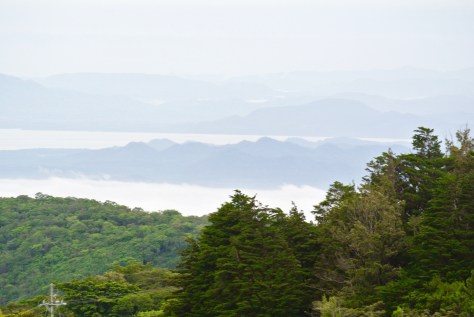
Gulf of Nicoya from the Hotel Belmar, Monteverde, Costa Rica
Additional articles on Costa Rica by Marc d’Entremont:
It begins with scented hand towels
Cream of Pejibaye: a Costa Rican national dish
Costa Rica and the vision of Pedro Belmar
Cuna del Angel is discretely gluten-free in Costa Rica
You can read additional articles by Marc d’Entremont at:

Hellenic News of America

Original World Insights
 

Save

Save

Save

Costa Rica and the vision of Pedro Belmar

“We’ve grown smaller,” Pedro Belmar said quietly as we sampled the crisp organic kale with Parmesan tapas. That would not ordinarily be a hotel’s best business plan, but as a Small Distinctive Hotel of Costa Rica, the Hotel Belmar strives to reduce its carbon footprint while at the same time expanding its hospitality. That sentiment has greater resonance coming from a second generation heir to a hotel that has his name on everything.

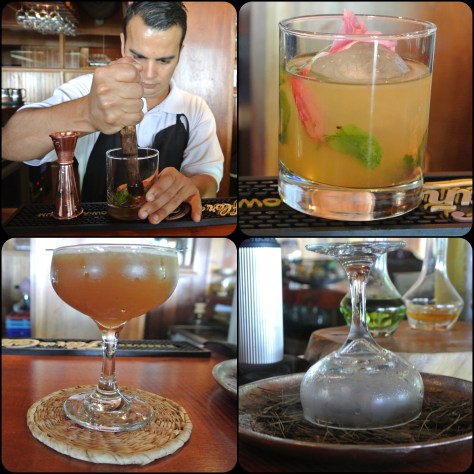
craft cocktails at Hotel Belmar, Monteverde, Costa Rica

A pleasant reminder of Pedro Belmar’s vision for the new look of success is as close as the hotel’s La Chispa cocktail. It’s firmly rooted in the forest and the 21st century cocktail revolution.

  • cedar pine needle smoke
  • premium Sloane’s Gin
  • black tea syrup
  • fresh lime

Crushed ice is swirled in a cocktail glass. Local dry cedar pine needles on a flameproof dish are lit with a torch. Discard the ice and invert the glass over the flame which should extinguish immediately and rest it on the needles capturing the smoke. The gin, syrup and lime are stirred in crushed ice. Upright the glass and strain the cocktail into the captured smoke.

Hotel Belmar (main building), Monteverde, Costa Rica

Sipping a smoky cedar scented La Chispa ensconced in the all-cedar Hotel Belmar overlooking the cloud forest tumbling down to the Gulf of Nicoya is an expression of “growing smaller.” The black tea syrup was made from ingredients in the Hotel Belmar’s organic garden as well as fresh limes. The cedar pine needles are on site. The gin may be imported, but the new craft cocktail menu anchors the Hotel Belmar’s commitment to sustainable growth and 21st century eco-luxe travel.

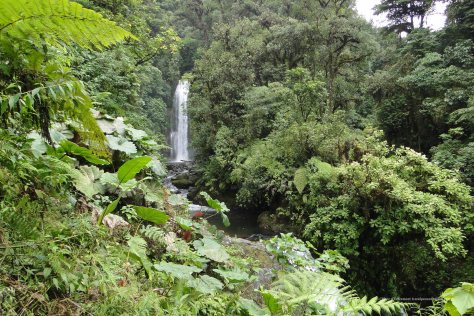
Cloud Forest, Costa Rica

When his parents, Pedro and Vera Belmar, opened their home as a bed and breakfast in 1985 in the heart of the country’s fabled Cloud Forest, Monteverde was a remote hamlet among lush subsistence farms. Located 85 miles northwest from the capital at San Jose, backpackers and naturalists exploring the cloud forests were the area’s first tourists. Isolation and climate conditions favorable for a plethora of unique indigenous flora and fauna helped Monteverde develop a mystic for natural wellness.

With nary a paved road to what is recognized today as a biological treasure, travelers to the cloud forest grew from just backpackers to seekers of tranquility with comfort. The 13 room all-cedar Hotel Belmar main building is Pedro and Vera’s homage to a love of alpine architecture. The extensive amount of cedar wood made opening a wood shop on site a logical decision. Handling all the work for hotel maintenance, it made sense for the wood shop to design and craft designated tableware for both the dining room and bar such as the sectional plate for the craft beer and tapas tasting.

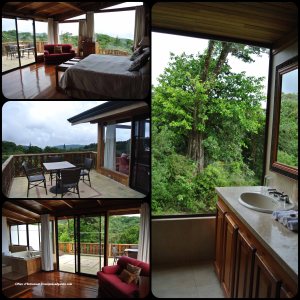
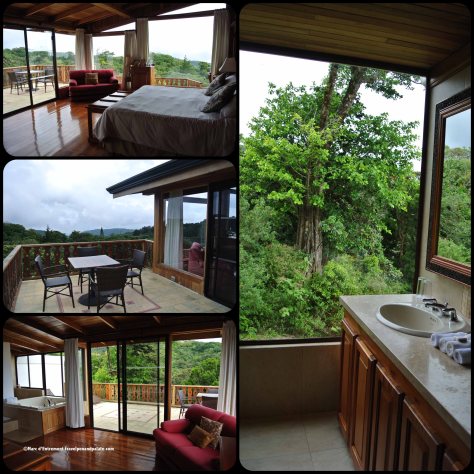
Suite the Chalet, Hotel Belmar

Under the second generation the past five years, Pedro, Jr, and his sister have renovated the hotel and transformed the original home into the sleek wood and glass nine room Chalet. The Chalet is the center of the hotel’s wellness program, spa services and organic juice and tea bar. The juices are made from fruits and vegetables grown on site.

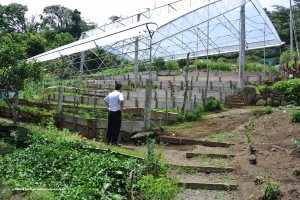
Organic garden, Hotel Belmar

On eight cultivated acres at the nearby Belmar family farm and the compact but expanding hotel organic garden, chickens for eggs, coffee, dairy, sugar cane, bananas, avocados, curly endive, lettuces, kale, watercress as well as sunflowers, nasturtiums, fennel, amaranth seeds and dozens more items supply the hotel’s Celajes Restaurant.

Smoke house, Hotel Belmar

A smoke house made from recycled materials smokes cheese, bacon and churresso sausage with the wood shop supplying the cedar chips. Plans are to grow mushrooms using the farm’s coffee hulls and natural compost.

Methane gas is collected for kitchen use through the hotel’s biological water filtration system. The system uses no energy yet produces methane, which is stored in a tank for the kitchen. Clean water is returned to the mountain stream in exchange for energy.

Gulf of Nicoya, Hotel Belmar

“My parents had the ideas,” says soft spoken Pedro taking little credit for the Hotel Belmar’s successful transition into a 21st century Small Distinctive Hotels retreat that consistently achieves Costa Rica’s highest awards for sustainable tourism. Knowing that the caché of Monteverde and the Cloud Forest is the region’s draw, Pedro wants to position the Celajes Restaurant and bar as the hotel’s unique attraction. It starts with the view: located on the main lobby floor, the spacious Celajes Restaurant and bar commands a sweeping vista of the forest, mountains and Gulf of Nicoya far below.

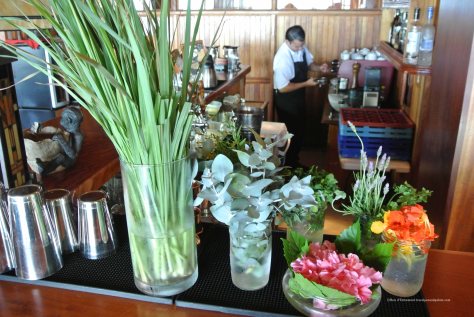
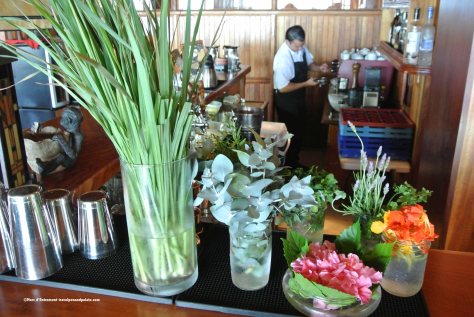
Bar ingredients from the organic garden

The bar reaches deep into the hotel’s organic garden for unique flavors to combine with premium sprits. Bitters and syrups are house made from reduced stout, coffee, eucuplytos and garden plants such as palo santo, a lemony scented herb that has been burned in South America to cleanse spaces of contrarian spirits – like sage. Room mini bar options include excellent house bottled Hotel Belmar cocktails.

Roberto Saenz is the Hotel Belmar’s brew master. The compact brewery just down the hill from the main hotel building was created using recycled equipment. All bottling is done on site. An inventive beer and food tasting is offered to guests at the bar or after the brewery tour.

Beer & tapas tasting on designated cedar plates

The Aura Pale Ale was light with a refreshing hint of citrus and paired well with veggie ceviche: chiote, green bananas, cilantro and lime were fresh and tangy on a small tortilla. The dark, earthy hops of Dos Maros IPA melded with the rich meat of house smoked churesso. A creamy Stout had a great vanilla nose and a lingering molasses flavor. Coffee and chocolate notes in the stout blended well with smoky and lightly candied house made bacon. The small batch brews change often so pairing combinations will vary – that’s fun.

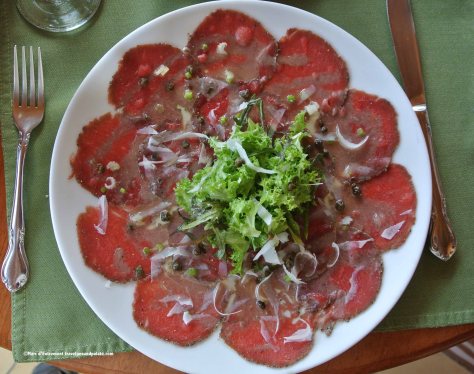
The freshness of both the ingredients and artistry of Celajes Restaurant does not disappoint. Breakfast can include a coconut milk and yogurt with chia seeds, fruit, tarragon and basil accompanied by house made granola. A lunch of beef carpaccio was a visually stunning platter of ultra thin slices of raw beef napped with a caper vinaigrette.

Beef carpaccio, Hotel Belmar

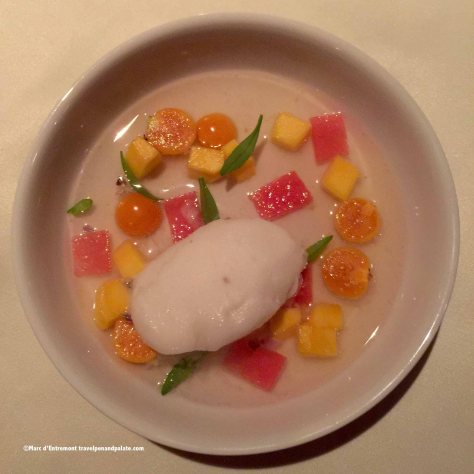
At dinner house baked bread is served with chimichuri sauce harkening back to Pedro, Sr, Chilean roots. Roasted beets, micro greens, grilled carrots, fennel flowers, basil, sunflower seeds with a yogurt dijon vinaigrette made a colorful salad. Beef tenderloin was seasoned with soy sauce, lemon juice, cilantro and fennel flowers. Wild sea bass was gently poached in butter. The perfume of a light dessert of verbana water, lavender flowers, tarragon, tropical fruit and guanabanas sorbet linked the dinner to the scents of a Cloud Forest evening.

The ethos of Hotel Belmar and of all Small Distinctive Hotels of Costa Rica is to succeed by taking less from the Earth. What is taken must be sustainable and is often delicious. Pedro Belmar and his diverse staff enhance the guest experience by living the true meaning of less is more.

Verbana water, lavender flowers, tarragon, tropical fruit and guanabanas sorbet

When you go: Juan Santamaría International Airport (SJO) is served by many airlines worldwide and is within an easy 20 minute drive of downtown San Jose and 3 hours to Monteverde. Getting around: Costa Rica has an extensive inter city bus system and many tourist van options. The easiest transportation is renting a car. Costa Rica’s road system is generally in good condition.

Disclaimer: The author was a guest of the Hotel Belmar, Small Distinctive Hotels, ENroute Communications and Revista Ander de Viaje. Transportation within Costa Rica was provided by Toyota Rent a Car of San Jose. A Rav4 made Costa Rica’s mountain roads, especially the few unpaved, safe and comfortable.

Hot tub, Hotel Belmar
Additional articles on Costa Rica by Marc d’Entremont:
It begins with scented hand towels
Cream of Pejibaye: a Costa Rican national dish
Cuna del Angel is discretely gluten-free in Costa Rica
Monteverde Biological Reserve is a climate change laboratory
You can read all my articles and subscribe to my Examiner columns at:

Hellenic News of America

Original World Insights
 

Save

Save

Save

Save

Save

It begins with scented hand towels

La Paz Waterfall Gardens at Peace Lodge

It begins with refreshing, moist hand towels scented with lemon grass and glasses of chilled passion fruit juice upon entering the lobby. A visitor becomes a connoisseur of this refreshing amusebouche that teases and soothes the senses. Scented hand towels and exotic juice blends transition the visitor from the tropical humidity of Costa Rica’s lush countryside to an enclave of tranquility that is a Small Distinctive Hotel.

Nine boutique hotels, each averaging fewer than 50 rooms, are members of the Small Distinctive Hotels of Costa Rica. Each is privately owned, several in the second generation, unique in architecture and setting, luxurious with fine dinning and backstories as distinctive as the properties. The amusebouche – the tease – is that all this comfort helps others; each property visited touched the human side in unexpected ways.

Hotel Belmar – the burden of a name

Hotel Belmar, Monteverde, Costa Rica

Craft cocktails are not usually associated with the world famous natural wonders of the Montverde cloud forests of Costa Rica. Quakers, cows, hostels and hikers come to mind first. But when you’re Pedro Belmar, second-generation general manager of a famous family mountain retreat, continued success requires thinking out of the box. Or in this case nothing boxed.

In the Belmar’s La Chispa cocktail the refreshing, earthy aromas of the rain forests are recreated.

  • premium Sloane’s Gin
  • black tea syrup made from the hotel’s organic garden
  • cedar pine needle smoke
  • fresh lime

Crushed ice quickly wets a cocktail glass, as local dry cedar pine needles are lite with a torch. Quickly the glass is inverted over the flame – should extinguish immediately – and rest on the needles capturing the smoke. The cocktail is mixed. Upright the glass and pour into the captured smoke.

bar ingredients from Hotel Belmar organic garden

Sipping a smoky cedar scented La Chispa ensconced in the all-cedar Hotel Belmar overlooking forests tumbling down to the Gulf of Nicoya is all a tease – a visual amuse-bouche. It’s the forerunner that everything good for the guest at a Small Distinctive Hotel should be good and sustainable for 21st century Costa Rica. It should be at your fingertips. “We’re growing smaller,” Pedro  Belmar said with a faint smile, expressing a vision for the new look of success.

Hotel Grano de Oro and the House of Light

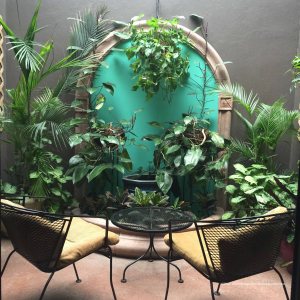
A private guest room garden Hotel Grano de Oro

A blend of old, restoration and cutting edge, Hotel and Restaurant Grano de Oro is firmly established as San Jose’s premiere property. Yet it’s very design from the restoration of a classic Victorian colonial early 20th century mansion was to maintain the hospitality extended to houseguests in a spacious urban home. With understated elegance and graceful service, the exquisite cuisine of Executive Chef Francis Canal Bardot, has set the standard for three meals a day for a quarter century at Grano de Oro and San Jose. Hidden gardens, art and the soothing sound of water fountains follow even into the rooms. A quiet private garden patio with fountain in room six was an opportunity to discover Casa Luz.

Nearly 20 years ago Grano de Oro founders Eldon and Lori Cooke were instrumental in creating the Asociacion Reaccion en Cadena por Nuestra Ninez and opened Casa Luz (“House of Light”) in San Jose. Casa Luz provides multi-year residential programs for abused teenage mothers and their children and a safe home. The program includes all necessary monetary, emotional and psychological support victims’ need. Just ask and the front desk will be pleased to discuss this significant humanitarian project while you enjoy the elegance of Hotel Grano del Oro  knowing a portion of profits help support a house of light.

Peace Lodge – inside the Cloud Forest

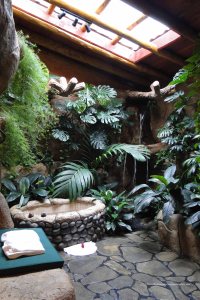
Peace LodgeOf course there’s a tropical garden with stone waterfall shower in the skylight ceilinged bath of the guest suite at Peach Lodge. After all it’s nestled within La Paz Waterfall Gardens. In 18 large individually decorated suites, guests luxuriate in river stone hot tubs on plant-bedecked balconies and within private courtyards. Rooms with massive wood honed beds and river stone gas fireplaces open onto views of waterfalls and meandering free-formed trout ponds all designed to make you resign the tensions of the day – the trout may appear on the menu as a real amuse-bouche.

Peace Lodge is an integral component of the privately owned La Paz Waterfall Garden, both the visions of Florida entrepreneur Lee Banks, which protects a plethora of local fauna and animals in this area of the forests and encompasses five stunning waterfalls. Peace Lodge and La Paz Waterfall Gardens are on-going eco-tourism success stories with exciting culinary news forthcoming.

Cuna del Angel – discretely guarding your health

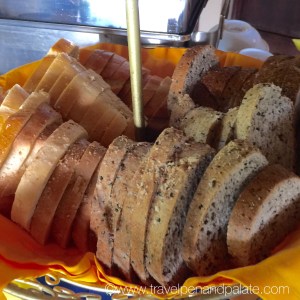
Gluten free bread at Hotel Cuna del Angel

It all starts with the bread. It’s gluten free. It tastes good. It’s whole grain bread with quality organic ingredients prepared by someone who understands proper techniques as in all good cooking and baking.

At Hotel Cuna del Angel, besides practicality due to a family member’s celiac disease, Tom York has every reason to prefer that his restaurant serve only organically grown and produced foods 100% gluten, GMO, and hormone free. Tom has been a devotee of healthy living spanning a decades long career. Many ingredients come from Tom’s own farm, and much of everything else is locally sourced.

Yet the tease is that a guest would never know their health is being guarded unless the menu is read in detail. Dishes from the classic continental repertoire such as flambé mango on vanilla sorbet and fresh snook with a creamy basil sauce are all components of a classic up-scale menu nutritionally balanced. The soft ambient lighting in the open walled palapa dining room overlooking the jungle and Pacific Ocean certainly are digestives in themselves. That’s just one part, as readers will discover in upcoming articles, Tom plays in helping to preserve this cradle of the Angel.

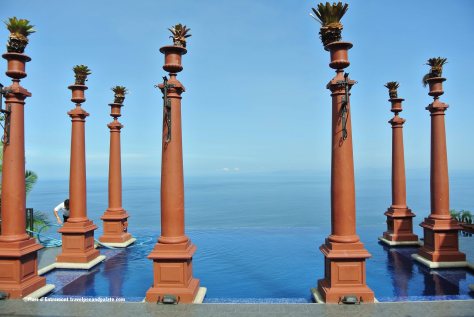
infinity pool at Villa Caletas

Villa Caletas – gazing into infinity

Denis Roy emigrated from France with a dream somewhere in his head that materialized into creating a fantasy in Costa Rica. On over 700 acres of improbable, undeveloped coastal and mountain wilderness, using building methods that hearkened back to the days of the pyramids, the multi building hotel, restaurants and spa complex of Villa Caletas and the Zephyr Palace emerged over a decade. A fusion of river stone castle and tropical Victorian, the 50 rooms range from stunning to awe inspiring.

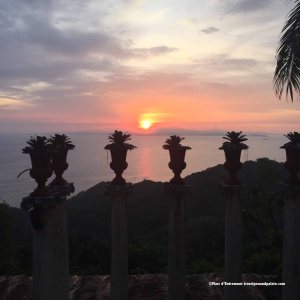
Sunset at Hotel Villa Caletas

Sunsets from the amphitheater are legendary, and views encompass forested hills and the Gulf of Nicoya from many angles. Yet those beautiful hills required total reforestation just a decade ago due to overgrazing. The lush peaks of today were barren, rocky and eroding into the clear Pacific below. Ecological restoration is ongoing and Villa Caletas spearheads major reforestation projects in the region.

That’s why the many infinity pools dotting the complex become a metaphor for the group of Small Distinctive Hotels owners, managers and chefs this journalist interviewed during an eight-day tour. They were all rooted in reality, but liked to tease. My upcoming articles will let you in on some amuse-bouche recipes – the visions they see gazing into infinity.

When you go: Juan Santamaría International Airport (SJO) is served by many airlines worldwide and within an easy 20 minute drive of downtown San Jose. Getting around: Costa Rica has an extensive inter city bus system and many toursit van options. The easiest transportation is renting a car. Costa Rica’s road system is generally in good condition.

Disclaimer: The author was a guest of Small Distinctive Hotels, ENroute Communications and Revista Ander de Viaje.

Transportation within Costa Rica provided by Toyota Rent a Car of San Jose. A Rav4 made Costa Rica’s mountain roads, especially the few unpaved, safe and comfortable.

Chef Francis Canal Bardot cream of pejibaye soup, hotel and restaurant Grano de Oro, San Jose


Additional articles on Costa Rica by Marc d’Entremont:
Cuna del Angel is discretely gluten-free in Costa Rica
Monteverde Biological Reserve is a climate change laboratory
Costa Rica and the vision of Pedro Belmar
Cream of Pejibaye: a Costa Rican national dish
Hotel Grano de Oro: ethics and luxury in Costa Rica
Villa Caletas: luxury with a conscience in Costa Rica
Exquisite Pacific Bisque at the El Faro Hotel, Costa Rica
Peace, waterfalls and trout in Costa Rica’s Cloud Forest


You can read more articles by Marc d’Entremont at:

Hellenic News of America

Original World Insights
 

Save

Save

Save

Save

Save

Save

Save

A glimpse at the Hashemite Kingdom of Jordan

Muhammad, Elder of his Bedouin family in Wadi Fayan, Jordan

The Hashemite Kingdom of Jordan may be less than a century old, but like many Bedouins, the Hashemite family share histories stretching back to biblical times.

The Wadi Rum, Jordan

For millenniums the river valleys, highlands and  vast deserts of the Cradle of Civilization were the epicenter of the legendary, lucrative and infamous caravan trade linking Asia with the Mediterranean world. In an age before GPS pictographs were road signs directing caravans that could include up to 700 treasure laden camels.

Travel guide Mohammad Qamhiya explaining pictographs in Wadi Rum, Jordan
Canyon (Siq) entrance to Petra

One enterprising tribe, the Nabataeans, carved the city of Petra (300s B.C.E. – 800s A.C.E.) into sandstone cliffs and created the wealthiest financial center in the ancient world. With only one public entrance at the end of a lengthy, towering, narrow,  canyon road, the Nabataeans made Petra immortal.

Al Khaznch, popularly known as the Treasury, Petra


Ready for ? & fuses with the ancients


part of the Oval Colonnade, Jerash, Jordan

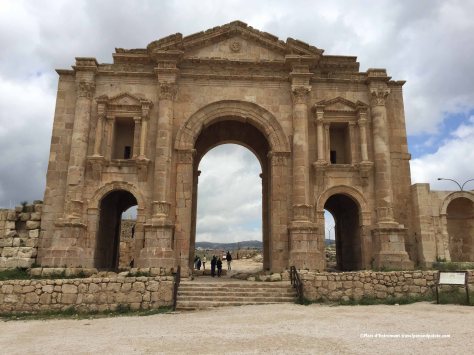
Coupled with its commercially strategic position,  the Jordan region had been fused, either through mutual interest, religion or conquest, with the great powers of the day from Greece to the Ottomans. The Greco-Roman city of Gerasa, founded by Alexander the Great (331 B.C.E.) and continuing as a major city within the Roman Empire,  is one of Jordan’s archeological gems.  Heavily damaged by earthquakes in 749 A.C.E., the city continued, and the remarkably preserved site is surrounded today by Jordan’s modern city of Jerash.


Triumphal Arch of Hadrian, Jerash, Jordan
Site at which John the Baptist baptized Jesus of Nazareth, Jordan River: (left bank) the Hashemite Kingdom of Jordan, (right bank) Israel

The Jordan River of biblical fame still defines a land that has stirred great passions in human history from Moses to today’s conflict concerning the West Bank. People that share an ageless  history are divided by a thin, slow moving stream of brown water.


Present day Christian baptisms, right bank Jordan River (Israel).The site at which John the Baptist baptized Jesus of Nazareth is shared by Jordan and Israel but divided in half.
Present day Christian baptisms, right bank Jordan River (Israel).

Jordan’s storied history has created a legendary cuisine with variations of many dishes it shares with Spice Route neighbors. From breakfast to late night dinner a bounty of mezze (small plates) to aromatic wood grilled lamb and Bedouin ash bread baked in hot sand will be but a few of the dishes in a culinary repertoire as vast as the Kingdom’s deserts.

a mezze "buffet" at Sufra Restaurant, Amman, Jordan
a mezze “buffet” at Sufra Restaurant, Amman, Jordan
fishing in the Red Sea, Aqaba, Jordan

For the modern traveler there has never been a better time to enjoy hospitality as stunning as Jordan’s natural beauty. Despite surrounding turmoil, the Hashemite Kingdom of Jordan enjoys peace  within its borders and goes to great length to ensure security for its citizens and visitors. Tolerant and democratic Jordan allows the 21st century  traveler a rare glimpse at the entire history of the Cradle of Civilization from iconic archeological sites, ageless Bedouin lifestyles, the roots of modern cuisine, phenomenons of nature, accommodations from Bedouin tents to the heights of luxury and even newborn  baby camels.

Mother & newborn camels, Wadi Rum, Jordan
Captain Desert Private Wadi Rum Camp, Jordan
 Kempinski Ishtar Hotel, Dead Sea, Jordan
Kempinski Ishtar Hotel, Dead Sea, Jordan
enjoying a hooka, Aqaba, Jordan
Discover Jordan for yourself.
Dead Sea sunset from the Kempinski Ishtar Hotel, Jordan

Follow Travel with Pen and Palate’s articles on Jordan:

The historic beauty of Jordan

Four serene destinations in timeless Jordan

Not all Jordan almonds are Jordan Almonds

Petra and pizza fuses Jordan with the ancients


(disclaimer: author was a guest of Jordan Tourism Board North America )

You can read all my travel and food articles and subscribe to my Examiner columns at:

Hellenic News of America

Original World Insights
 

Save

Save

Save

Save

Postcards from seven Greek Islands: have fun this summer

Kythnos island
Kythnos island

It is an undeniable cliché that the islands of Greece are firmly part of the great destinations of the world. It’s an extra pleasure to be a guest on one of the lesser known islands, Kythnos.  The island is ideal for tourists who seek tranquility. Five photo perfect villages dot the island and all are easy to reach by car. Their compact size makes them enjoyable to wander on foot. Kythnos being a classic Cyclades mountaintop, driving the roads means going either up or down until on the spine of the island. The panoramic views are spectacular. Read my article in the Hellenic News of America,  Kythnos: small island with a big Greek heart.


Ios Island
Ios Island

Homer chose Ios as his final resting ground. His tranquil burial site on the herb blanketed north hills of the island offers a panoramic view of the Aegean. In the 21st century thousands of young tourist in July and August choose the island for its clubs, resorts, secluded beaches and music scene. Yet even at the height of the summer season and certainly the remaining ten months of the year, the tranquility Homer enjoyed for millenniums is the genuine character of Ios.  my article in the Hellenic News of America,  Slow down on the Greek party island of Ios   tells you how to still have fun!


Paros Island
Paros Island

Flowering shrubs, trees, herbs and succulents blanket the hillsides while clear Aegean water laps Paros Island’s shore. Classic white villages accented with blue are surrounded by soil envied in the Cyclades. Buildings jumble upon one another like blocks and many pre-industrial stone streets are pedestrian only, too narrow for anything more mechanized than a scooter.  Ancient and protected grape vines thrive along with winter wheat, olives, fruit and produce. Please read about Savor culinary and historic Paros Island in the Hellenic News of America.


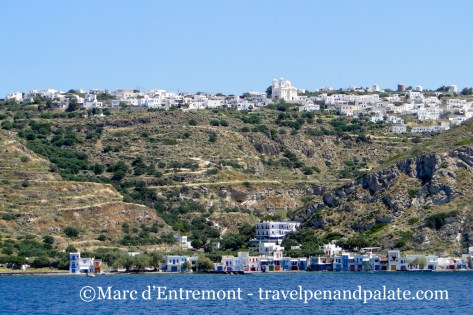
Milos, Greece
Milos, Greece

From volcanic cooking at Cafe Restaurant Sirocco on the island of Milos to Barriello’s 150-year-old vaulted  basement in ancient Trypiti, the culinary scene in Milos is part of a trend among young Greek chefs to preserve grandmother’s recipes but tweak them for the 21st century. Read about this gastronomic find in the Hellenic News of America in Eating Milos: culinary stars in a Cycladic galaxy


Sifnos Island
Sifnos Island

The steep Sifnos Island hillsides that rise from the Aegean Sea are crisscrossed by dozens of centuries old foot and donkey paths. These tended rock walled paths still connect island towns. With the decline in the use of donkeys, Sifnos tourism promotes them as ideal walking trails, although a hiker will have to make way for goats and the occasional working donkey. This acceptance that both ancient and every day reality still coexist is the unique pleasure of Sifnos, and in the Hellenic News of America find out why Tradition crafts 21st century Sifnos.


Selene's, Santorini Island
Selene’s, Santorini Island

“Selene is zero distance from farm to table,” Georgia Tsara says with a broad smile obviously as pleased with the restaurant’s location on Santorini as she is with this fabled island’s products. The volcano that blew Santorini into history 3,500 years ago is responsible for sculpting the magnificent and photogenic 800-foot cliffs currently topped by some of the most sought after hotels in all the Greek Islands.It’s responsible as well for some products unique in all of Greece, and my article,  A Santorini lunch with Selene’s Georgia Tsara in the Hellenic News of America will guide you to one of the finest meals you’ll experience in your travels.


Alonissos Island
Alonissos Island

Not all Greek islands are similar, just as the mainland is a patchwork of ecosystems. The Cyclades, the tourist mecca of islands in the south Aegean, tend to be dry with low vegetation and whitewashed villages trimmed in blue shuttered windows and doors. Alonissos, located in the central Aegean, is the most northerly of the Sporades islands with towering pine forests tumbling down the rocky cliffs to the sea. They’re more akin to the northern New England coast of the U.S.A. than southern Greece. Discover why Alonissos Island is a floating spoon sweet.


Santorini Island
Santorini Island

You can read more articles by Marc d’Entremont at:

Hellenic News of America

Travel Pen and Palate Argentina

Original World Insights


5 Vietnam destinations not to be missed


Temple of Literature Hanoi

The Annamite Mountains divide Vietnam’s one thousand mile strip of mountains and beaches along the Pacific Ocean. The south is tropical year round, but northern winters can be cold and damp. Political upheaval in the late 18th century led to the Nguyen Dynasty’s triumphant unification of the northern and southern factions in the early 1800s.

The Imperial City, Hue

Yet political upheaval seems to have been the natural order often until 1975. The end of America’s Vietnam War allowed the Vietnamese to concentrate on what they enjoy the most — doing business. Whether it’s a BMW auto dealership in Hanoi or a convenience store in a rowboat on a bay, the Vietnamese are capitalists. It’s part of the throb of real life in Vietnam.

DSC09233

Part of life is also stunning natural beauty, crazy traffic, the silence of fog on a bay and the iridescence of a fresh pearl just shucked from its shell. One trip is not enough. This exploration highlights five key destinations in the north.

Wedding pictures at Hoan Kiem Lake , Hanoi

Please read the rest of…

The throb of life in northern Vietnam

in the Hellenic News of America

Hạ Long Bay
Hạ Long Bay

You can read all my articles and subscribe to my Examiner columns at:

Hellenic News of America

Original World Insights

Culinary Travel Examiner

 International Dining Examiner

International Travel Examiner

Philadelphia Fine Dining Examiner

Food & Recipes Examiner

What you hear in Argentina is startling

Perito Moreno glacier, Argentina

Of all the Hielo Continental Sur‘s 49 glaciers the park’s tourist star is Perito Moreno. It’s located within Parque Nacional Los Glaciares established to preserve a vast region of Patagonia’s unique Austral Andes eco system. It’s accessible in the south from El Calefate – a town with all amenities on Lago Argentino – and in the north from El Chaltan – Argentina’s trekking center.

smoked trout, El Chaltan, AR
Parque Nacional Los Glaciares HQ, El Calefate


Read why Perito Moreno is a Patrimony of Humanity…and why what you hear is startling.

Enjoy summer this winter at the glaciers of Argentina


El Chalten & Rio de las Vueltas river valley, Patagonia, Argentina

You can read all my articles and subscribe to my Examiner columns at:

Hellenic News of America

Original World Insights

Culinary Travel Examiner

 International Dining Examiner

International Travel Examiner

Philadelphia Fine Dining Examiner

Food & Recipes Examiner

Two Irish village gems: Kinsale and Westport

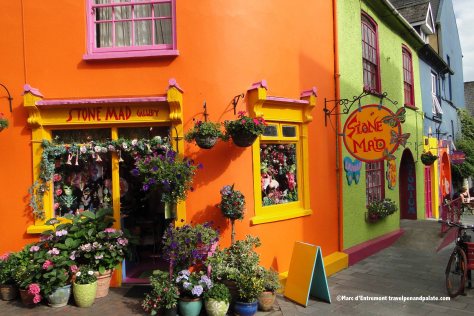
Kinsale, Ireland
Kinsale, Ireland

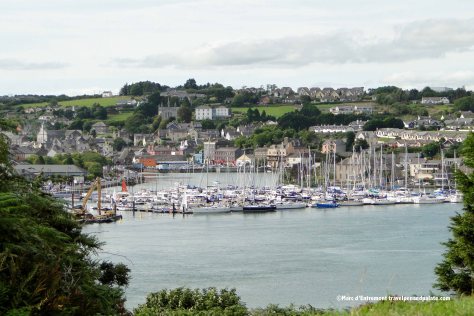
Kinsale’s history is drama beyond its size.

Kinsale, Ireland
Kinsale, Ireland

Yet tranquility reigned on these soft days of late August showers that alternated with brilliant sunshine. Everyone on the streets – punctuated by bright red, deep blue or even burnt orange painted houses – settled into the rhythms of the photo perfect port town with the distinct sounds of seagulls and a charming child-size waterfront amusement park.

Kinsale, Ireland
Kinsale, Ireland

Kinsale was founded in the early 1300s by the Plantagenet dynasty of England. Based on the success of Celtic Mediterranean sea routes,  for the next 500 years Kinsale would become the wine distribution center for Europe generating vast fortunes….

Charles Fort, Kinsale, Ireland

…and attention as it was fought over for centuries with the very independence of Ireland in balance. Read why

Kinsale is the most beautiful village in Ireland


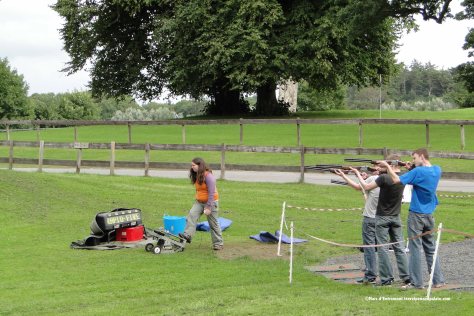
skeet shooting, Westport House, Ireland

The legend of Irish ‘pirate queen’ Grace O’Malley – Ó Máille Clan chieftain ­­­– is in the history books, yet as important as that was it would be passing down her entrepreneurial pluck and the aristocratic titles and privileges conferred on succeeding generations that would perpetuate Grace O’Malley’s family into the 21st century.

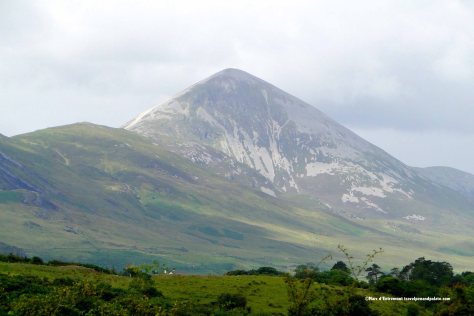
Croagh Patrick, County Mayo, Ireland

Adding to this allure is the photogenic village of Westport and elegant Westport House creations of enlightened 18th century concepts in estate planning.

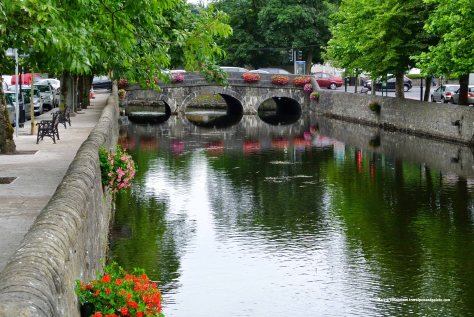
Carrowbeg River mall, Westport, Ireland

So morphing Westport House estate during the 1960s into a family-oriented tourist attraction made perfect entrepreneurial sense.

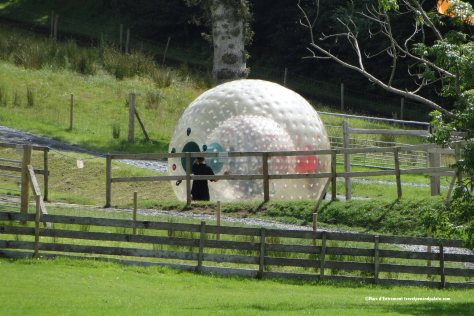
zorbing, Westport House, Ireland

Find out what’s zorbing at

Irish chieftain Grace O’Malley would approve of Westport


swans at Westport House, Ireland


You can read all my articles and subscribe to my Examiner columns at:

Hellenic News of America

Original World Insights
Culinary Travel Examiner

 International Dining Examiner

International Travel Examiner

Philadelphia Fine Dining Examiner

Food & Recipes Examiner

A Culinary Renaissance in Quebec City

Poutine at Le Chic Shack, Quebec City

Perhaps poutine is an apt example of a half-century of culinary evolution in Quebec City. Invented in the 1950s, this fast-food combination of French fries topped with fresh cheese curds and smothered in beef gravy became virtually the Quebec national dish and for years the butt of jokes in other parts of Canada – that is until the 21st century. In recent years poutine has changed under the talented hands of imaginative chefs and has migrated to major North American food centers from Philadelphia to Vancouver. From cafes to fine dining restaurants, additions from smoked bison to wild mushrooms and even foie gras now grace hand cut fries, squeaky organic cheese curds and lighter herb flavored gravies.

Mini lobster salads at Quebec Hilton

That same evolution in cuisine under both the talents of seasoned chefs and a new generation brought up on the media’s internationalization of tastes are transforming Quebec City into a sought after dining destination. Yet traditions remain; they’re simply being tweaked. The same incomparable food products Quebec agriculture has always produced now take center of the plate as the following nine city restaurants so admirably prove.

Read more at Eat Québécois in Quebec City


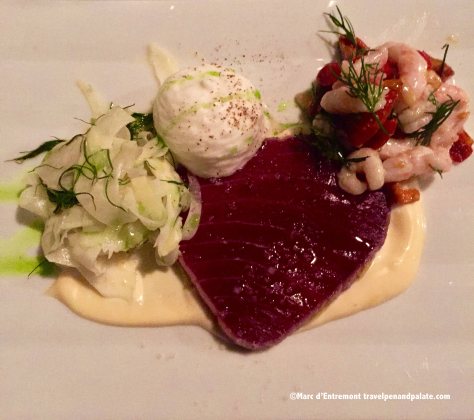
Blue fin tuna at Toast, Quebec City


You can read all my articles and subscribe to my Examiner columns at:

Hellenic News of America

Original World Insights


Andean Cuisine in Quito, Ecuador

Flaming black clams, Los Milagros Restaurant, Centro Historico Quito
Los Milagros Restaurant, Centro Historico Quito

Only a few restaurants in Quito still serve cuy (roasted guinea pig) anymore, and it has become an exotic food. Although still common in remote village cuisines, even in urban Ecuador the sides would include potatoes, corn and grains in a variety of forms.

Giant shrimp stuffed chicken breast, Opera Restaurant, Hotel Dann Carlton

Giant shrimp do not belong in the central Andes of Ecuador, but they do on the long Pacific coast. Modern transportation provides the means today to easily market foods within geographic regions.

pan fried corn nuts & toasted beans are a common garnish/snack

Quinoa, potatoes and corn are but three of a copious number of food stuffs indigenous to the Central Andes. Spanish conquest in the 16th century spread both these and many other agricultural products worldwide and introduced pigs and beef to South America. Today highways allow Ecuador’s Amazon River and Pacific Ocean fish and seafood to be served fresh in Quito at 9,000 feet elevation.

Los Milagros Restaurant, Centro Historico Quito

In a recent trip to Quito I explored seven restaurants that firmly base their menus on traditional cuisine yet take a liberal hand their reinterpretation for the 21st century plate.

Read more at:

Evolving Andean cuisine at seven Quito restaurants


El Patio Andaluz, Centro Historico Quito


You can read all my articles and subscribe to my Examiner columns at:

Hellenic News of America

Original World Insights
Culinary Travel Examiner

 International Dining Examiner

International Travel Examiner

Philadelphia Fine Dining Examiner

Food & Recipes Examiner

Suite 101