Tag Archives: restaurants

Hanoi at 1,001

Past error is no excuse for its own perpetuation.”  Senator Robert F. Kennedy, 1968
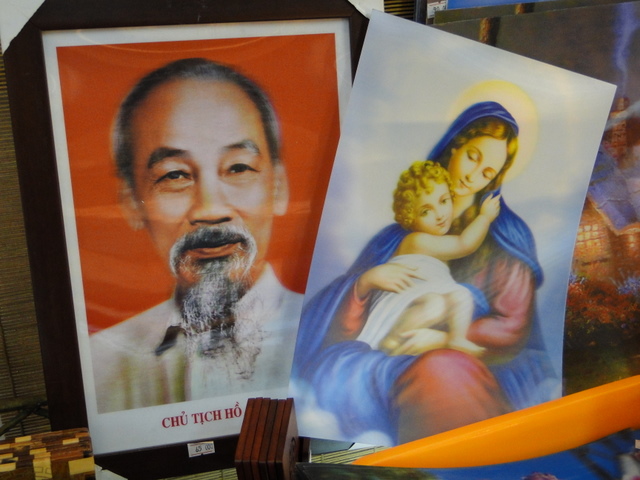
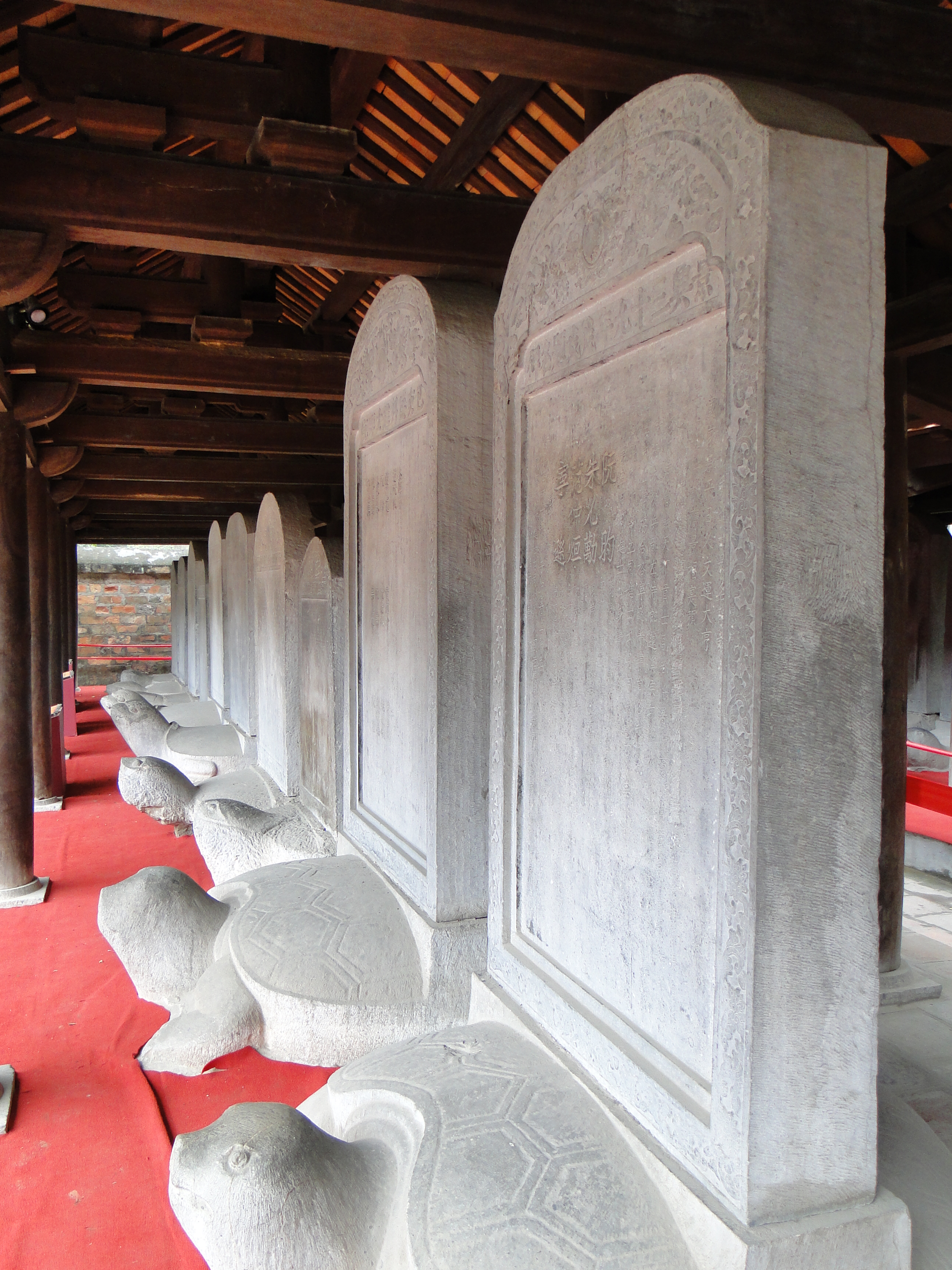
DISCLAIMER: I did not group these myself. They were in the gift shop of the Temple of Learning

There’s little visible evidence of Hanoi circa 1010 – the city was established by Chinese expanding southward on settlements along the Red River that had been there already for 2,000 years. Actually, there’s little evidence of Hanoi pre 1870’s. Confucian culture preserves the spirits of the ancestors, not their buildings. Even if decades of war and millions of tons of dropped bombs had not significantly damaged the city, ingrained capitalism would have dictated their presence superfluous. The drive from Hanoi’s dreary Noi Bai International Airport – 28 miles (45 km) from the city’s downtown – passes extensive rice paddies boardering high-rise office complexes, narrow mold-streaked French colonial-style town houses next to another BMW dealership before winding snake-like into the heart of Old Hanoi with it’s 21st century sensory overload.

“old” 19th century buildings, chic cafe and typical traffic

“Charming” is a term to apply to Hanoi only if you believe Manhattan deserves the moniker as well. Frenetic is my description. The motor bike horns begin by 4:00 AM, followed by the publically broadcast music from the computer/TV store across the street starting at 8:00 AM, then the TV in the hotel’s breakfast room entertaining the owner’s young son with the Cartoon Network dubbed in Vietnamese. Outside is pandemonium if not prepared.
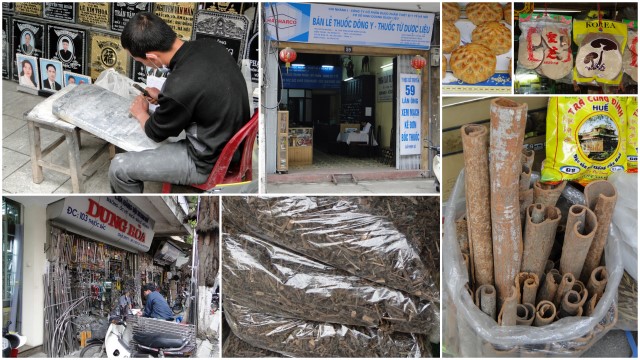
(top from left) monument maker, traditional medicine clinic, pastery and mushrooms, (bottom from left) plumbing supply store, ginsing, cinnamon sticks over a foot long.

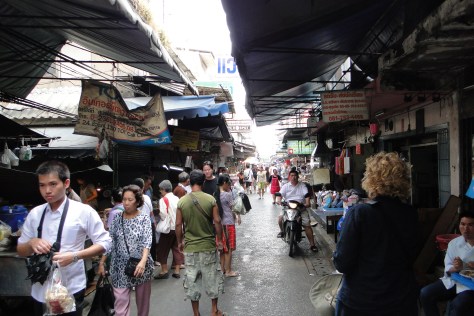
Hanoi is a city that would make Donald Trump proud. Everyone is an entrepreneur and quite aggressive in their selling methods whether it be a cyclo driver following you down the street because you really don’t want to walk (?), or stepping over and around another sidewalk café while saying “no” to the hundredth deep fried donut, peeling the hand of the seller off your arm because you really do not need another map of the city all the while being aware that you’re walking in the middle of the street, because there’s no sidewalk space, along with cars, motorbikes and bicycles. Everything is for sale and streets, not just in the Old City, are frequently dedicated to a product – silversmith, watches… The Hotel Ho Guom was located on the edge of the Old City and the French Quarter and most of the surrounding shops were computer and TV stores.
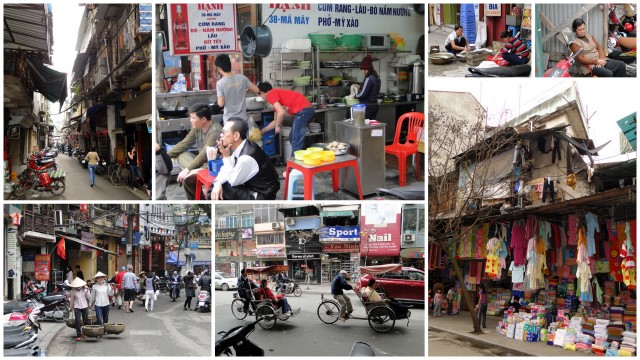
Street life is not attractive compared to Thailand and Laos. The city is dirty. In Thailand and Laos both the cities and countryside were virtually trash free and yet there was not an overabundance of trash cans. Residents and shop owners simply picked up after themselves. Not so in Hanoi. There is an air of freewheeling rampant capitalism with a “me-me” attitude. It is nearly impossible to simply stop on the side of the street when walking to take a photo without having to dodge a vehicle, a person, a pile of discarded greasy food or a hawker. Yet Hanoi is a rich city. It is Southeast Asia’s most expensive real estate, everyone is either working or eating (or both), Bentley, BMW and Mercedes cars share the streets with motor bikes, high rise buildings are going up and the lakes are beautiful – even if they’re still not havens of quiet.
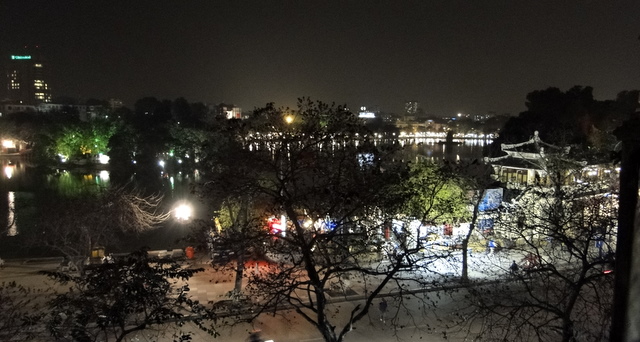
Hoan Kiem Lake
Emperor Lý Thái Tổ

It is not a tourist city, it’s for business. Evidence of the horrific wars that tore the country apart are nowhere to be seen except in the museums – none of which are worth seeing unless you’re really into war and politics. The most prominent statue to a political figure is the huge monument to Emperor Lý Thái T (974-1028) who ended Chinese domination over Vietnam. One of the city’s largest structures is the Roman Catholic Cathedral of St. Joseph (1886). Over 15% of Vietnamese are Catholic and Saturday night Mass was packed.
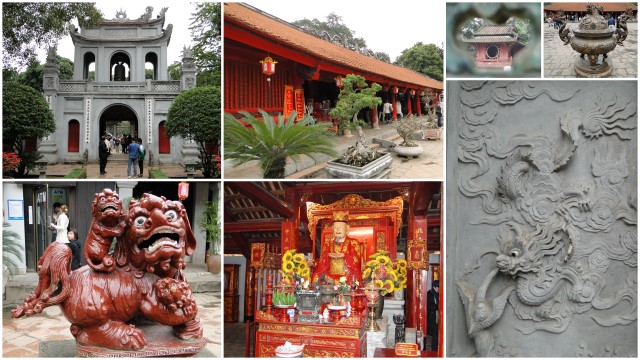
The Temple of Learning, built in 1070, dedicated to Confucius, functioned for more than 700 years as Vietnam’s Imperial University educating the country’s nobles, royalty, mandarins and other elite. If after years of study and a month-long series of exams, a student graduated as a Mandarin their name was engraved on stone stele that sits on large stone turtles in the temple. Annually about 8 out of every 3,000 exam takers ever reached that loftiest of degrees. The temple consists of a series of five landscaped courtyards. The first two are primarily gardens including fanciful designs and topiary. The third one has a lotus pond and the stellae. The final courtyard holds the shrine to Confucius. The northern half of Vietnam has been Confucian for centuries. More a social and political philosophy based on ethics and behavior, and quite compatible with capitalism and central government, Confucian thought – although complex – does guide Vietnam today. Ancestor worship and offerings to the animistic spirits of nature by burning incense and leaving food and drink on alters, in trees and at monuments is as common in Vietnam as anywhere else in Southeast Asia.
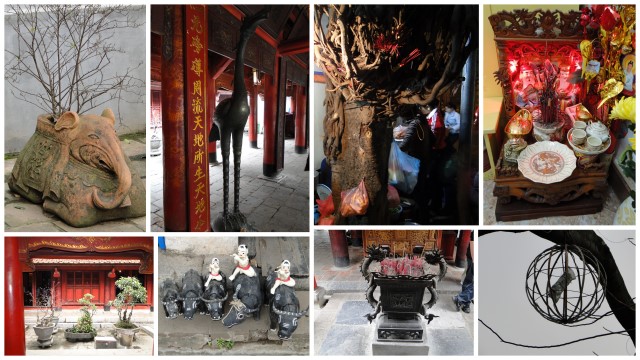
the many Confucian ways of prayer

Within the Old City are several privately owned houses many within the same family dating back several centuries and are open to the public. They give a glimpse of middle class merchant life that, in reality, still exists today. The front of the house was always the store, and directly above were the 2nd floor store rooms reached by a staircase. Behind the store is the residence dominated in front by the alter to the ancestors. At least two courtyards open the houses to outdoor light and rain water. Chinese architectural influence is paramount in these pre-19th century structures.

87 Ma May Street

Most “tourist attractions” signal to me to “stay away,” but Hanoi’s Water Puppet Theater is unique and well worth the US$3.00 admission (for a front row seat). Started during ancient rice harvest festivals, the flooded rice paddies were transformed into magical puppet theaters. Puppets are a beloved form of entertainment throughout Asia, but these puppet masters control their elaborate characters from behind screens and actually under the water. Fire breathing dragons compete with dainty court dancers and palm tree climbing coconut collectors. A live orchestra in traditional dress playing on traditional instruments completes the experience as one of the best cultural venues in the city!
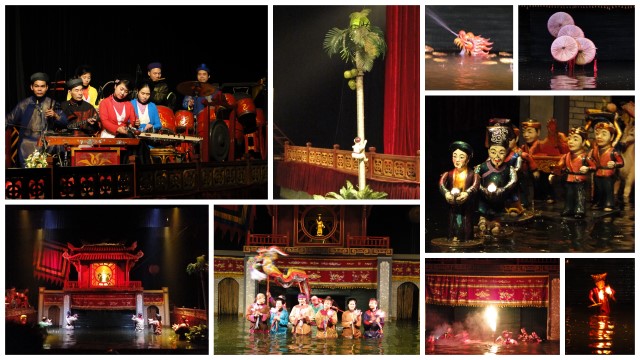
The Water Puppet Theater

Cuisine is not Hanoi’s forte. There are a lot of places to eat and, as usual on this Earth, they’re mediocre. The finest restaurant in Hanoi is also the most fascinating. Koto, next to the Temple of Learning, is in an elegant, 3 story French art nouveau town house. Opening at 11:30 AM it is full within the hour. Founded 20 years ago by concerned Australians and Vietnamese, it is a culinary training school and refuge for disadvantaged/abused/orphaned young adults. If I had not known this in advance, I would have assumed it’s simply a superbly well trained staff serving creative dishes at moderate prices. It was the best meal I had in Hanoi. Cost for two was less than US$18.00

Koto
the incomperable Vietnamese Pho: soup, frequently eaten for breakfast, with noodles and beef

Unfortunately, many restaurants in Hanoi listed in guidebooks or on user reviewed travel sites were geared to tourists with Western taste (Australian beef burgers) and overpriced for the country. One important note of traveling in Vietnam is that it’s the least expensive of the Southeast Asian nations. A metered taxi (don’t travel any other way) is a couple of bucks anywhere within downtown, dinner for two with beer is under US$20, a first class hotel is overpriced if it’s rates are more than US$55-75, admission to any museum is a couple of bucks. I did have a very interesting, but not consistently well prepared, dinner at the top rated Highway 4, on a dark and dreary street north of the Water Puppet Theater. Deep fried crickets were fascinating – like eating feathery nuts, but beef flamed in foil was tough and other unexciting dishes were under seasoned. Although they advertise such exotic foods as Water Buffalo penis and fried scorpians, none of these were available. The Hotel Ho Guom, $55/double, was centrally located with an energetic and helpful staff – although the web site pics are better than reality. The room was comfortable and the breakfast provided a nice choice of traditional and Western foods.


deep fried crickets, beef flamed in foil: Highway 4 Restaurant


 Hanoi is not a comfortable city, and I’d suggest no more than a two day stay. Yet, for someone of my American generation it was an important visit. Barely avoiding the draft in the late 1960’s, brought up on  ideas of “communist domination,” it was valuable to learn that it truly was all lies. If Vietnam is a “socialist” state, Wall Street’s full of socialist. The war was a nationalist independence movement to throw off Western domination so that they could resume the rampant capitalism Vietnam always enjoyed before the French imposed their colonial regime. Vietnam succeeded, and if, along with their Chinese cousins, they eventually dominate Southeast Asia it will be through capitalist investment not ideology.
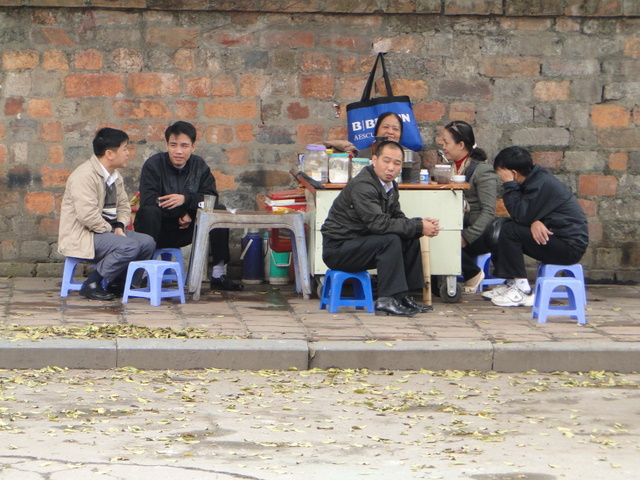


The Ta Prohm Strangler

copyright: www.travelpenandpalate.com

The ceiling fan stirs the languid air as mosquitoes flirt in the shadows of verdant ferns and orchids. Roosters compete with motor bikes to break the dawn. The gray/pink haze illuminates the dust laden street with its fading blue and red tin roofed houses. A young man in his 20’s, shirtless, in red shorts, barefoot, opens a creaking gate to drag the motor bike out of the night-time safety of his house. He pauses, takes in the day – a day just like yesterday – the sun will break through and life will steam.

I sit on the rattan chair at the small dining table, close to the window away from the fluorescent ceiling lights and their harsh pools of blue/white light. The coffee is black, thick and sweetened with condensed milk, just as everyone in this ancient kingdom likes it – except me.

Other guests filter down the wide wooden staircase during the morning. Given the heat, humidity and sugar high from the coffee, I easily imagine a veritable cornucopia of characters from any number of 20th century expat-in-the-tropics novels. The fit German couple in the corner table – early 50’s but have that trekkers’ older look – bussed it overnight from the capital, 12 hours, no air-conditioning. I’ve been warned the overnight busses are not wise – theft, bandits, drivers falling asleep, other accidents. Relaxed they were with their pineapple juice, coffee and toast; they’ve faced worst dangers (?). There’s the eager well-scrubbed English 20-something travel companions planning their one-day schedule to see 14 temples, naive to the toll the jungle will take by temple # 3. The sullen early middle-aged North American couple, skin already too red from the sun,  start the day badly due to the eggs (they were oddly undercooked in some sort of fat and sprinkled with ground cinnamon). Yet even though $20/night is nothing to spend on a hotel – ok, weak a/c, weaker WiFi and it’s the third world – it should include… Perhaps he needs to ask the Ta Prohm Strangler what life in the jungle should include.

Royal Residence of the King of Cambodia in Siem Reap

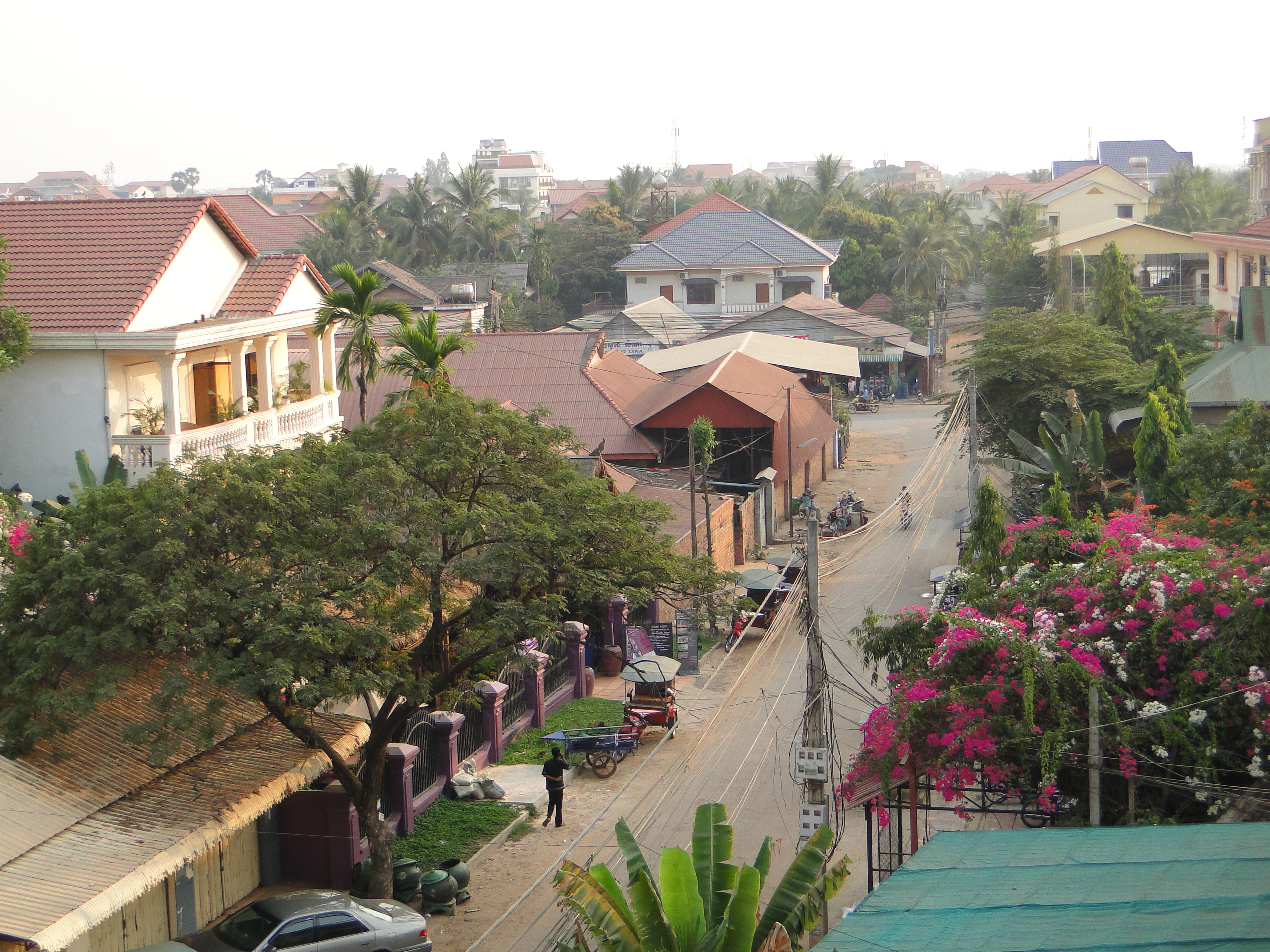
Siem Reap, Cambodia, is not far from the 19th century. Just outside the town are dusty small villages still in that time warp.   French annexation of the Angkor Wat region over a century ago assured its discovery as one of Earth’s great man-made sites, and Siem Reap developed a modest tourist industry. A few elegant hotels, such as the 1929 Grand Hotel d’Ankor, guest houses and a very modest Royal Residence were sprinkled on tree-lined streets in what was just a large village.

Grand Hotel d’Ankor (1929)

The survival of Angkor, and Siem Reap, through World War II, the French Indochina War, the Vietnam War, Pol Pot and the civil war (total war years: 1939 -1989) is miraculous although like all urban areas, the town and its population suffered greatly. Yet what is Siem Reap without Angkor, what is Angkor without the Khmer Empire, and what is empire without war?

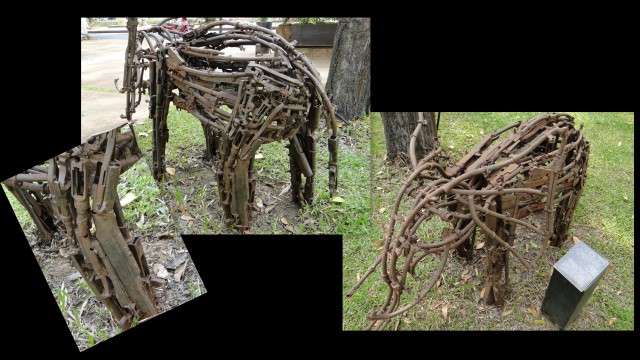
Mother Elephant, sculpture, the Peace Art Project, made from decommissioned weapons

The meters of bas-relief carved on many walls of the over 200 temple complexes at Angkor Thom tell the story that this was the center of an empire – political, military, economic and religious – as well as the home to thousands of people for hundreds of years. Since 1989, stability under the restored monarchy has made tourism safe again at Angkor. Still, visiting the UNESCO site at night is neither allowed nor advisable. Driving, or even being driven, at night for any long distance in rural areas outside Siem Reap is not a good idea. Bus travel to the Lao border a couple hundred miles north can take a full day. It has been this way for hundreds of years, ever since the Khmer Empire moved its capital south and the Ta Prohm Strangler moved in.

the Bayon (early 13th century)

The expansionist Thais of Siam put an end to the westward growth of the Khmers in the 15th century by sacking and eventually occupying most of the Empire’s capital at Angkor Thom. Then the French took it from the Thais (1907) and gave it back to the new Khmer kingdom of Cambodia (under their “protection”). Except there’s still this issue over the 11th century Preah Vihear temple right on the border created after the French annexed the land so…

Monk did get cigarette lite

Siem Reap exploded during the last decade developing from a modest town into a chaotic jumble of village/tacky/new high-end without sufficient infrastructure. A new strip of luxury resort hotels, lining the road from the airport to town, seriously serving bus tours, seem incongruous interspersed with rice paddies and no beach. The old French Quarter’s charm is hidden behind questionable electrical lines and examples of exuberant marketing.

Dusty unpaved roads with small houses and even smaller tailor shops, fruit stands and tall narrow guest houses intersect with a boulevard and the ATM across the street. The night-time scene is classic: locals hawking cheap wares while children watch TV on someone’s laptop, “tuk-tuk? where are you going?” the smells of grilled meat and humid air, music thumping from dozens of open bar/restaurants, “2 dollars foot message?”  lights of all shapes and colors illuminating a kaleidoscope of swirling Australians, French and Japanese  dodging the motor bikes and tuk-tuks. The gods and demons of ancient  Angkor would prefer if Siem Reap was grander, but I’m confident they’d approve the activity – after all, it is once again Cambodia’s cash cow. Could the Strangler be failing?

reviving traditional crafts, training the disadvantaged: the non-profit Artisans d’Angkor

Creating a sustainable economy is difficult in a region both exhausted by strife and whose fame is based on ruins. Artisans d’Angkor operates both training facilities and retail outlets for high-end traditional Khmer silk, wood and stone arts and crafts. Training those with special physical needs is part of their mission as well. Touring both the craft shops and the silk farm is instructive and a pleasant break from tracking down the Ta Prohm Strangler.

(top left) palm fruit, (center) boiling palm fruit juice, (bottom left) palm brown and white sugar, (top right) Palm Juice Drink: sweetened palm syrup & water in bamboo cups

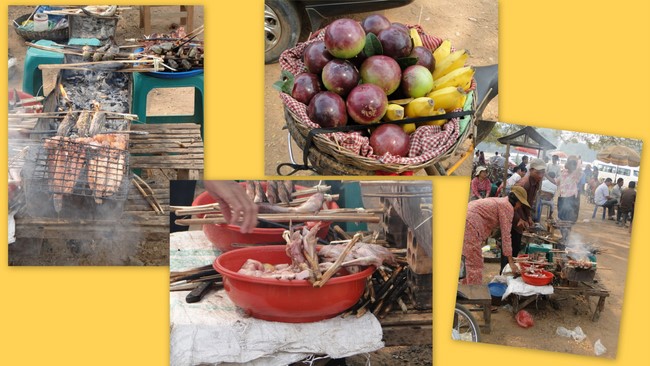
Southeast Asians eat all the time – a grilled banana, nibble fresh pineapple, sip some cane juice, a fresh baked fish in salt, a coke, a few dried strawberries. There’s always food, and no one’s fat. Yet KFC’s here and Australian beef burgers but so are frog’s legs and sautéed freshly picked morning glory greens from the river bank.

(Left) grilling fish and poultry on aromatic wood holders within Angkor UNESCO World Heritage Site
Siem Reap River: cafe, hand-made silk fashions and Temples (click to enlarge picture)

There’s a quiet side, the banks of the Siem Reap River. The town’s best restaurant and small hotel, Bopha, is located at 512 Acharsva Street facing the east bank. It’s a haven of calm with rooms and the restaurant surrounding and within several lush tropical garden courtyards. A private pool adds to the relaxation of spending less than $US60/double and US$20/couple for haute Khmer cuisine (US$10-20/wine).

Bopha: (top from left) baked fish, green papaya and chicken salad (bottom from left) steamed rice and grilled pork with crispy noodles

The lure is still the past – the Royal City of Angkor Thom, the vast complex of 243 temple cities once populated with over one million people ruling an empire covering much of present day Southeast Asia. Started by Khmer kings and Hindu priests in the 9th century, reaching its zenith in the 13th as the capital of a Buddhist empire, sacked by the Thais in the 15th century, it has been sustained and ultimately saved by monks from the strangulation of neglect, changing politics, wars and the jungle.

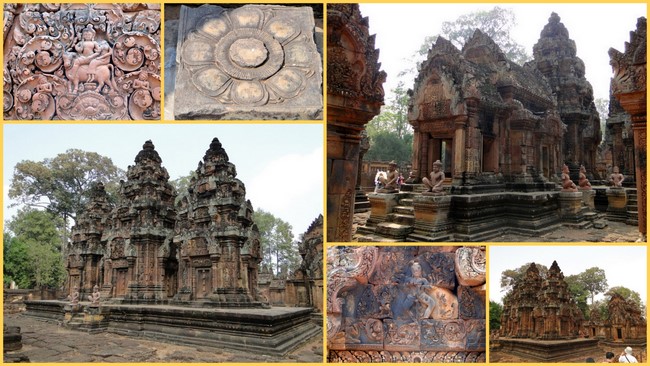
Banteay Srei, 12th century “women’s temple” built several miles from the Royal City of Angkor Thom

The Strangler Fig (strangler vine to the locals) sends dozens of roots deep into the ground around rocks and buildings for hundreds of feet. It encases and crushes whatever it encounters. To kill the vine, all roots must be severed. To restore a temple, the vines must be killed.

A metaphor for the restored Khmer Kingdom of Cambodia? Can all the destructive roots of the past 500 years be severed and the orderly, yet bloody, grandeur of nationhood be reborn? Or will Siem Reap be a new Khmer model: play it day-by-day, see what happens, hope, sweat and keep the Ta Prohm Strangler at bay.

Strangler Fig (Vine) at Wat Ta Prohm

Hot, Hotter, Hottest: Chiang Mai Thai Cuisine

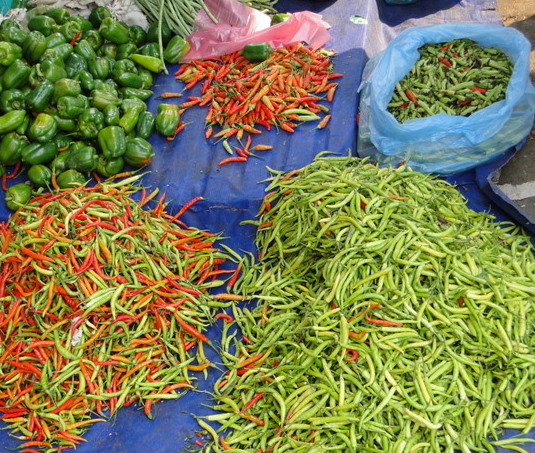
chilies at market - just a small selection

Famous local saying: “We have three seasons in Thailand – hot, hotter, and hottest.”

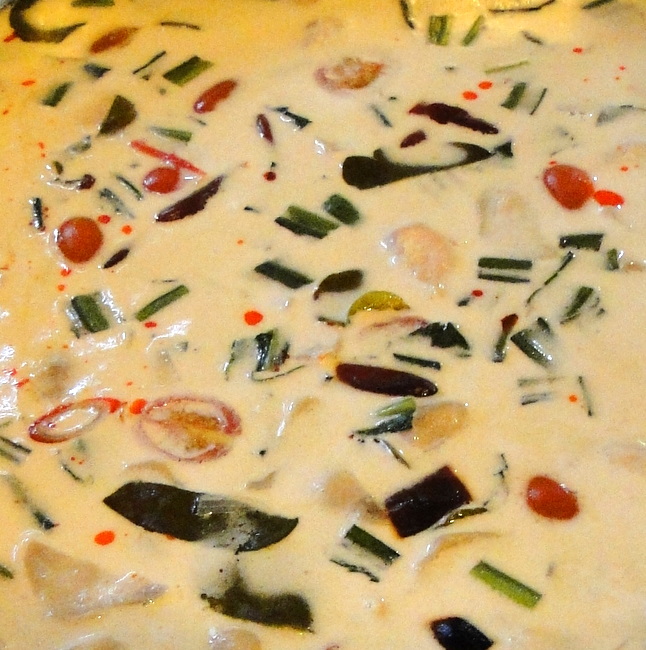
Tom Kha Chicken

You could say the same about Thai cuisine. I’ve seen innocent tourists sitting in a Bougainvillea bedecked cafe terrace enjoying Tom Kha Chicken at breakfast – the incomparable Thai lemongrass infused stock and coconut milk soup. Small chunks of chicken float in a fragrant  white sea and the diner, concentrating on the interplay of lime, green onion, cilantro, tomato and coconut, is oblivious to the decorative slivers of red and green until teeth involuntarily release their oils into the mouth. The shock has often been audible. Now I know why crisp, cold cucumber slices are frequently at every meal – they’re an “ice pact” to your burning mouth. Given the subtle ways Thai’s can hide chilies within a dish, it’s perhaps the secret to remaining the only Southeast Asia nation never colonized. You figure.

small local cafe, noodles with a meat sauce, glass noodle soup with fish balls

Yet not even locals constantly bombard their taste buds with numbing capsicum overloads. At a tiny local street café I had two common noodle dishes mild hot. Next to me were dishes of dry and fresh chilies, as well as fish sauce and lime, to add my own layer of heat. Rarely will a Thai dish be made without any chili, but as common is accommodating personal taste and not just for tourists.  I find too much heat masks the other flavors. I enjoy a soft to mild after burn once I’ve tasted the fresh herbs, mushrooms, fish sauce, garlic, lime and lemongrass. (Thai restaurants in North America forget that the quantities of the previous ingredients need to be generous – not merely garnish). Those two dishes cost US$2.00, total.

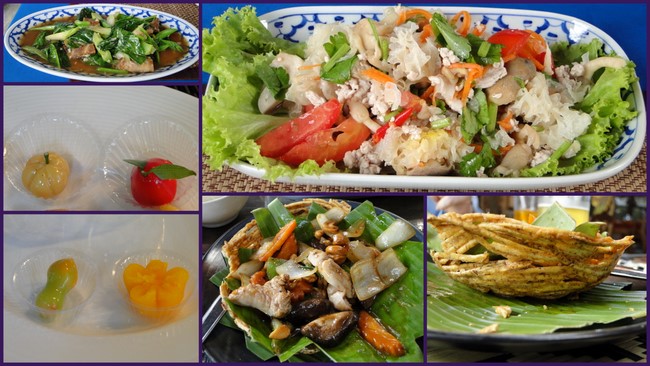
from faux fruit at Rimping Village Hotel to tarot bowls, stir fry and salad at Antique House Restaurant

  Thai’s like to play with their food. We’re all used to the ubiquitous stir fry with beef (upper left)  but have we given a thought to making a woven edible bowl out of tarot root for a chicken stir-fry (bottom right). A noon time salad of mushrooms, tomatoes is not uncommon, but adding porcelain white varieties that look like sea plants along with a light, lime, chili and sesame oil dressing raises the bar. The miniature little fruit off to the left? They are edible, painted and decorated sweet bean paste creations that can’t help but make you smile.

Ban Rom Mai Restaurant, Chiang Mai

Ban Roi Mai Restaurant serves a good and varied menu of Thai cuisine in an attractive garden setting (bottom right). Live music plays at night. It’s easy to find by Tuk-tuk or walking since it’s only a couple blocks from the Night Market. (Top left) The “fried chicken” was a chopped flat disk nicely seasoned with cilantro, chili, onion, lightly browned and topped with a lime sour cream mayonnaise. The chicken was surrounded with a ruffle of dry green cellophane noodles. (Top right) Sautéed Snake in Red Curry Sauce was a surprisingly mild dish. Snake really is as mild as chicken, and the curry was exceptionally light on chili to the point where I added a few. (Bottom left) The typically spicy green papaya salad – a dish that can go to the height of heat – was spiked with steamed purple crabs. (Lunch for 2 w/beer: less than US$15.)

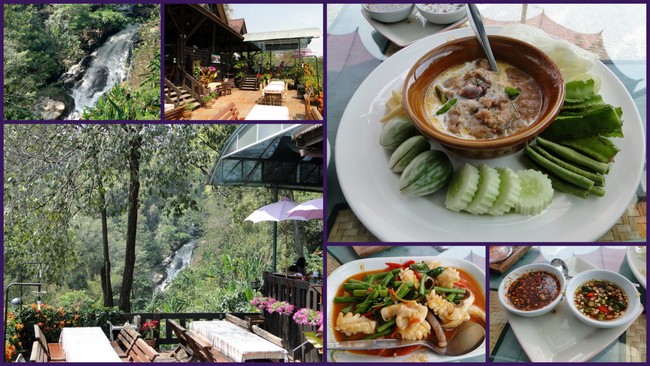
Pongyang Angdoi Resort & Restaurant

It’s hard to top Chiang Mai’s Pongyang Angdoi Resort & Restaurant for location: on a hillside surrounded by the protective mountains and forests of Doi Inthanon National Park. A waterfall that attracts many visitors in its own right is within unobstructed view of anyone dining on the multi level stone terrace. For a restaurant that’s on everyone’s list, the food is surprisingly fresh and imaginative. (Top right) A classic dish of seasoned ground pork with lime, chilies, fresh basil, cilantro in broth, to which fresh vegetables are added as it’s consumed, had a good balance of heat and cold.  Note the side dishes of fresh marinating chillies and garlic – one’s in rice wine vinegar the other in a sweetened fish sauce. Fish Sauce, which so puts people off with its initial smell actually becomes sweet once added to food. Along with lime it’s a great flavor enhancer.  (Bottom center) The stir-fry of calamari was tender. (Lunch for 2 w/beer, espresso, tip was less than US$20.)

Rimping Village Hotel, Chiang Mai

  There are less expensive hotels than the Rimping Village, but you’ll be hard pressed to find one with a more friendly and helpful staff. Situated in the quiet of Chiang Mai’s east bank of the Ping River within its own extensive walled garden, the hotel is a luxurious oasis for US$90/night/breakfast. The salt water pool is immaculate along with every other square inch of the facilities. Fresh flowers grace every room and in the massive rubber tree are small alters with burning incense just to thank its spirit for adding such useful shade. The open air restaurant serves a superb breakfast buffet of both Western and Thai dishes (which change daily): pastries, breads, cereals, juices, sticky rice, tropical fruits, green salad, a couple Thai hot dishes such as Pad Thai with shrimp, stir-fry rice with vegetables as well as choices of freshly made eggs, omelets and meats.

breakfast at the Rimping Village Hotel

Take away the chilies and Thai cuisine is more subtle that other Southeast Asian cultures. All the herbs and spices are there but in quantities that add soft layers of flavor rather that explode in the mouth – unless it’s chile peppers. In previous articles I’ve written about the street food. It’s no cliché; that’s the real Thai food – simple grilled, marinated, fried – with fresh chilies. (I need to mention that it’s best to observe the street techniques but recreate the dish in your own kitchen unless you’re not bothered by a lack of certain elements of street sanitation).  The natural flavors of the fruit and produce, of course, are intense. Few factory farms exist in this land of small farmers with abundant time for food to ripen and many markets to sell their goods at the peak of freshness.

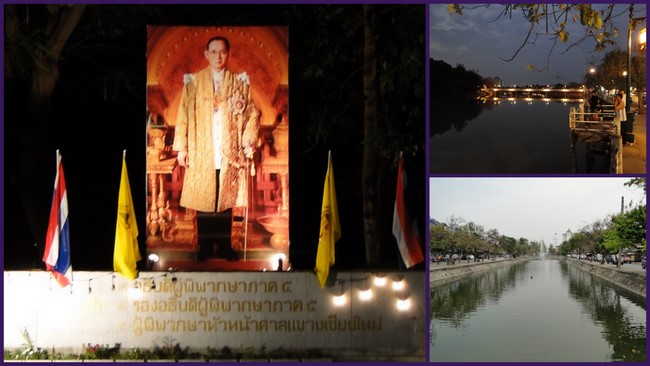
His Majesty Bhumibol Adulyadej, Rama IX, King of Thailand

His Majesty the King is said to enjoy the simple yet beloved egg tart sweet so much that it’s prominently advertised by KFC in Thailand.

Hanoi: 24-hours

First Impressions…Hanoi

                            …in a much anticipated visit to Vietnam. 

photos: Marc d’Entremont

music: Ai Oan Lamentation, Phong Nguyks Vietnamese Instrumental Music on the Đàn bầu.


The Three Reincarnations of Vientiane

Modern Laos - old and new

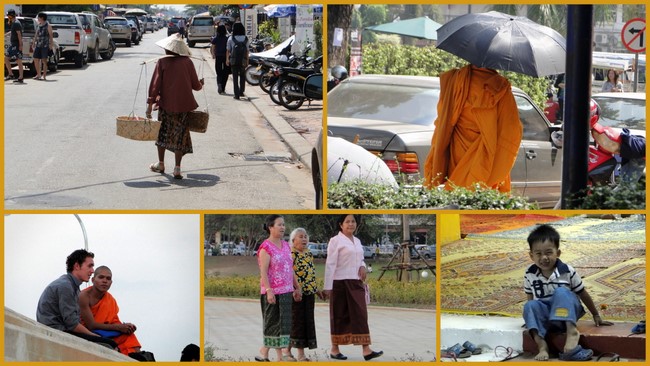
The baritone sounds of the giant drums resonate calling monks to prayer. Soft chanting can be heard in the stillness of pre-dawn. In the near pitch blackness dozens of men and women jog, walk and exercise on modern machines one sees in any American gym except these are free and in the park. In front of the Vientiane Times, men are stacking rolls of the daily newspaper on their motor bikes for delivery. French bakeries are opening for business. There is barely a car in sight on the streets at 6:00 AM. The air is still cool and moist before the sun raises the winter temperature to 90 degrees (F) by midday. Welcome to the reincarnated city of Vientiane, capital of the Lao People’s Democratic Republic


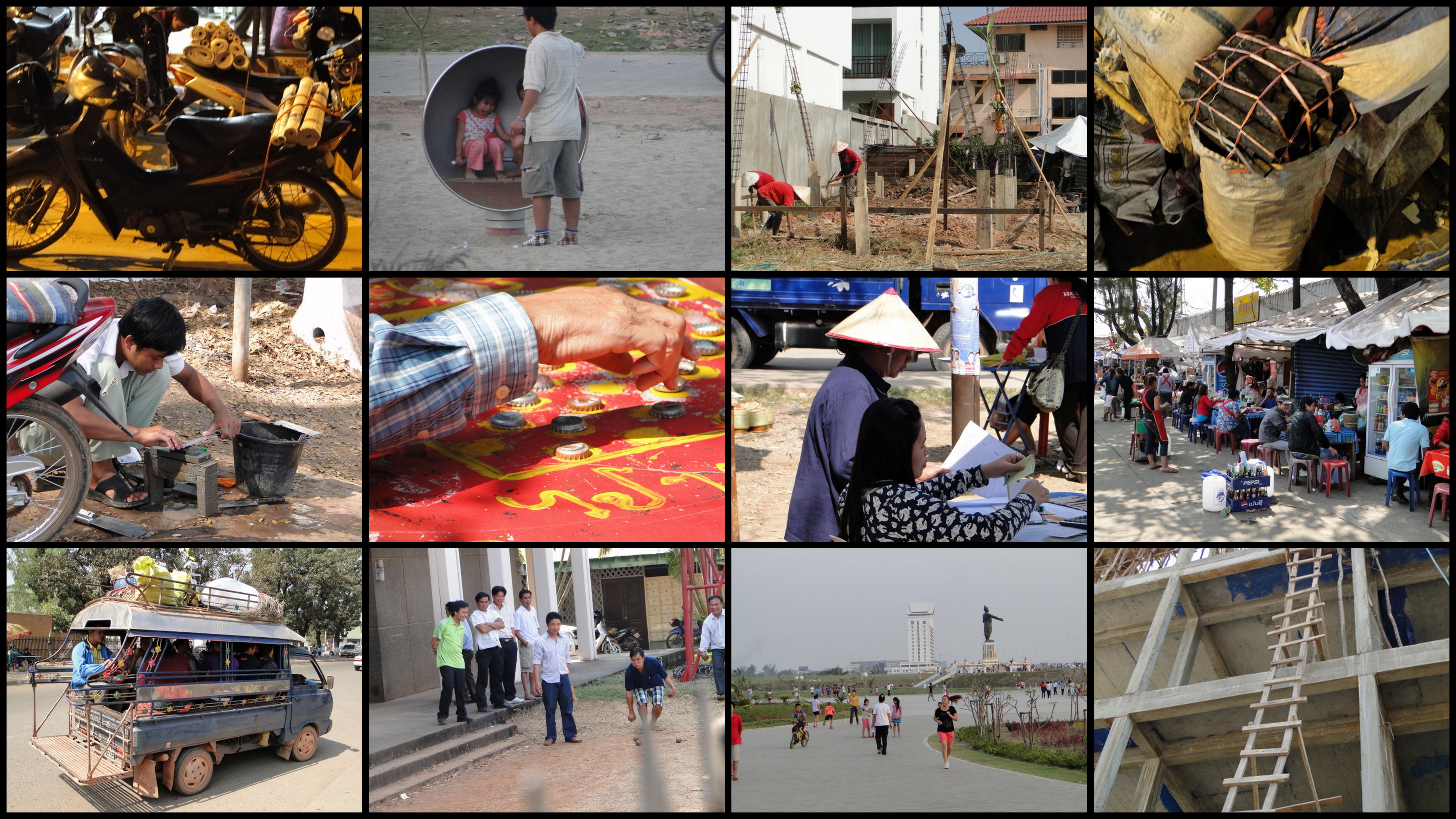
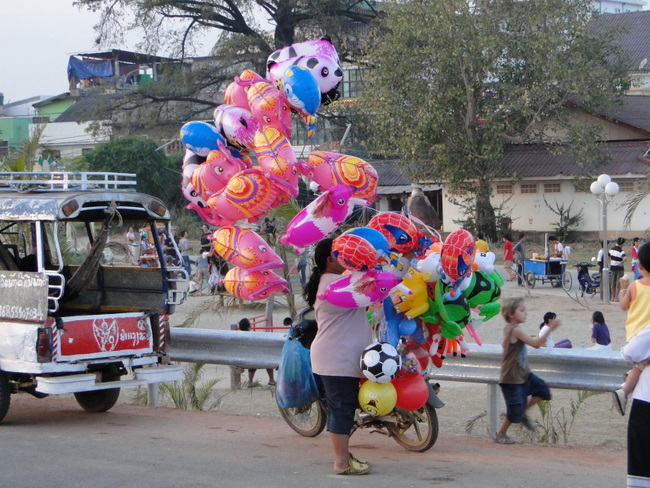
everyday life: fresh charcoal, knife sharpeners, bottle cap checkers, tuk-tuk cab, bocci ball and bamboo construction ladders


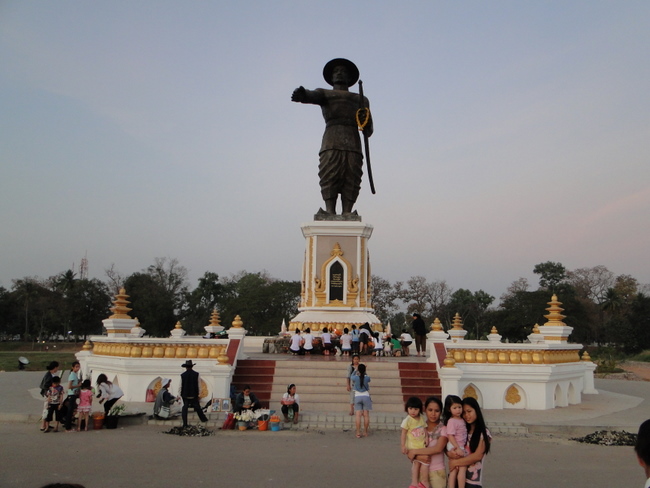
martyred Prince Anouvong (King Chaiya Sethathirath V: 1767 – 1829) last ruler of the Kingdoms of Vientiane and Lan Xang.

On the South Korean financed and constructed 2.5 mile long Mekong River Promenade/flood control wall (completion by 2013) stands the largest political monument in Laos – a Pathet Lao leader? A vitriolic monument to Western imperialism? No…it’s a memorial to an early 19th century national hero, the martyred Prince Anouvong (King Chaiya Sethathirath V: 1767 – 1829) last ruler of the Kingdoms of Vientiane and Lan Xang.  He led a failed war against their enemy, Siam (the Kingdom of Thailand) who had occupied Vientiane, and he died in captivity.

a small sample of Buddhist Wats in Vientaine (bottom center) prayer at That Dam - the revered centuries old Black Stupa - (bottom right) sticky rice offering on a protective naga (snake)

After 400 years as the on-again/off-again capital of the Kingdom of Lan Xang (Land of a Million Elephants), the city of Vientiane was utterly destroyed in 1827 by Thailand and remained a wasteland until the arrival of the French in the 1890’s. They rebuilt Vientiane as the administrative capital under their colonial “protectorate” and many structures retain early 20th century French colonial designs. Where are the memorials to the 1975 Communist revolution? They exist in only two places – the former Royal Palace (National Museum) and at the former American compound of the USAID/CIA outside of the city that became the home of Kaysone Phomvihane (1920–1992) co- leader of the Pathet Lao along with the “Red Prince” Souphanouvong (brother of the last King of Laos).  Thus is the complex history of this beautiful country with its stunningly friendly people, as well as an indication that modern Lao is still the traditional, conservative Buddhist culture that has been its history for over a thousand years.

Vientiane, like so many Southeast Asian cities, is undergoing an economic and building revival unheard of since the end of Western domination (the Vietnam War) in 1975. It still retains vestiges of a relaxed colonial town that has to deal with tropical weather which rarely gets cooler than 85 (F) on any day – and always humid. I was told that the number of cars has doubled in the last three years and building cranes can be seen in numerous locations. Chinese, Vietnamese, South Korean and European investment money is pouring into this Buddhist nation.

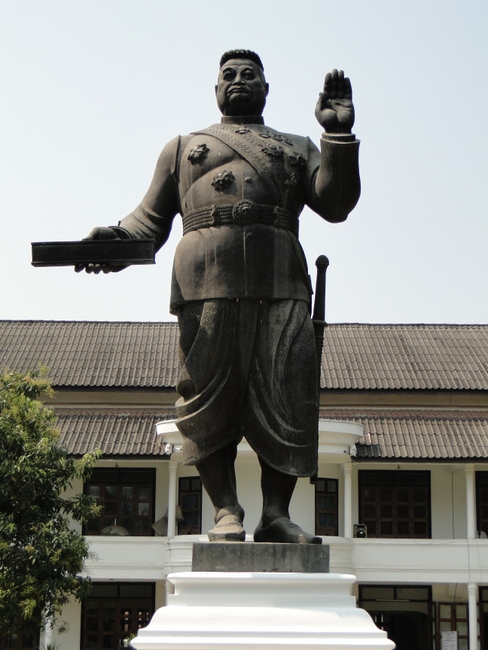
His Majesty Sisavang Vong, King of Luang Phrabāng 1904-46 and King of Laos 1946-1959)

Capitalism in a Communist nation? Let’s get real. Before the creation of the unified Kingdom of Laos, after the French withdrawal, under His Majesty Sisavang Vong, ( King of Luang Phrabāng 1904-46 and King of Laos 1946-1959) – another celebrated national hero –   the nation we know today as Laos – drop the “s” and say “Lao” – was a feudal society of several kingdoms who pledged loose allegiance to the Kings of Lan Xang and, later, to the Kings of Luang Phrabang. The monumental statue on the grounds of Luang Phrabang’s National Museum (former Royal Palace) depicts the King’s right hand in a classic Buddha position for peace and the left hand holding the 1946 constitution.

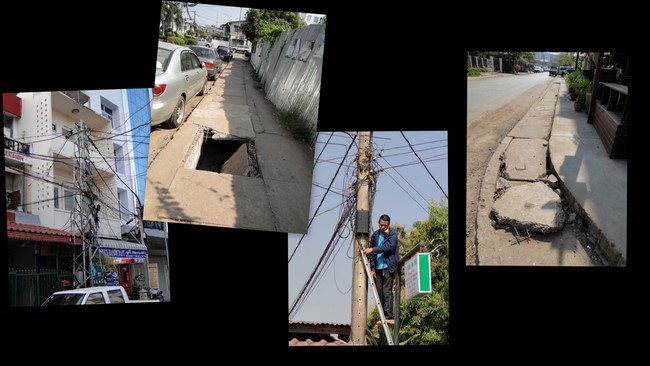
infrastrusture? Repair?
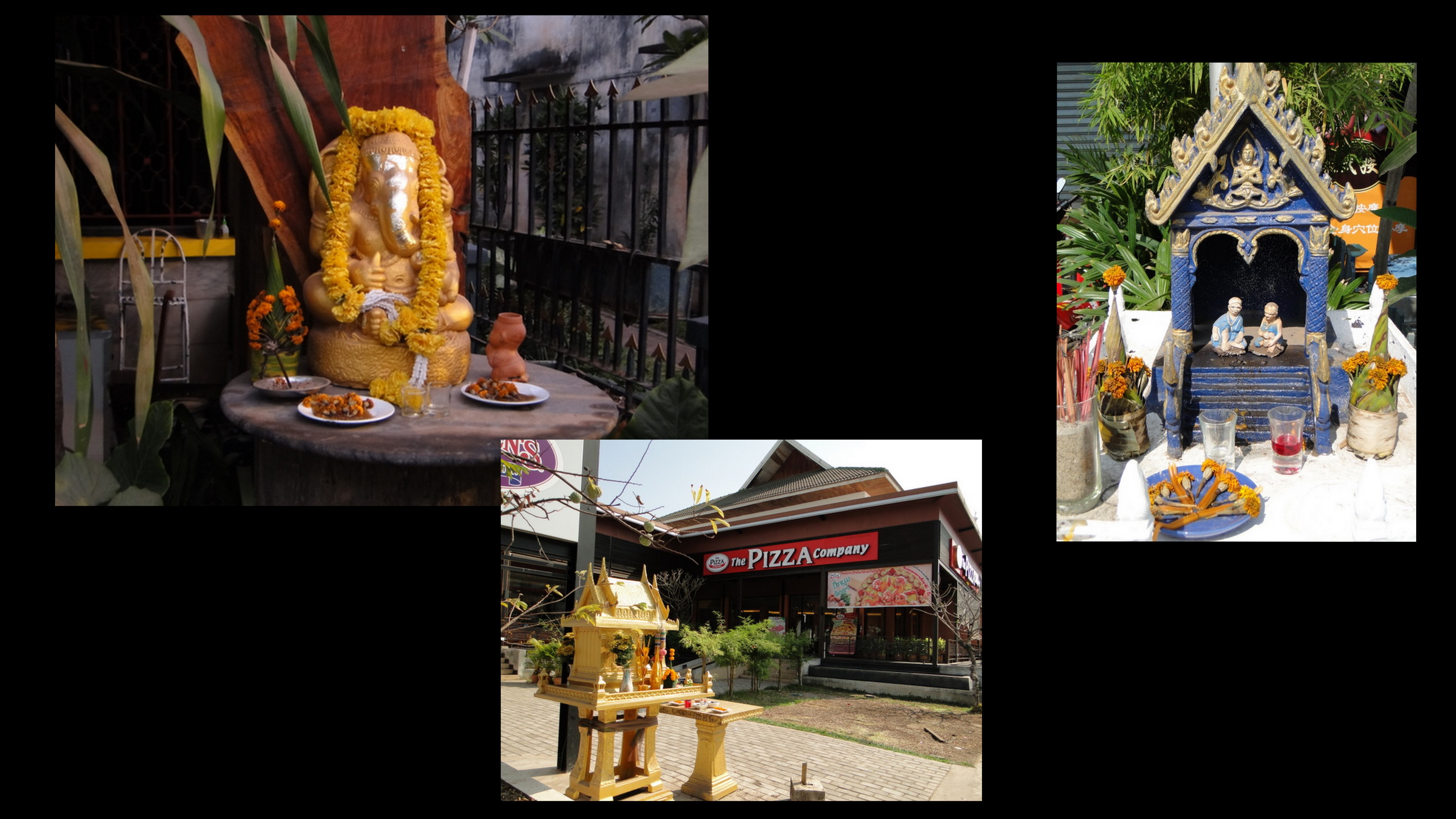
a few of the many Spirit Houses in front of shops, homes and a pizza restaurant

The current Lao People’s Democratic Republic is not much different, with many of the same families in power, except allegiance is to the Central Committee that resides in Vientiane. Over 90% of all Laotians are self-employed small business entrepreneurs and farmers and always have been. Buddhism and its teachings still remain the greatest cultural and political influence within the nation. There are more Buddhist temples and monasteries than I can count – independent of  government influence –  and travel within Southeast Asia for Laotians is unencumbered. The excessivly bureaucratic government is considered incompetent and government workers have decent middle class jobs – just like the former Royal Courts. There is a visible lack of infrastructure planning in this developing country.

Pets - which are not eaten

All of this makes Laos, Vientiane and the ancient northern capital of Luang Phrabang (a UNESCO World Heritage Site – and another blog) a fascinating country. Laos cuisine is wonderful. Less sweet than Vietnamese and with fewer hot peppers than Thai, the dozens of flavors from herbs, meats and spices shine. This will upset vegans who believe Asians are basically vegetarians and are eating more meat due to the influence of McDonalds, but Laotians have always been large meat/fish eaters. I was told by numerous chefs that currently more vegetable dishes are becoming part of the cuisine because of Western vegetarian trends! Laotians eat EVERYTHING – beef, pork, duck, frogs, rats, some dog, river fish, shell fish, all the innards and the blood – both liquid and congealed. (OK, please don’t stop reading – I won’t add recipes.) But they lavish love on their pet dogs and cats – they don’t eat their pets – unlike other Southeast Asian cultures (although this is rarely a part of the modern urban diet).

(Top) fresh roasted peanuts, smoked ducks, grilled fish in rock salt, frogs (Center) fish for stew, cockles, prawns and a variety of deserts (Bottom) produce, French bread, strips of Water Buffalo and an ivy-like vine leaves used for salads and soups

Life is on the street and in the markets – typical of Southeast Asia. The “morning markets” are primarily food (4:00 AM – to mid day.) “night markets” tend to be crafts, clothing and prepared foods and “weekend markets” are a great mixture. At any market you will find fresh frogs and the latest Apple I-Pod – it’s “one stop shopping” – the American dream…

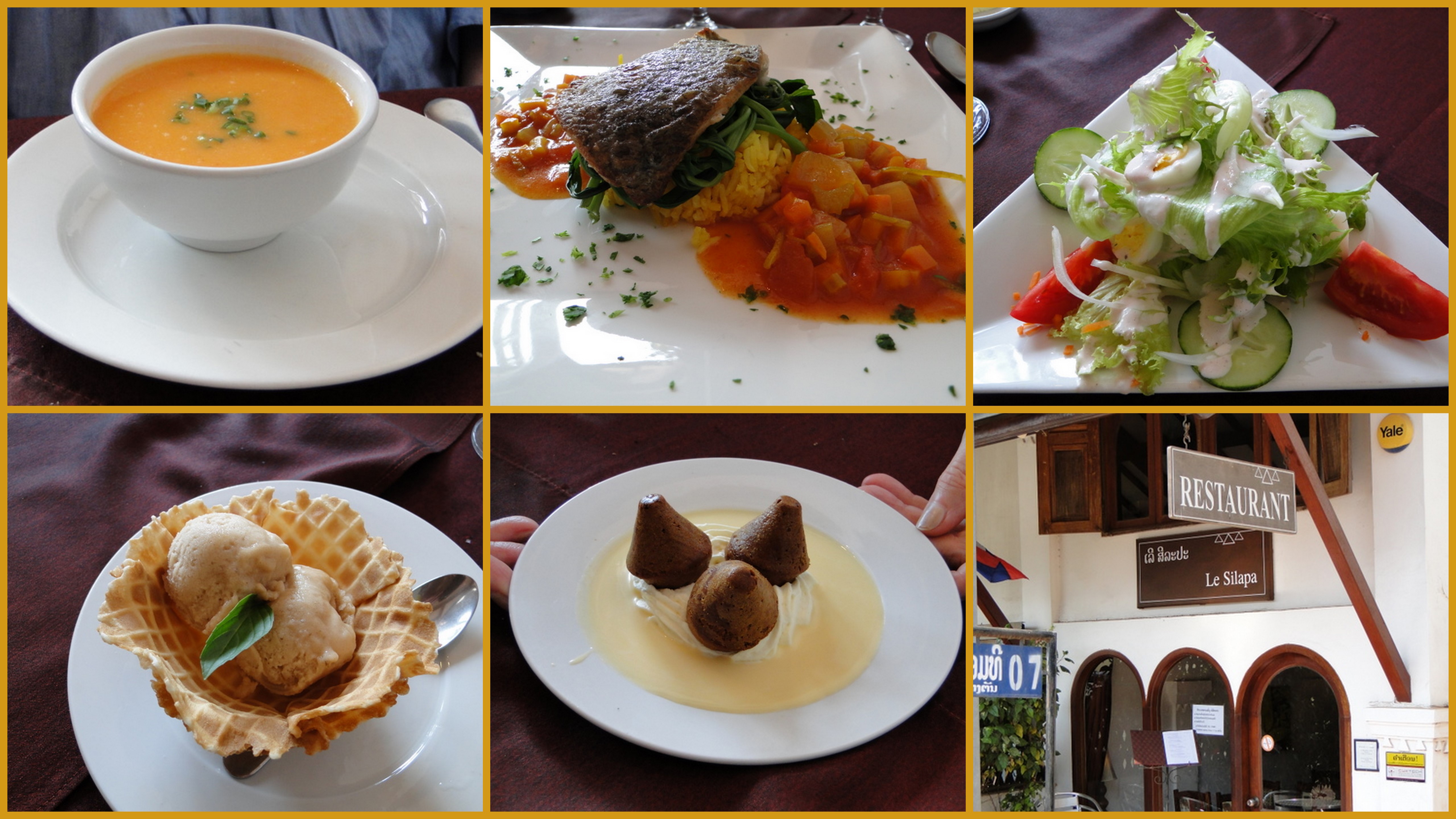
La Silapa: Cream of Pumpkin Soup, White fish with Laos vegetables, salad with a lime dressing, tamerind sorbet, ginger cakes in creme anglaise

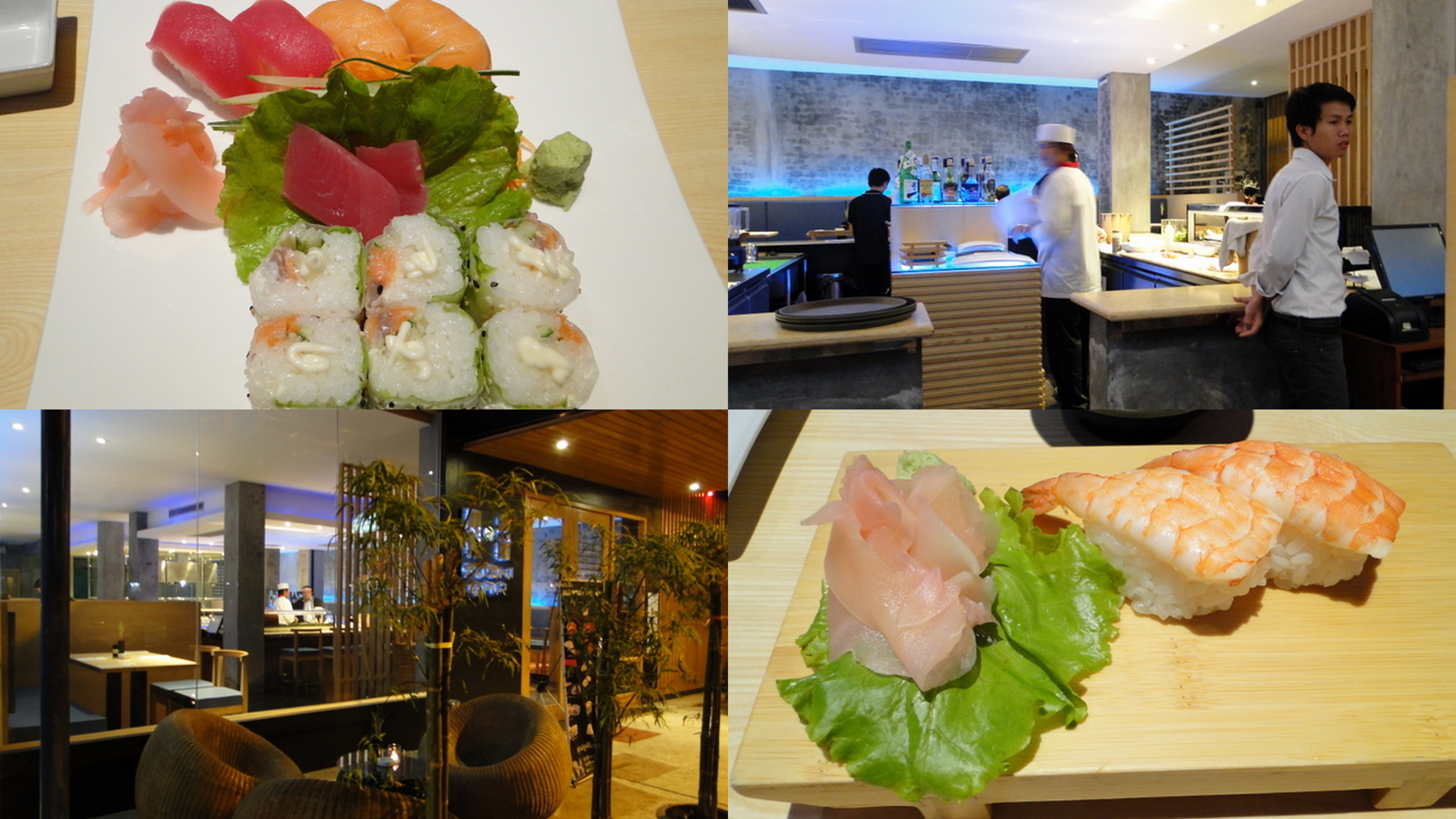
Inexpensive restaurants abound and spill onto the streets. Lunch or dinner for 2 will rarely cost more than US$15 – unless you stuff yourself. A large 3/4 litre bottle of Beer Lao – a pleasant lager – costs $1.25. A few outstanding restaurants exist. The best being La Silapa, owned and operated by a French Canadian with a menu that is an excellent fusion of French and Lao flavors. Lunch for two is less than $30. (Note: wines are expensive anywhere in Southeast Asia. Costs are frequently more than the entire meal.) Nos serves excellent sushi at prices that make a Westerner believe they were in a Sushi nirvana – about $.25/each with salad and miso soup. There are a number of pizza restaurants using wood fired brick ovens and make terrific paper thin crusts. For genuine Lao cuisine eat on the street. Look for the most popular, crowded street restaurants. The rapid turnover means the food is fresh and has not lingered in the heat – what, no ice to keep the food fresh? Get real – I’ve yet to get even the slighest stomach problem.

Nos

Poverty, as judged by Western standards, is the norm for most people – especially in the rural countryside – in all of Southeast Asia, but not starvation. For a visitor from the “First World,” luxury is quite affordable – beautiful hotels for less than US$70/night, restaurant meals for 2 with drinks for less than $25 (and this is the average high end.) A person/couple can travel for less than a third of that amount or waste money on  ultra luxury accommodations that will run in excess of $650/night. Yet if peace and stability remain in this fabled land they just might achieve the Lord Buddha’s dream of the Middle Path – neither lose one’s self in sensual pleasure nor deny one’s self the gifts of living.

Bangkok: What defines a fabled city?


dsc04696
What defines a fabled city? Age? Diversity of cultures? Tolerance of differences? Quality of life? Art and architecture? By using any of these terms I’m not sure if “fabled” is a moniker that can be applied to Bangkok. Fascinating certainly is proper terminology.

Bangkok is young and chaotic. Founded only in 1782 (Philadelphia, USA, is a century older) after the Burmese destroyed the truly fabled capital city of Ayutthaya, the site of Bangkok was chosen for strategic purposes – protection from the Thai’s arch-enemy the Burmese. Like Venice, it was marsh land surrounded by rivers. The king immediately constructed a system of canals creating a virtual moat around the city – and like Venice the elevation of the city is sinking.

It’s a city of contrast; not only rich and poor but architectural styles as well – condo skyscrapers next to river shanties, 19th century shopping districts and modern malls, dubious electrical infrastructure, scorching heat/ humidity (even in “winter”), cooling parks, trees, flowers everywhere and exquisite topiary.

Would you believe Bangkok’s a clean city? Believe it ! Trash on the streets is virtually non-existent despite the constant and lively street life. Legions of street sweepers and building maintenance workers constantly sweep up even leaves and fallen flower petals.

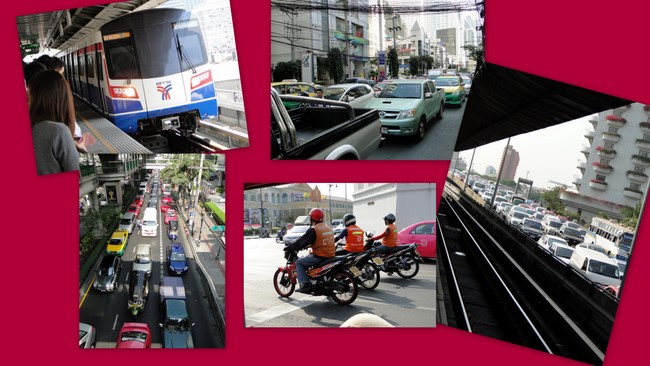
Sky Train and traffic

Traffic is horrendous! I spent one hour in a taxi to travel less than 4 miles – of course the fare was modest and the cabs are mostly new, comfortable air-conditioned Toyotas. Yet for less I could have taken a Tuk-Tuk – a motorcycle pulling an open air covered wagon – or, for even less, rode on the back of an orange shirted motorcycle “taxi.”

Yet, built within the past decade, the ultra modern, ultra clean and comfortable Sky Train elevated and the subway system will whisk one around the central core of the city (about one-third of Bangkok) for less than taking the average city bus in the USA. Despite the chaotic traffic I’ve yet to see a dented car.

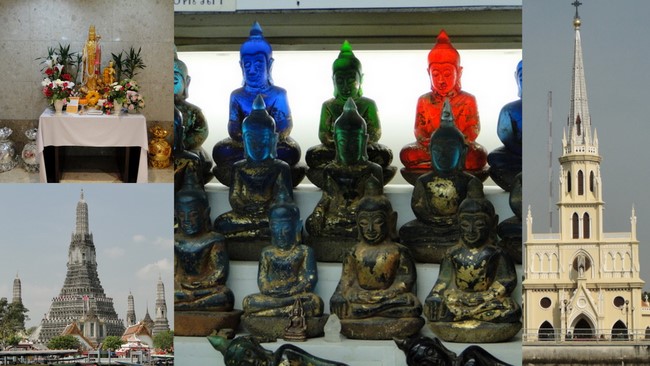
(top left) shrine in a shopping mall, (center) Buddha statues for sale, (right) Holy Rosary Catholic Church, (bottom left) Temple of the Sleeping Buddha

There are over 35,000 Buddhist temples (Wat) in Thailand, 300,000 Buddhist monks, shrines everywhere – street corners, in malls, in front of every house, in parks, restaurants and hotels with burning candles, incense, flowers and food offerings. Just about every other world religion is present as well. In the Robinson Department Store just down the street from my hotel is a Muslim prayer room.

Shoes and hats are never worn in Thai houses of worship, or, for that matter, in any Thai home. The dirt of the outside is left outside. Floors are immaculate – not a speck of dust.

street life: (top left) eggs roasting on charcoal, (bottom left) street vendor dentures maker

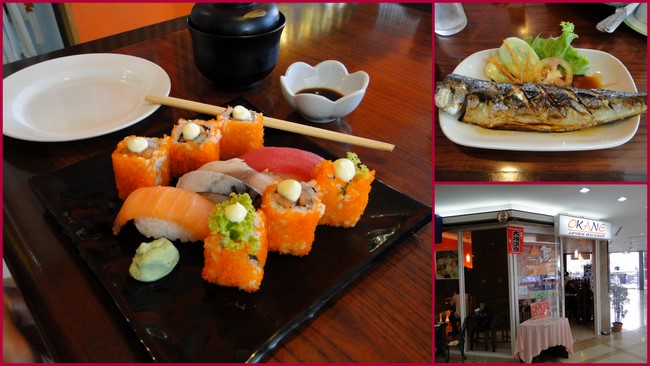
Everything is available from street vendors, especially food. The Thai’s seem to eat constantly yet I have not seen a single person you could call even slightly overweight. For a Westerner, the cost of food is embarrassingly cheap. In the pictures below, the sushi and superbly grilled trout, plus a rice salad and miso soup in a small nondescript Japanese restaurant in a shopping mall cost  less than a Big Mac in the States.

In the three days I have wandered the city I have experienced nothing less than the utmost courtesy whether in a tourist attraction, on the Sky Train or the street. I have yet to see any public display of anger or bad behavior. The police are friendly and helpful – what a contrast to so many countries.

Children seem to be revered and the photos below sums up my impression of Thai friendliness – figures of laughing children are everywhere, especially in the gardens of the Wats (temples) and street the vendor’s baby in the crib is cooled by a battery-powered fan. Bangkok may be intolerably hot and humid, chaotic and perhaps not “fabled,” but it has a more valuable treasure – it’s friendly.

Save

43 Days: The Things I’ll Carry

 “The things they carried…P-38 can openers, pocket knives, heat tabs, wristwatches, dog tags, mosquito repellent, chewing gum, candy, cigarettes, salt tablets, packets of Kool-Aid, lighters, matches, sewing kits…they carried diseases…malaria and dysentery…lice and ringworm and leeches…and the land itself…the endless march, village to village, without purpose, nothing won or lost. They carried all the emotional baggage of men who might die. Grief, terror, love, longing – these were intangibles…They carried their own lives.”

from The Things They Carried by Tim O’Brien (Haughton Mifflin, 1990)

It’s been a quarter century since peace finally came to the  lands of Southeast Asia. For centuries it was part of the fabled “spice route” between the eastern and western worlds, yet in the 20th century more than twice the tonnage of bombs were dropped on Indochina than in all of World War II. I’ll be leaving Sunday to spend 43 days in Thailand, Cambodia, Laos and Vietnam. I’ll have no worries or fears, unlike the brave but misled soldiers of that ill-fated war.

For me who narrowly escaped experiencing the horror of those past times, it feels odd that I’ll enjoy first class hotels, renowned cuisine, stunning scenery, cities and sites that have survived millennia of wars and legendary hospitality. From all my research of the past six months in preparation for this trip I expect to see, or even feel, little evidence (except in museums) of last century’s strife. As a chef, historian and travel writer I’m preparing myself for a flood of experiences that will test my ability to process this trip with all five senses – especially taste. Foods that few westerners ever have the opportunity to see, no less taste, await me, with fusion cuisine developed over centuries of east-west contact – durian cheesecake anyone?

Oddly, I’ll carry some of the same objects listed by Tim O’Brien – can opener (cork screw in my case), pocket knife, wristwatch, mosquito repellant, bottled water, sewing kit and malaria pills (one-a-day for 51 days). I’ll have to still be mindful of bed bugs – carrying bed bug repellant (fortunately I’m  already aware of what they look, and feel, like.) Lice, leeches, dysentery are all still present – this is the tropics – which means swimming in lakes and rivers is out. I’ll carry my ignorance of customs – no pointing either with fingers or, especially, with one’s foot. I’ll be ignorant of the languages. For the first time in my life as a traveller I’ll be hopelessly unaware of what anyone is saying (with the exception of tourism workers that speak English). Language will become music, much nicer than the karaoke sounds my research says is the favorite throughout all four countries.

The best thing I’ll carry? A sense of wonder.

My first blog, from Bangkok, will post Tuesday, 8 February.

New York, New Year, 3 Restaurants

What am I saying? I had a pleasant, imaginative, moderately priced lunch in a major urban museum’s cafe? An oxymoran….0r lack of oxygen….?

Petrie Court Cafe & Wine Bar

Just off the multi-storey glass atrium of the striking American Wing at New York’s Metropolitan Museum of Art, is the airy, glass walled dining space occupied by the Petrie Court Cafe & Wine Bar. My experience in most museum cafes is to forgo the over priced, microwaved offerings in favor of a coffee, but the menu at Petrie is neither overpriced nor nuked.

Petrie Court Cafe & Wine Bar, the MET, New York City

Perhaps the Pennsylvania Dutch were Italian, because Petrie’s pappardelle noodles (top left) are as rich as anything eaten in a Lancaster farmhouse. Tossed with a light buttery cream sauce, earthy sautéed wild mushrooms and spinach with a garnish of spinach puree, it was an inspired pasta dish ($17.95.) The Cream of Pumpkin soup (bottom left)was velvety and light – not the thick vegetable puree served in so many restaurants. A flavorful stock underpinned the soup, but the aroma of the roasted pumpkin seed oil garnish raised this common dish to a new level of flavor ($8.95). Salads should delight the eye and the taste buds. (bottom right) Spicy arugula and mixed greens tossed in a light citrus vinaigrette with slightly salty manchego cheese, pears, bright fresh pomegranate seeds and deep red pomegranate puree garnish accomplished the task nicely ($9.95). Fresh sourdough rolls accompanied the meal. Most wines were in the $8 – $9.00/glass range. Despite a busy lunch time, service was smooth and professional. Interestingly, there are few restaurants of any type within walking distance of the MET in its wealthy Upper East Side location, making the Petrie Cafe & Wine Bar a welcome, and much-needed, addition to the neighborhood.

Lower East Side, near Orchard Street, (left) Katzs Deli, since 1888

Little Giant cafe, on the corner of Broome and Orchard Streets, certainly would not have existed in 1870’s Lower East Side New York –  or even 1970’s. Not that eating establishments didn’t exist back then. Taverns and street vendors have flourished from the city’s founding nearly 400 years ago. In the picture above, left side, you can see the sign for famous Katzs Deli serving the (then immigrant) Jewish community since 1888. Now an institution, but still terrific, its 21st century clientele is an ever-increasing affluent population of “post-immigrant” residents. Just a block down from the Tenement Museum, Little Giant is a laid back cafe in a renovated, exposed brick store front in an early 20th century Lower East Side building. In earlier days maybe it was a cloth store? It’s small space – seats 20/25 –  is filled even at 3:00 pm on a weekday and keeps the small staff busy. The menu is brief but items are freshly made so be patient. The Angus Beef burger was fresh ground and grilled medium rare as requested ($9.95).  A “little giant” portion of their own Mac and Cheese was excellent. Like Petrie’s Pumpkin Soup, Little Giant’s Baked Macaroni and Cheese eschewed thickeners and relied on a well seasoned, but medium, cheese sauce to bind the macaroni and garnished with a nice crust of browned bread crumbs for texture ($7.00/$14.00). A well seasoned “salad” of sautéed kale with oyster mushrooms was tasty and nutritious for anyone wondering about all that red meat ($9.95). The bar served a nice selection of micro beers on tap and bottle, wines by the glass and a great Bloody Mary with horseradish-infused vodka ($10.00). With its large store front windows, it was pleasant leisurely having lunch while watching the bustle which is always New York.

Sante Fe Restaurant

Finding imaginative Southwest American cuisine in New York is as difficult as in Albuquerque. Face it, real Southwest/Tex-Mex/Mexican-American is comfort food – like pasta with red sauce for Italians. To find chefs that create new dishes using old techniques is always nice and not common in the commercial world of the food industry.

Sante Fe, 73, West 71st Street, in the leafy but happening Upper West Side of New York, serves recognizable southwest dishes yet tweak the recipes giving them new life. Citrus and herb marinated thin-sliced grilled skirt steak is wrapped in a tortilla and served with a micro green salad ($12.95). A fresh lump-meat crab cake topped with a poached egg and covered with a roasted smoky tomato sauce is a flavorful variation on a brunch standard, with a green salad and rice pilaf ($14.95). Excellent house salsa accompanied corn chips and the house Margarita ($8.00 or $11.00) was citrus fresh and tequilla rich – not a mix. The restaurant itself is a relaxing space in light airy southwest peach, art, a fireplace and good acoustics (quiet!)

New York can be expensive, but it doesn’t have to be. It’s easy to find great food in this “world capital” at prices most people tolerate at their local shopping mall’s food court!

Upper West Side, 70's, looking downtown, New York City

Philadelphia: A Tale of One City/Two Neighborhoods

“…here I dwell, where these sweet zephyrs move,

And little rivulets from the rocks add beauty to my grove.

I drink the wine my hills produce; On wholesome food I dine;

 My little offspring ‘round me Are like clusters on the vine…”

 Thomas Livezey, circa 1750

It’s Friday evening and we’re sitting on the great marble staircase having a drink and listening to jazz at the Philadelphia Museum of Art’s Art After Five. Stepping out into the courtyard, the city at night glitters and hums like an urban engine. The following day, we leisurely stroll down Forbidden Drive in bucolic Valley Green after having lunch in an 1850 Inn. Mounted horses pass at full gallop and geese float down the Wissahickon Creek. We’re still within the city. Like all great urban centers, Philadelphia is a city of neighborhoods. Like all great cities, these neighborhoods evolve, and so it is with William Penn’s original square mile city of Philadelphia as well as leafy Chestnut Hill/Valley Green. The future doesn’t always preserve the past, and sometimes that’s good.

an original 19th century stable and one the few remaining trolley lines
Swan Fountain (Alexander Calder, 1924) at Logan Circle

William Penn’s original square mile city, bounded by the four squares of Rittenhouse, Washington, Franklin and Logan, still retains an orderly grid. The absence of a glass and steel jungle blotting out the sun, and the presence of 300 year old alleyways lined with colonial houses allows Philadelphia to feel like a home for humans, rather than just an economic engine. Visionary city planners as early as the late 1700’s designed the grand boulevard, the Benjamin Franklin Parkway, that stretches from City Hall/Logan Circle to the Art Museum. It’s hard to experience a finer entrance to a city than the tree-lined, flag bedecked, fountain anchored Parkway. Its space, like a giant front lawn, is shared by commuters, strollers, special events, runners, frisby players, three generations of Calder family sculptures and many cultural institutions. Yet one square mile Philadelphia was an urban economic engine in the 18th and 19th centuries with all the accompanying issues of pollution, muddy streets, poor sanitation and summer “fever” epidemics.

Philadelphia Museum of Art

The 1920’s Greek temple that is the Philadelphia Museum of Art stands, appropriately, on a hill at the far end of the Parkway. Its galleries contain priceless collections spanning millennia. Music and social events are not new to museums, but Art After 5 (every Friday from 5:00 to 8:00) has become a fixture in Philadelphia’s “TGIF” venues. There are a limited number of tables that fill quickly but sitting on the  smooth marble of the grand staircase, under the gaze of an enormous backlit “Diana,”  creates an amphitheater feel. The central hall rises up one floor to a broad mezzanine where it’s possible to sit as well. Two full service bars and a professional, personable wait staff serve light fare and drinks. It’s an informal, club atmosphere and people wander through the adjoining galleries while the music filters in as doors open adding to the visual experience.

Art After 5 at the Philadelphia Museum of Art

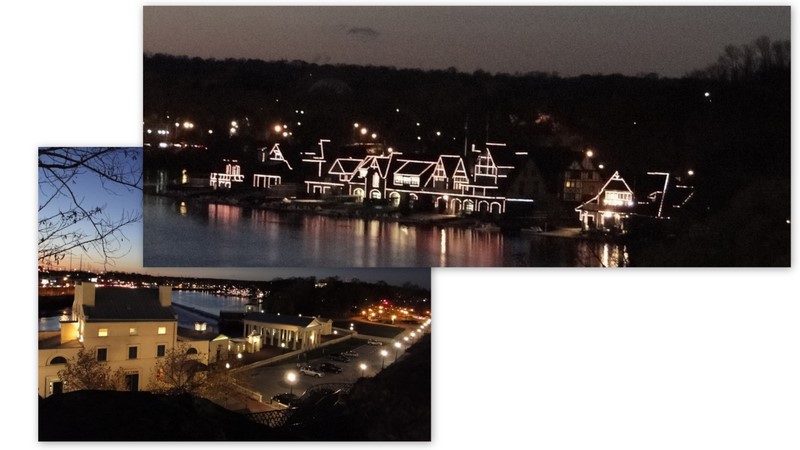
From the gazebos that sits on a rocky promontory outside the museum there’s a nice view of the Waterworks and Boathouse Row.

(top) Boathouse Row, (bottom) the Waterworks

An engineering marvel when it opened in the early 19th century, the municipal Waterworks pumped fresh Schuylkill River water directly into an ever-expanding city. Today its restored buildings house a pricey restaurant, small museum and provide public space as part of Fairmount Park. Boathouse Row stretches just beyond. This collection of late 19th century stone and wooden houses represent generations of private university associated sculling clubs. Although the sport is often thought of in the same league as polo, dressage and fox-hunting, the skill necessary to compete in sculling is achieved only after arduous physical training. In Philadelphia, it’s a serious sport.

Fairmount Park's Valley Green, (top right) Livezey House, 1740

The 1740 Livezey House has that stately look of so many of the well-preserved antique houses in Valley Green and the neighborhood of Chestnut Hill. From the Art Museum it’s possible to hike or bike the five miles on trails that meander through the thickly forested Park, along the river and creek, directly to Valley Green and Chestnut Hill. Yet except for the pre-1870 houses, little of this countryside was bucolic as late as the 1870’s. The banks of the Schuylkill River and Wissahickon Creek had been denuded of trees for nearly 200 years and over built with a series of small company towns while its polluted waters were harnessed to provide energy for the mills that were part of  Philadelphia’s economic engine. Mr. Thomas Livezey made a nice fortune from his Wissahickon Creek mill but his surroundings were certainly not as attractive as today. 

Rittenhouse Town

It was the threat to Philadelphia’s drinking water that spurred the building of the long-planned 9,000 acre Fairmount city park. Its serpentine shape deliberately included both the Schuylkill River and Wissahickon Creek within its boundaries. Gone were dozens of Colonial and early 19th century mills, houses and entire small company towns. The Park-owned historic Rittenhouse Town is an exception and provides a glimpse of life when it was a company town/suburb to Philadelphia’s one square mile city. Yet since the town’s business was paper making one can be sure few trees existed when it was purchased by the Park Commission in the 1870’s. Restoration of the watershed, over a century later, is still ongoing. These generally affluent neighborhoods today have the look and feel of story book versions of leafy, bucolic Colonial villages, and yet they’re within the bounds of a 21st century city.

interior of Valley Green Inn

The Valley Green Inn on Forbidden Drive (cars were banned in 1920) has been open since 1850 but with a checkered history. In the past few years it seems to have secured its future as a venue for fine interpretations of classic American and Continental fare. It’s setting directly on the Wissahickon Creek with its antique decorated dining rooms make it an ideal venue for any occasion. There’s nothing better than taking a walk along the 7-mile Forbidden Drive after lunch nearly any time of the year, and if you’re riding your horse, you can still hitch it to the posts outside the Inn.

Valley Green Inn, 1850

Published: 2 Articles/2 Journals

I have two articles on Argentine themes that are now published on-line by respected travel journals.

Rio Parana from Casa Quiroga & bamboo maze

Horatio Quiroga’s San Ignacio: Home to Madmen and Missionaries appears in the British journal Hack Writers  http://www.hackwriters.com. It has been publishing for 11 years and is associated with the University of Portsmouth, England.

               (I am posting some photos not printed with the articles)


(Top)model of San Ignacio Mini, stone carving detail (Bottom) ruins of church facade, on-going restoration work


(Top) native Guarani, ruins of mission housing (Bottom) irrigation canal, school and countryside


(Top) Quiroga's motor bike & first house, (Bottom) interior and exterior of second house)

 and

Global Writes, the 54 year old journal of the International Food, Wine and Travel Writers Association (http://global-writes.com/ ) published Sweet Fire in Ushuaia, my article on the incomparable food enterprise Dulce Fuego in Ushuaia, Argentina run by 20-something-year-old chefs.

staff of Dulce Fuego, grilled Patagonian Trout, and Ushuaia, Argentina (the southernmost city on Earth)