This photo at Seminole Lodge is titled “Waiting for another invention” – T. Edison (on ground), H. Firestone (left) & Pres. W. G. Harding 1921 in Florida
Much is written in the media today concerning the inability to disconnect while on vacation – professionals glued to email and cell phones around the pool. Yet that’s hardly unique to the 21st century. In 1885 when Thomas Edison purchased 14 acres along the Caloosahatchee River as a winter retreat in the remote southwestern Florida farming hamlet of Fort Myers he had no intention of turning his mind off.
The guest house of Seminole Lodge, Fort Myers, FLEdison’s office in the Moonlight Garden
Although Thomas (1847-1931) Mina (1865-1947) and their children spent most winters at their Seminole Lodge estate, his office provides ample evidence he was still connected by correspondence to his invention laboratory at Menlo Park, NJ. Along with good friends Harvey Firestone and Henry Ford the Edison Botanical Research Corporation was established and a laboratory constructed on the estate in the 1920s. The goal was to make America independent of foreign rubber.
Edison Botanical Research Corporation laboratory at Seminole Lodge
Edison dubbed Seminole Lodge his jungle. He and Mina surrounded their home with lush gardens. But first, they had to construct the houses.
Seminole LodgeEntrance & pilings remain of the 1,500′ pier at Seminole Lodge
The railroad was not extended to Fort Myers until 1904, which meant convenient travel was by ship. A 1,500 foot pier was built as a landing for family, guests and the materials necessary for Seminole Lodge. Prefab houses were also not new to the 21st century. The lumber for the two identical mirror-image houses that are Seminole Lodge was fabricated in Maine, shipped to Fort Myers and assembled on site.
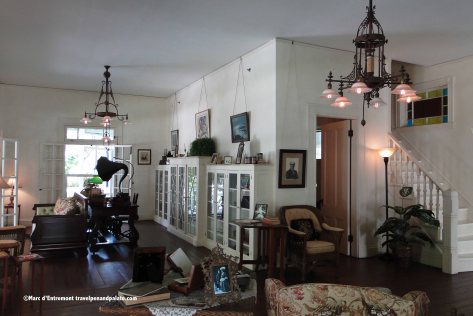
Seminole Lodge, Edison & Ford Winter Estates, Ft. Myers, FLDining room at Seminole Lodge
The adjacent second house was originally the winter home of business partner Ezra Gulliland, but was bought back by Edison after a serious split with Gulliland. The spacious, airy wood structures were connected with a pergola and the second house turned into combination guest quarters, dining room and kitchen for Seminole Lodge. Both houses were electrified, of course, with power from both generators and batteries – all the product of Edison’s fertile mind.
Henry Ford house, Edison & Ford Winter Estates, Ft. Myers, FLFord Model T, Edison & Ford Winter Estates, Ft. Myers, FL
Children of America’s great industrial age, Thomas and Mina were friends with other magnates of the day, especially Henry Ford. A frequent guest of the Edisons at Seminole Lodge, Ford purchased the beautiful yet modest Craftsman house in 1916 adjacent to Seminole Lodge. Although the Fords only used the home for two weeks each winter to celebrate Edison’s birthday, their friendship and business partnerships were life-long.
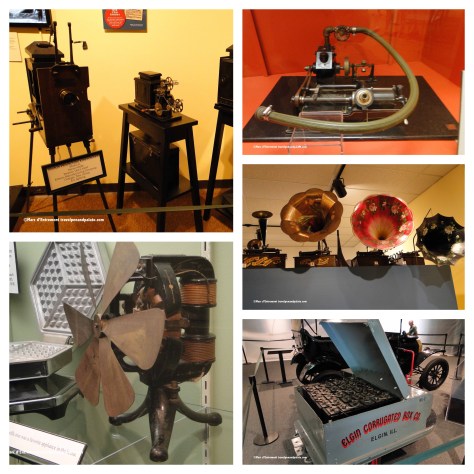
(clockwise left) motion picture projectors, water powered cylinder phonograph c.1890, early record players, electric industrial tractor c.1917, Edison Manufacturing Co. electric fan c. 1900
After Thomas Edison’s death at age 84 in 1931 Mina continued to winter at Seminole Lodge. Mina was Edison’s second wife having been widowed in the early 1880s when only in his 30s. The daughter of an inventor, university educated and an employee at the Menlo Park lab, Mina was as much an intellectual equal to her husband as a wife.
Fountain of natural coral at Seminole LodgeAt Seminole Lodge: the 1st private swimming pool built in S.W. Florida, 1911. The above ground pool constructed of Portland cement – Edison held the patent
Mina was active managing their households, the botanical gardens and the Edison business ventures. Edison was said to greatly appreciate Mina’s intellect and input in discussing his many theories for everything from the phonograph, electric batteries to motion picture cameras. In 1947 Mina deeded the estate to the City of Fort Myers on condition that it be preserved as a public memorial to her husband’s genius.
Edison’s “jungle” at Seminole Lodge
Henry Ford sold his house in 1947, and it remained a private home until the city purchased it in 1988. The Edison & Ford Winter Estates is operated and maintained as a non-profit offering a plethora of tours and activities including an extensive museum dedicated to the genius of these two men. A visit to Edison’s jungle is to step back to an age where great ideas were conjured in the mind rather than by an electronic device – although Thomas probably would have invented the computer if he’d had time.
Sunset over the Caloosahatchee River at Seminole Lodge
It begins with refreshing, moist hand towels scented with lemon grass and glasses of chilled passion fruit juice upon entering the lobby. A visitor becomes a connoisseur of this refreshing amuse–bouche that teases and soothes the senses. Scented hand towels and exotic juice blends transition the visitor from the tropical humidity of Costa Rica’s lush countryside to an enclave of tranquility that is a Small Distinctive Hotel.
Nine boutique hotels, each averaging fewer than 50 rooms, are members of the Small Distinctive Hotels of Costa Rica. Each is privately owned, several in the second generation, unique in architecture and setting, luxurious with fine dinning and backstories as distinctive as the properties. The amuse–bouche – the tease – is that all this comfort helps others; each property visited touched the human side in unexpected ways.
Hotel Belmar – the burden of a name
Hotel Belmar, Monteverde, Costa Rica
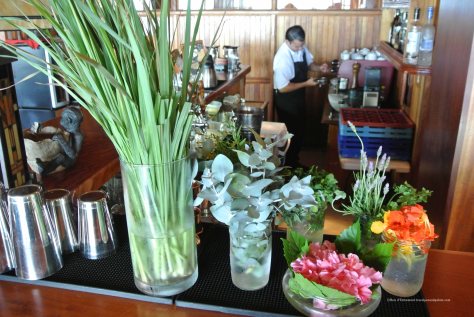
Craft cocktails are not usually associated with the world famous natural wonders of the Montverde cloud forests of Costa Rica. Quakers, cows, hostels and hikers come to mind first. But when you’re Pedro Belmar, second-generation general manager of a famous family mountain retreat, continued success requires thinking out of the box. Or in this case nothing boxed.
In the Belmar’s La Chispa cocktail the refreshing, earthy aromas of the rain forests are recreated.
premium Sloane’s Gin
black tea syrup made from the hotel’s organic garden
cedar pine needle smoke
fresh lime
Crushed ice quickly wets a cocktail glass, as local dry cedar pine needles are lite with a torch. Quickly the glass is inverted over the flame – should extinguish immediately – and rest on the needles capturing the smoke. The cocktail is mixed. Upright the glass and pour into the captured smoke.
bar ingredients from Hotel Belmar organic garden
Sipping a smoky cedar scented La Chispa ensconced in the all-cedar Hotel Belmar overlooking forests tumbling down to the Gulf of Nicoya is all a tease – a visual amuse-bouche. It’s the forerunner that everything good for the guest at a Small Distinctive Hotel should be good and sustainable for 21st century Costa Rica. It should be at your fingertips. “We’re growing smaller,” Pedro Belmar said with a faint smile, expressing a vision for the new look of success.
Hotel Grano de Oro and the House of Light
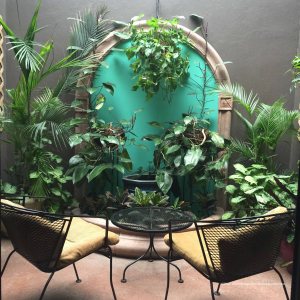
A private guest room garden Hotel Grano de Oro
A blend of old, restoration and cutting edge, Hotel and Restaurant Grano de Oro is firmly established as San Jose’s premiere property. Yet it’s very design from the restoration of a classic Victorian colonial early 20th century mansion was to maintain the hospitality extended to houseguests in a spacious urban home. With understated elegance and graceful service, the exquisite cuisine of Executive Chef Francis Canal Bardot, has set the standard for three meals a day for a quarter century at Grano de Oro and San Jose. Hidden gardens, art and the soothing sound of water fountains follow even into the rooms. A quiet private garden patio with fountain in room six was an opportunity to discover Casa Luz.
Nearly 20 years ago Grano de Oro founders Eldon and Lori Cooke were instrumental in creating the Asociacion Reaccion en Cadena por Nuestra Ninez and opened Casa Luz (“House of Light”) in San Jose. Casa Luz provides multi-year residential programs for abused teenage mothers and their children and a safe home. The program includes all necessary monetary, emotional and psychological support victims’ need. Just ask and the front desk will be pleased to discuss this significant humanitarian project while you enjoy the elegance of Hotel Grano del Oro knowing a portion of profits help support a house of light.
Peace Lodge – inside the Cloud Forest
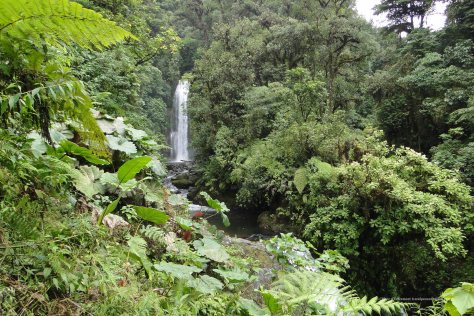
Of course there’s a tropical garden with stone waterfall shower in the skylight ceilinged bath of the guest suite at Peach Lodge. After all it’s nestled within La Paz Waterfall Gardens. In 18 large individually decorated suites, guests luxuriate in river stone hot tubs on plant-bedecked balconies and within private courtyards. Rooms with massive wood honed beds and river stone gas fireplaces open onto views of waterfalls and meandering free-formed trout ponds all designed to make you resign the tensions of the day – the trout may appear on the menu as a real amuse-bouche.
Peace Lodge is an integral component of the privately owned La Paz Waterfall Garden, both the visions of Florida entrepreneur Lee Banks, which protects a plethora of local fauna and animals in this area of the forests and encompasses five stunning waterfalls. Peace Lodge and La Paz Waterfall Gardens are on-going eco-tourism success stories with exciting culinary news forthcoming.
Cuna del Angel – discretely guarding your health
Gluten free bread at Hotel Cuna del Angel
It all starts with the bread. It’s gluten free. It tastes good. It’s whole grain bread with quality organic ingredients prepared by someone who understands proper techniques as in all good cooking and baking.
At Hotel Cuna del Angel, besides practicality due to a family member’s celiac disease, Tom York has every reason to prefer that his restaurant serve only organically grown and produced foods 100% gluten, GMO, and hormone free. Tom has been a devotee of healthy living spanning a decades long career. Many ingredients come from Tom’s own farm, and much of everything else is locally sourced.
Yet the tease is that a guest would never know their health is being guarded unless the menu is read in detail. Dishes from the classic continental repertoire such as flambé mango on vanilla sorbet and fresh snook with a creamy basil sauce are all components of a classic up-scale menu nutritionally balanced. The soft ambient lighting in the open walled palapa dining room overlooking the jungle and Pacific Ocean certainly are digestives in themselves. That’s just one part, as readers will discover in upcoming articles, Tom plays in helping to preserve this cradle of the Angel.
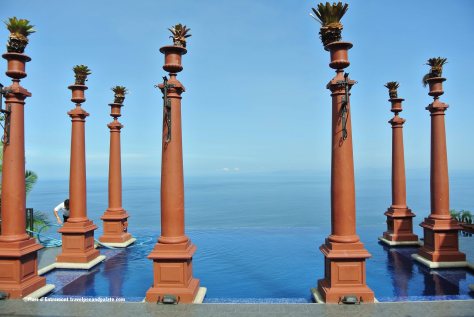
infinity pool at Villa Caletas
Villa Caletas – gazing into infinity
Denis Roy emigrated from France with a dream somewhere in his head that materialized into creating a fantasy in Costa Rica. On over 700 acres of improbable, undeveloped coastal and mountain wilderness, using building methods that hearkened back to the days of the pyramids, the multi building hotel, restaurants and spa complex of Villa Caletas and the Zephyr Palace emerged over a decade. A fusion of river stone castle and tropical Victorian, the 50 rooms range from stunning to awe inspiring.
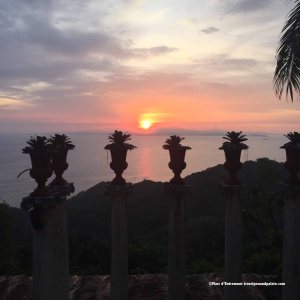
Sunset at Hotel Villa Caletas
Sunsets from the amphitheater are legendary, and views encompass forested hills and the Gulf of Nicoya from many angles. Yet those beautiful hills required total reforestation just a decade ago due to overgrazing. The lush peaks of today were barren, rocky and eroding into the clear Pacific below. Ecological restoration is ongoing and Villa Caletas spearheads major reforestation projects in the region.
That’s why the many infinity pools dotting the complex become a metaphor for the group of Small Distinctive Hotels owners, managers and chefs this journalist interviewed during an eight-day tour. They were all rooted in reality, but liked to tease. My upcoming articles will let you in on some amuse-bouche recipes – the visions they see gazing into infinity.
When you go: Juan Santamaría International Airport (SJO) is served by many airlines worldwide and within an easy 20 minute drive of downtown San Jose. Getting around: Costa Rica has an extensive inter city bus system and many toursit van options. The easiest transportation is renting a car. Costa Rica’s road system is generally in good condition.
Transportationwithin Costa Rica provided by Toyota Rent a Car of San Jose. A Rav4 made Costa Rica’s mountain roads, especially the few unpaved, safe and comfortable.
Chef Francis Canal Bardot cream of pejibaye soup, hotel and restaurant Grano de Oro, San Jose
Additional articles on Costa Rica by Marc d’Entremont:
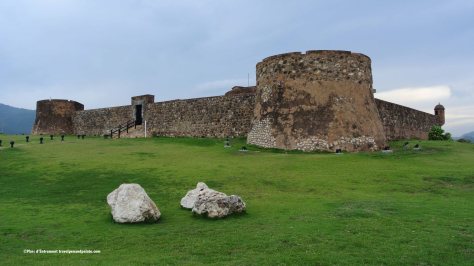
has guarded Puerto Plata, Dominican Republic for over 400 years and now anchors a pleasant ocean side park @fathomtravel #traveldeep #cruise #voluntourism #travel
sharp coral moat
Puerto Plata harbor
the park
You can read all my articles and subscribe to my Examiner columns at:
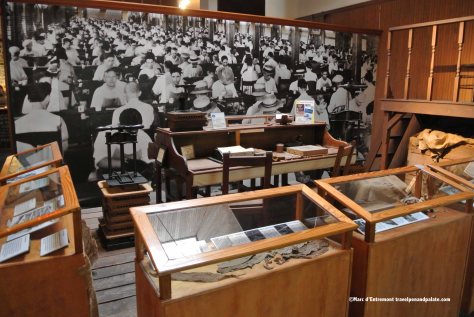
In a few square miles parcel of former Tampa marshland over two hundred cigar factories, manned by thousands of immigrant workers, were hand rolling half a billion cigars annually by the 1920s.
casitas
The fortuitous arrival in the 1880s of Spaniard Vicente Ybor turned a marshland into the cigar capital of the world and created a cultural phenomenon.
Other than the already centuries old Spanish domains in the north and the panhandle, south of St. Augustine Florida in the early 19th century was a land of bayous, forests, gators and mosquitoes. Fortunately, Florida’s still that way in some places.
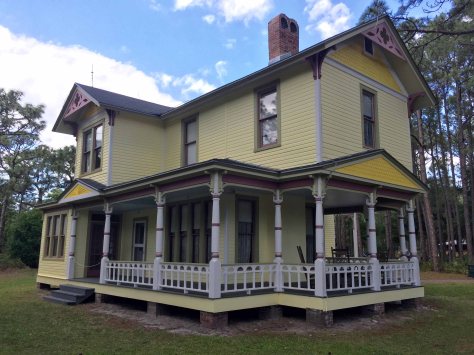
The House of Seven Gables (1907)
Yet by the 1890s the Tampa Bay/Clearwater/Pinellas County Gulf of Mexico shore had been discovered by affluent Americans traveling by the new railroads that opened Florida. Their vacation homes would reflect the styles of the day from simple cottages to Edwardian mansions and Craftsman houses.
Over two dozen historic structures – and growing – comprise the the 21-acre Pinellas County Heritage Village representing Florida life from the mid-1800s to the outbreak of the Second World War. You can continue the story at…
Muhammad, Elder of his Bedouin family in Wadi Fayan, Jordan
The Hashemite Kingdom of Jordan may be less than a century old, but like many Bedouins, the Hashemite family share histories stretching back to biblical times.
The Wadi Rum, Jordan
For millenniums the river valleys, highlands and vast deserts of the Cradle of Civilization were the epicenter of the legendary, lucrative and infamous caravan trade linking Asia with the Mediterranean world. In an age before GPS pictographs were road signs directing caravans that could include up to 700 treasure laden camels.
Travel guide Mohammad Qamhiya explaining pictographs in Wadi Rum, JordanCanyon (Siq) entrance to Petra
One enterprising tribe, the Nabataeans, carved the city of Petra (300s B.C.E. – 800s A.C.E.) into sandstone cliffs and created the wealthiest financial center in the ancient world. With only one public entrance at the end of a lengthy, towering, narrow, canyon road, the Nabataeans made Petra immortal.
Al Khaznch, popularly known as the Treasury, Petra
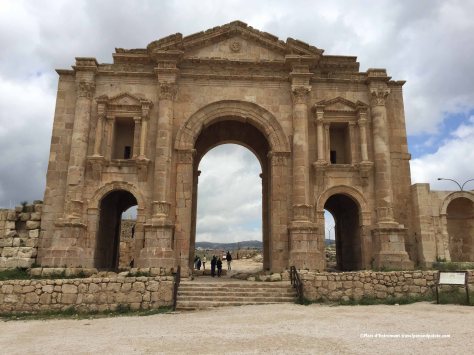
Coupled with its commercially strategic position, the Jordan region had been fused, either through mutual interest, religion or conquest, with the great powers of the day from Greece to the Ottomans. The Greco-Roman city of Gerasa, founded by Alexander the Great (331 B.C.E.) and continuing as a major city within the Roman Empire, is one of Jordan’s archeological gems. Heavily damaged by earthquakes in 749 A.C.E., the city continued, and the remarkably preserved site is surrounded today by Jordan’s modern city of Jerash.
Triumphal Arch of Hadrian, Jerash, JordanSite at which John the Baptist baptized Jesus of Nazareth, Jordan River: (left bank) the Hashemite Kingdom of Jordan, (right bank) Israel
The Jordan River of biblical fame still defines a land that has stirred great passions in human history from Moses to today’s conflict concerning the West Bank. People that share an ageless history are divided by a thin, slow moving stream of brown water.
Present day Christian baptisms, right bank Jordan River (Israel).
Jordan’s storied history has created a legendary cuisine with variations of many dishes it shares with Spice Route neighbors. From breakfast to late night dinner a bounty of mezze (small plates) to aromatic wood grilled lamb and Bedouin ash bread baked in hot sand will be but a few of the dishes in a culinary repertoire as vast as the Kingdom’s deserts.
a mezze “buffet” at Sufra Restaurant, Amman, Jordanfishing in the Red Sea, Aqaba, Jordan
For the modern traveler there has never been a better time to enjoy hospitality as stunning as Jordan’s natural beauty. Despite surrounding turmoil, the Hashemite Kingdom of Jordan enjoys peace within its borders and goes to great length to ensure security for its citizens and visitors. Tolerant and democratic Jordan allows the 21st century traveler a rare glimpse at the entire history of the Cradle of Civilization from iconic archeological sites, ageless Bedouin lifestyles, the roots of modern cuisine, phenomenons of nature, accommodations from Bedouin tents to the heights of luxury and even newborn baby camels.
Mother & newborn camels, Wadi Rum, JordanCaptain Desert Private Wadi Rum Camp, JordanKempinski Ishtar Hotel, Dead Sea, Jordanenjoying a hooka, Aqaba, Jordan
Discover Jordan for yourself.
Dead Sea sunset from the Kempinski Ishtar Hotel, Jordan
Follow Travel with Pen and Palate’s articles on Jordan:
It is an undeniable cliché that the islands of Greece are firmly part of the great destinations of the world. It’s an extra pleasure to be a guest on one of the lesser known islands, Kythnos. The island is ideal for tourists who seek tranquility. Five photo perfect villages dot the island and all are easy to reach by car. Their compact size makes them enjoyable to wander on foot. Kythnos being a classic Cyclades mountaintop, driving the roads means going either up or down until on the spine of the island. The panoramic views are spectacular. Read my article in the Hellenic News of America, Kythnos: small island with a big Greek heart.
Ios Island
Homer chose Ios as his final resting ground. His tranquil burial site on the herb blanketed north hills of the island offers a panoramic view of the Aegean. In the 21st century thousands of young tourist in July and August choose the island for its clubs, resorts, secluded beaches and music scene. Yet even at the height of the summer season and certainly the remaining ten months of the year, the tranquility Homer enjoyed for millenniums is the genuine character of Ios. my article in the Hellenic News of America, Slow down on the Greek party island of Ios tells you how to still have fun!
Paros Island
Flowering shrubs, trees, herbs and succulents blanket the hillsides while clear Aegean water laps Paros Island’s shore. Classic white villages accented with blue are surrounded by soil envied in the Cyclades. Buildings jumble upon one another like blocks and many pre-industrial stone streets are pedestrian only, too narrow for anything more mechanized than a scooter. Ancient and protected grape vines thrive along with winter wheat, olives, fruit and produce. Please read aboutSavor culinary and historic Paros Island in the Hellenic News of America.
Milos, Greece
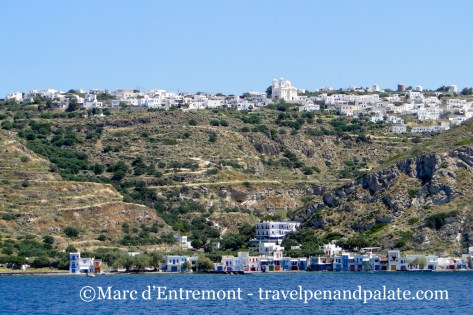
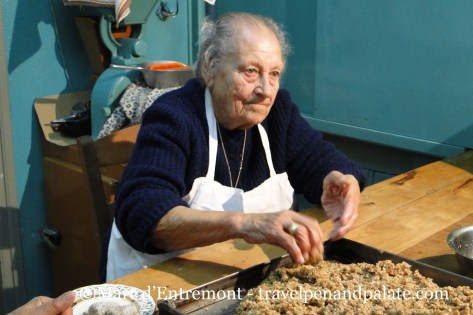
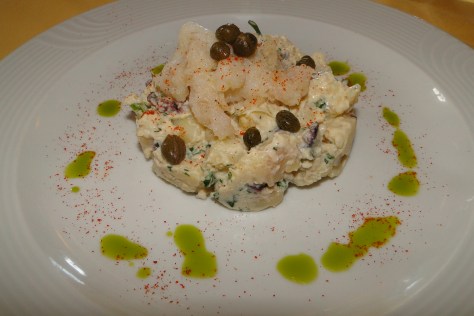
From volcanic cooking at Cafe Restaurant Sirocco on the island of Milos to Barriello’s 150-year-old vaulted basement in ancient Trypiti, the culinary scene in Milos is part of a trend among young Greek chefs to preserve grandmother’s recipes but tweak them for the 21st century. Read about this gastronomic find in the Hellenic News of America in Eating Milos: culinary stars in a Cycladic galaxy
Sifnos Island
The steep Sifnos Island hillsides that rise from the Aegean Sea are crisscrossed by dozens of centuries old foot and donkey paths. These tended rock walled paths still connect island towns. With the decline in the use of donkeys, Sifnos tourism promotes them as ideal walking trails, although a hiker will have to make way for goats and the occasional working donkey. This acceptance that both ancient and every day reality still coexist is the unique pleasure of Sifnos, and in the Hellenic News of America find out why Tradition crafts 21st century Sifnos.
Selene’s, Santorini Island
“Selene is zero distance from farm to table,” Georgia Tsara says with a broad smile obviously as pleased with the restaurant’s location on Santorini as she is with this fabled island’s products. The volcano that blew Santorini into history 3,500 years ago is responsible for sculpting the magnificent and photogenic 800-foot cliffs currently topped by some of the most sought after hotels in all the Greek Islands.It’s responsible as well for some products unique in all of Greece, and my article, A Santorini lunch with Selene’s Georgia Tsarain the Hellenic News of America will guide you to one of the finest meals you’ll experience in your travels.
Alonissos Island
Not all Greek islands are similar, just as the mainland is a patchwork of ecosystems. The Cyclades, the tourist mecca of islands in the south Aegean, tend to be dry with low vegetation and whitewashed villages trimmed in blue shuttered windows and doors. Alonissos, located in the central Aegean, is the most northerly of the Sporades islands with towering pine forests tumbling down the rocky cliffs to the sea. They’re more akin to the northern New England coast of the U.S.A. than southern Greece. Discover why Alonissos Island is a floating spoon sweet.
Santorini Island
You can read more articles by Marc d’Entremont at:
Alfajores with dulce de leche at Mr. Cebiche Peruvian restaurant, Mount Dora, FL
Peru is not what comes to mind when wandering Mount Dora’s Victorian and Arts & Crafts streets. Yet among the myriad number of restaurants and cafes Mr. Cebiche Peruvian Cuisine is an innovative addition to the town’s American Modern standards.
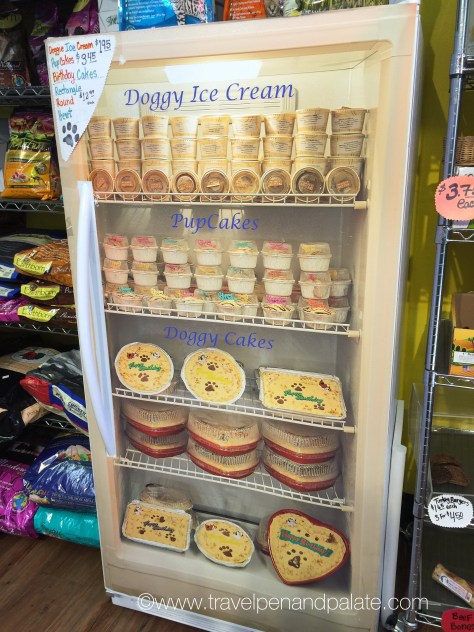
But its culinary choices are not limited to people. Piglet’s Pantry has been baking all-natural dog biscuits for nearly 20 years.
Piglet’s Pantry line of doggy ice cream & decorated birthday cakes
The Annamite Mountains divide Vietnam’s one thousand mile strip of mountains and beaches along the Pacific Ocean. The south is tropical year round, but northern winters can be cold and damp. Political upheaval in the late 18th century led to the Nguyen Dynasty’s triumphant unification of the northern and southern factions in the early 1800s.
The Imperial City, Hue
Yet political upheaval seems to have been the natural order often until 1975. The end of America’s Vietnam War allowed the Vietnamese to concentrate on what they enjoy the most — doing business. Whether it’s a BMW auto dealership in Hanoi or a convenience store in a rowboat on a bay, the Vietnamese are capitalists. It’s part of the throb of real life in Vietnam.
Part of life is also stunning natural beauty, crazy traffic, the silence of fog on a bay and the iridescence of a fresh pearl just shucked from its shell. One trip is not enough. This exploration highlights five key destinations in the north.
Among Florida’s Roaring Twenties grand hotels it seems Al Capone slept in many, including Casa Marina. The mid-1920s Prohibition era was profitable for Florida including Jacksonville Beach. The beachfront Mediterranean Revival club-like Casa Marina, complete with a sprinkler system, opened in 1925 to a high living bi-coastal clientele.
Casa Marina Hotel Penthouse Lounge, Jacksonville Beach, FL
Ninety years later on the deck of the Penthouse Lounge & Martini Bar overlooking the Atlantic’s pounding surf Casa Marina serves a premium Tequila Margareta – without the slushy ice – that I’m confident infamous Al would approve.
Read what intrigued even the big Al to Jacksonville Beach…
Blessed with Florida’s agricultural and ocean abundance at their doorstep, restaurants in St. Petersburg don’t have to search far for quality ingredients.
Smoked Fish Sandwich, Ted Peters Famous Smoked Fish, St. Petersburg, FL
A relaxed Gulf of Mexico life style and plenty of Florida sunshine draw residents and tourists to a plethora of cafes, fine dining, bars and beach side venues serving traditional fried fish platters to truffled wild mushroom risotto. With an emphasis on independent ownership St. Petersburg chefs have the freedom to experiment or just create the best grilled grouper sandwich on the beach. Here’s a dozen to try in the St. Petersburg area…






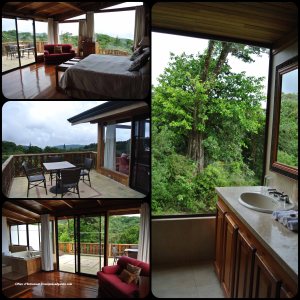
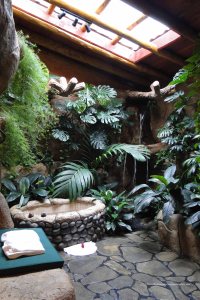 Of course there’s a tropical garden with stone waterfall shower in the skylight ceilinged bath of the guest suite at Peach Lodge. After all it’s nestled within La Paz Waterfall Gardens. In 18 large individually decorated suites, guests luxuriate in river stone hot tubs on plant-bedecked balconies and within private courtyards. Rooms with massive wood honed beds and river stone gas fireplaces open onto views of waterfalls and meandering free-formed trout ponds all designed to make you resign the tensions of the day – the trout may appear on the menu as a real amuse-bouche.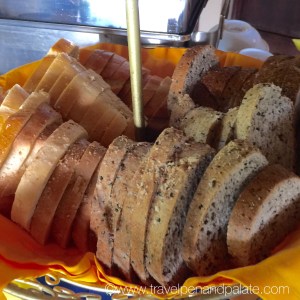




















 Travel with Pen and Palate
You must be logged in to post a comment.