
Tag Archives: restaurants
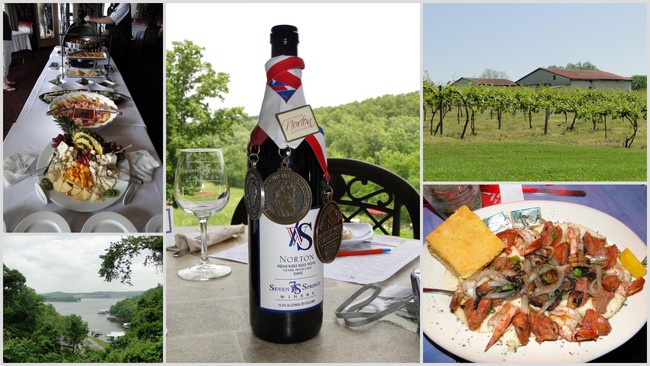
The Black Trumpet, Spring Lake, NJ: Gourmet Lunch on a Budget

The Black Trumpet’s lunch in tony Spring Lake, New Jersey, is oceanfront fine dining at a fast food price.

Spring Lake: New Jersey’s Irish Festival on the Riviera
Spring Lake, NJ, known as the “Irish Riviera,” goes all things Gallic in mid-June – but no green beer.

Kansas City, MO: Blues, BBQ and Baklava
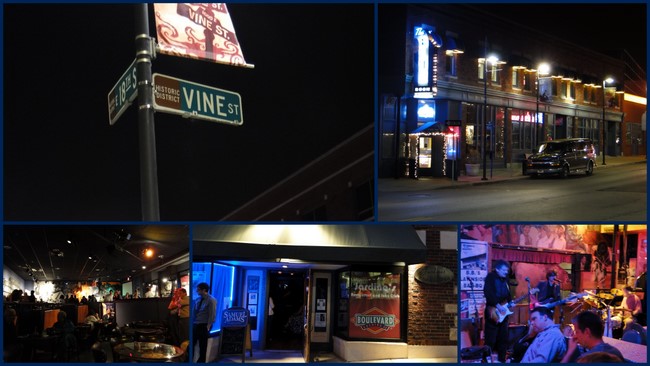
Kansas City: this gateway to the west kept on the move gathering an international mix of cultures, food, jazz and blues defying mid-west stereotypes.

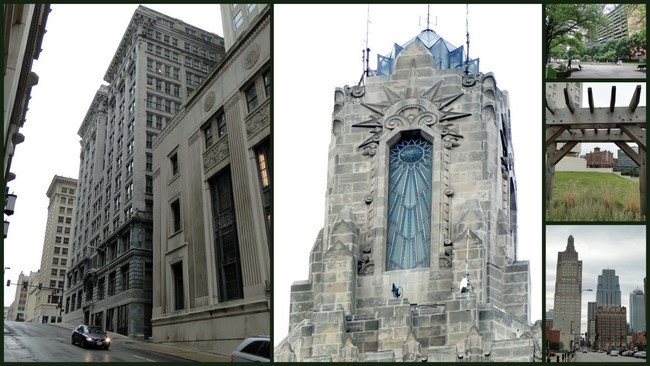
Kansas City: Missouri’s Modern Day Phoenix

Missouri’s Kansas City is undergoing a revival that’s attracting businesses back from the suburbs and especially from that “other” Kansas City.
Columbia, Missouri: A Zou for the Lively Arts
Be it jewelry, painting, film, music, writing or culinary, 100,000 Columbians enjoy a surprisingly rich artistic life – and a lively “Zou” of 50,000 students.
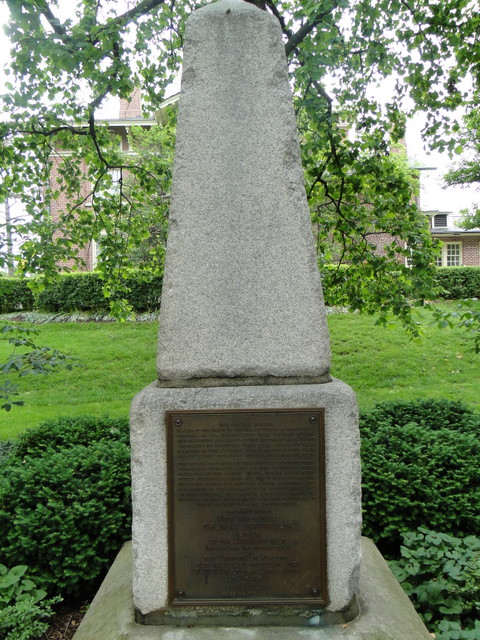
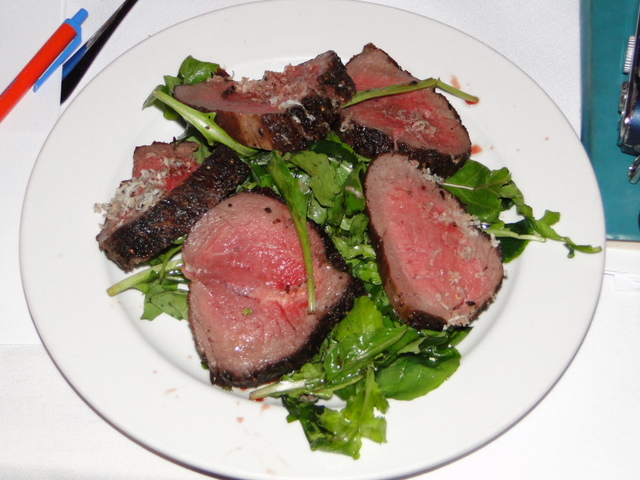


Great dining experiences in Missouri
Great dining experiences in Missouri: the heartland of America has more to offer than just being “that empty space” one flies over from coast to coast.
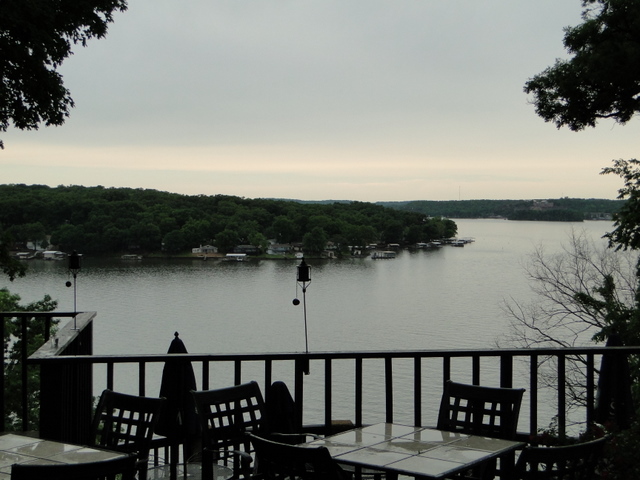
Restaurant, Seafood, Hotel – Hoi An, Part III
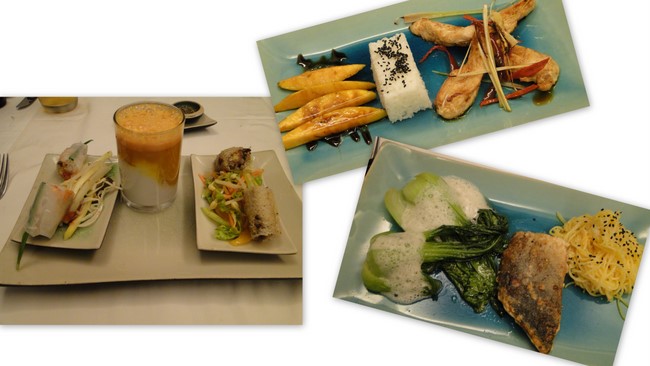
For a tourist town, Hoi An has a surprising number of decent restaurants at some of the lowest prices outside the major cities. My first dinner in this city of 200 + year-old-buildings was at a hip new boutique hotel and café, River Lounge (35 Nguyen Phu Chu). The simple, modern white interior provides a nice foil for imaginative interpretations of traditional Vietnamese cuisine.
Take simple cream of pumpkin soup, found on so many menus, River Lounge serves a cream foam topped with the seasoned pumpkin puree in a swirl on top in a tall clear glass. The textures of hot puree mixing with cooler cream, as well as the visual, is a nice touch. The rest of the meal was equally satisfying.
An assortment of spring rolls, an entrée of grilled river fish with steamed morning glory greens and lime foam and fresh noodles and one of boneless chicken in a sesame/soy/ginger reduction accompanied by a block of rice and grilled mango. Dessert was a perfectly executed creme caramel topped with a crunchy ginger sugar glaze.

Cafe Can(74 Bach Dang St.) is one of many Hoi An river front restaurants that all basically offer the same menu. Cafe Can caught my eye for both its pleasing outdoor dining and its large wood charcoal grill off to the side with fresh fish and seafood for dinner. In simple large pots of aerated water are freshly caught giant prawns, crabs and clams.
Sold by weight, they are best grilled napped with a variety of herb/garlic/ginger/soy sauces. The meal was accompanied by a large platter of steamed vegetables and mushrooms, with a large local beer.
A variety of other preparations, from fish baked in banana leaves to fried as well as non-fish dishes are available. Being open to the street directly across from the river, don’t be surprised when more than one street vendor wander in selling bracelets, the English language Vietnam Times, dried fruit and homemade candies. It’s all part of Vietnam.

Dem Hoi Bar & Restaurant, just down the block from Cafe Can, has the advantage of a beautiful French colonial building with a large open second floor that offers stunning views of the river and Hoi An harbor. The menu is decent – nothing surprising but well prepared.
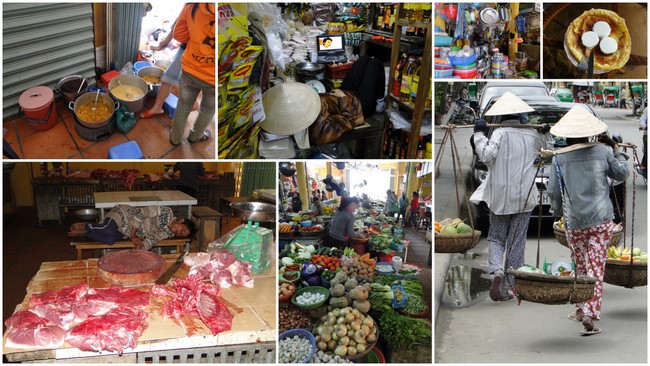
Over on the French Quarter are several cafes that serve, if lucky and they are available at the market, Vietnamese delicacies such as pig’s brain and eel. The brain was unavailable but the eel was nicely fried in a light batter – tasted a lot like trout (see, not chicken!) The Hoi An Market is classic offering everything from hot soup to wonderful French crepes topped with coconut ice cream (top right).

When it comes to hotels there is a large selection of accommodations with many moderately priced first class venues. The newest choices are on the expanding residential island of Cam Nan, a 10 minute walk across the bridge from the Old City. Cam Nan Island is quiet with a pleasant mixture of old wooden houses with vegetable plots to the larger homes of new middle class residents.
Windbell Homestay Villa has an established reputation for comfort, service and a good restaurant. Set around a central garden and beautiful blue tiled swimming pool, this family run hotel offers spacious rooms with lots of windows that open onto nice private vistas letting in the sea breeze. Including a full breakfast, strong Wi-Fi, double rooms average in the low US$100s.

Serving all meals, the Windbell Homestay is one of the rare small hotels with a full service restaurant with everything freshly made to order. A Hoi An specialty, White Rose, (bottom left) is a delicate dumpling filled with savory mixtures which the Windbell does particularly nice as well as spicy shrimp, Beef Pho (upper left) and a great herb calamari sauté on mint and watercress (upper right). Add a bottle of white or red from Vietnam’s largest winery, Vang Dalat and you’ll enjoy a pleasant meal overlooking the lit gardens and pool. (Vang Dalat will not win any awards soon).

The Hoi An Folk Art Museum is well worth a visit. It has a fine display of traditional tools, everyday life items, artistic and musical traditions, the important silk weaving industry and some contemporary art. The large 18th century structure is a treasure in itself.
 Hoi An is one of those rare villages tourism has revived that, as of yet, has not been destroyed by its success. Perhaps it’s the strong merchant background of old Hoi An – sails and a port still equals sales. It doesn’t hurt having a strong preservation ethic among the town leaders. New construction in the Old City was following strict building codes using the same materials and methods of construction as 200 years ago. That commitment bodes well that even though it will remain a tourist town, Hoi An’s real, still going about its business and beautiful.

Beach Anyone? An Undiscovered Vietnam

Vietnam: jungles, mountains, green and 1,956 miles (3260 km) of coastline (not counting islands) much of it pristine, undiscovered, wide, white sand beach. “Undiscovered” by a beach-hungry Western tourist world but for how long?
 The 65 mile (110 km) trip from Hue to Hoi An is a beautiful coastal drive past fishing villages, wet lands and rice paddies with the road winding through the hills of the Truong Son Mountains. The postcard fishing village of Lang Co is situated between the Pacific and a perfect crescent lagoon dotted with boats. Tourism investment money is starting to develop the beach towns, but it will, hopefully, be some time before they’re condo canyons.
We were on our way from Hue to the UNESCO Heritage village of Hoi An, some 10 miles south of Da Nang. From Hue the passenger train line from Hanoi to Ho Chi Minh City (Saigon) hugs the same coast as the coastal highway, a 4 hour trip to Da Nang. From Da Nang you catch a taxi to make the 30-45 minute drive to Hoi An (cost $28 – $45/double train and taxi). As beautiful as the rail trip would be, I chose to arrange for a car and driver to make the trip to Hoi An with the option of stops on the way. For US$60/double this was a terrific day trip as well as transportation to our next destination.

I would have enjoyed wandering around the village of Lang Co, but on this day it was primarily a lunch stop. The Thanh Tam Seaside Resort is nicely designed. The main reception building contained a spacious restaurant decked over a sloping hill and opening onto a sweeping view of the Pacific at palm tree-top level. The palm trees create a large shaded sitting area at beach level. The rooms for the hotel were in separate beach front buildings. I did not see the rooms but TripAdvisor reviews are not kind. Of course there was a large store selling jewelry and clothing. There was no competition on either side of the resort for the peace of an enormous stretch of sand with beautiful views of the mountains.

For a tourist resort, the restaurant was surprisingly good. Specializing in seafood, there was a fine selection of grilled clams and oysters topped with a variety of savory sauces. Spring rolls were delicate and lightly fried. Prices were at the high end for Vietnam meaning that lunch or dinner for two will average US$25/30. (Our light lunch with espresso was $18/two).

The Hai Van Pass is the reason for making the overland trip by car – or if intrepid, by bicycle. The train dramatically hugs the coast around this finger of the Truong Son Mountains that literally juts into the Pacific Ocean creating a 1500 foot (497 m) barrier geographically dividing the country north and south. By car Highway 1 switchbacks up lush mountainsides, brushing clouds, opening vistas of the blue ocean set against the intense green of farm fields. This mountain barrier creates the moist microclimate that makes Hue and the Perfume River delta a unique ecosystem.
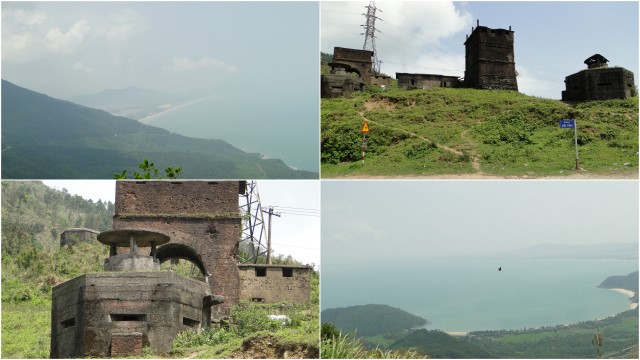
For over 1,000 years, Hai Van Pass (Pass of the Ocean Clouds) was the boundary between the Kingdoms of Vietnam and Champa. Even after the final conquest of Champa by Vietnam’s Nguyen dynasty in the early 19th century, the Pass was deemed a strategic position through the Vietnam War. Pill boxes are next to a 19th century watch tower. Today the site’s a rather windy, shabby remnant of a violent past. One side of the road is lined with the ubiquitous tourist stalls selling the same trinkets, water, soda, cigarettes, scarves, postcards etc that you’ve seen so many times already. Your car literally will be surrounded by well meaning and persistent sales women. I admire their persistence, even while regretting that I do not need what’s for sale, because it’s certainly a peaceful pursuit after this site’s violent past millennium.
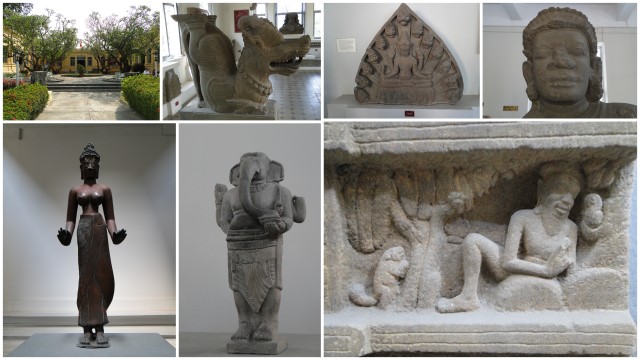
Having traveled to both Cambodia and northern Vietnam, I could see and understand the distinct break in artistic traditions between the Chinese Confucian influenced north Vietnam and the Hindu/Buddhist/Khmer Champa Kingdom of the south – there is a cultural divide. Da Nang’s Bao Tang Dieu Khac Champa Da Nang (Museum of Champa Art) is both a gem and the world’s largest repository of the exquisite sculpture of this civilization.

The rapidly sprawling rather charmless city of Da Nang looks like a new settlement. If there was a historic core or a building prior to 1975 it’s well hidden. Being both a major port and air base during the Vietnam War did make it a prime target for severe damage. With modern Vietnam’s penchant for getting on with the future there’s little to no evidence of that past war. Yet Da Nang’s future fame will result in the development of its miles of stunning beaches. Australian money has already begun to pour in starting major golf/hotel/condo resorts. Iconic China Beach is highly desirable real estate. Da Nang’s airport is undergoing major expansion. I know it would be politically correct to decry this future loss of pristine nature, but also patronizing. This is an ancient land. It changes.

In Rediscovery: Huế, Việt Nam

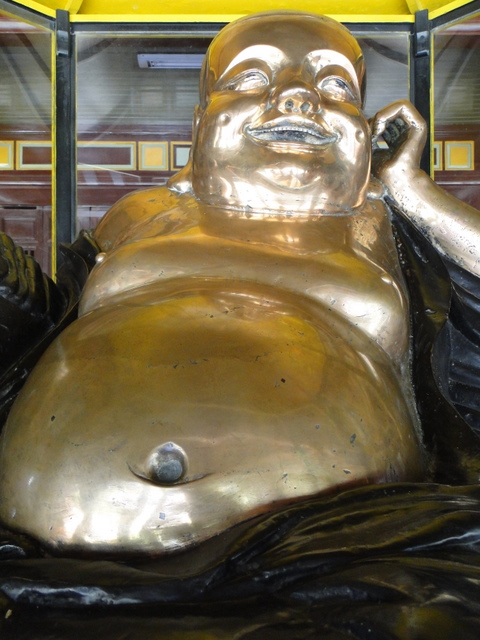
There has been a river port on the Perfume, just a few miles inland of the Pacific, at least since the early 14th century. The unpredictable river has intertwined for 650 years with Nguyen dynastic intrigue to inexorably shape the modern city. Hue exudes a less frenetic pace than Hanoi – although the cyclo and tourist boat drivers are just as “persistent.” It’s a city with an attitude: “I’ve seen it all before, several times, so let’s move on.” Besides, the river moves on regardless fertilizing the farms, and frequently cresting its banks creating destructive floods even the Imperial City cannot defend against.
Before the Vietnam War’s 1968 Battle of Hue severely damaged the city, graceful French Colonial villas blended with ancient Confucian/Buddhist architecture. Much of that is gone, replaced by functional late 20th century commercial whatever. A loss? Of course, but, of course, before the French it was all Confucian/Buddhist, and yet there was that earlier Champa period and …


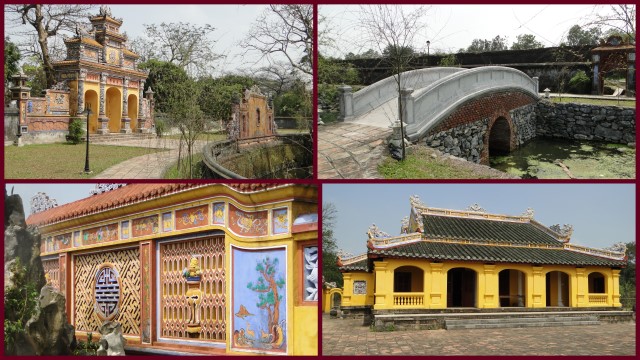
A four day visit is not sufficient to prove, but I have a hunch that Hue has not rediscovered its role in 21st century Vietnam – and I’m not sure they’re all that concerned. In the old commercial city on the south bank of the Perfume, Hue is still a maze of narrow streets but with few pre-1970 buildings. Many charmless new narrow 5 to 6 story hotels and condos are classically jumbled along with cafes, shoe shops, clothing stores, spas and the postcard vendor. Only a few shops noticeably cater just to tourists. Perhaps that’s because most sites for visitors are outside the city or on the north bank, such as The Imperial City.

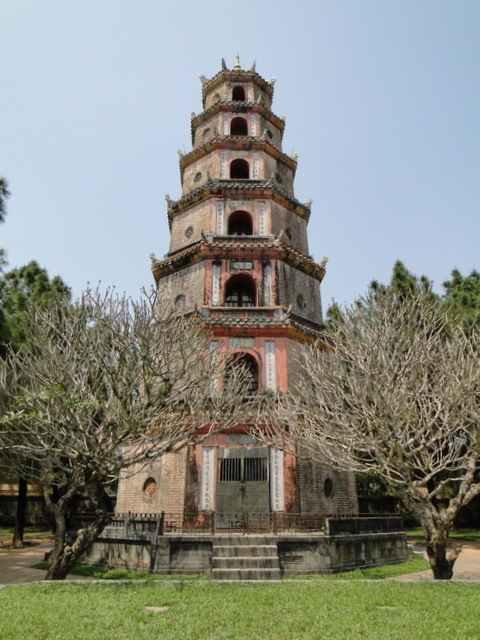
Nearly equidistance between Hanoi and Saigon, Hue has been a meeting ground of the nation’s great cultural institutions. Confucian and Chinese Buddhist Vietnam in the north blended with Khmer/Champa Buddhism from the south and both have dealt with the French legacy of Roman Catholicism. Yet even under the Confucian Court of the Nguyen emperors, and the Socialist Republic, Hue’s mascot has been the 1602 Buddhist Thien Mu Pagoda. As in all Vietnamese cities, both Confucian and Buddhist temples built through family patronage, to publicly honor ancestors, can be found tucked away on many streets.


It is convenient to walk along the landscaped river park on both banks of the Perfume River and cross either one of two bridges that connect the Imperial City with downtown. “Convenient” as long as being comfortable with the traffic, the lack of crossing lights, stop signs and constantly being asked if you want to ride a cyclo or buy something. Otherwise, metered taxis are common and inexpensive – a couple of dollars between the Imperial City and any downtown hotel. Excursions to the Imperial Tombs and boat trips on the Perfume River – both highly recommended – should be made through your hotel (more likely to get a better boat at a fair price). I prefer the freedom of not traveling with groups. A private car and driver for a four hour excursion to some of the more remote tombs was US$30. A private dragon boat for a 7 hour trip on the Perfume River stopping at tombs, monasteries and a Garden House was US$20. Rates are less if you join a group.


Hue has several luxury hotels including the newly restored venerable Hotel Morin Saigon (1904) starting at $100/double. Although featuring the comforts of a 5-star hotel with an attractive pool/garden/cafe courtyard, it possess all the sterility that goes along with such venues. There are many excellent small hotels offering much better service than their 3-stars would indicate. Although at a rate that would make most Western tourists think twice, the US$35/double per night including buffet breakfast Orchid Hotel on Chu Van An Street in the Old City was not only the best hotel at that price in which I have ever been a guest, but a fine hotel by any standard.

Clean, modern with a staff that would never even let you push the elevator button, the Orchid’s rooms were large providing ample closets, a spacious bathroom and a desk with a high-speed desktop computer included in each room! Hue traditionally is known for its Imperial Cuisine which, unfortunately, I found in few restaurants. The Orchid only serves breakfast offering an excellent selection of items typical of Hue – chicken balls rolled in flaked green rice, fried rolls stuffed with vegetable/meat mixtures, banana pastry with caramel sauce and an incomparable Beef Pho, the Vietnamese breakfast noodle soup. A large selection of fresh fruit – including tropical varieties such as whole passion fruit – baguettes and Western dishes rounded out the buffet.

Many decent restaurants are found in the Old City all within easy walking distance of most hotels. Confetti Restaurant & Art Gallery and the Tropical Garden, both on Chu Van An Street, offer well prepared standard Vietnamese food in pleasant surroundings just like the majority of the area’s venues that are patronized by tourists. Yet there are lots of small places filled only with locals with menus not written in English, but, I’ll be blunt, the sanitation methods I can see frequently make me dubious. Getting a recommendation from your hotel for local restaurants is a must or else I’d never have eaten dinner at Am Phu Restaurant a bit further down Chu Van An Street. A calamari dish with greens, peppers and cilantro and light, moist coconut batter fried shrimp were as fine as in any dining room except I was sitting on a plastic chair under fluorescent lights with a TV soap opera playing. Dinner for 2 with beer was less than US$10.

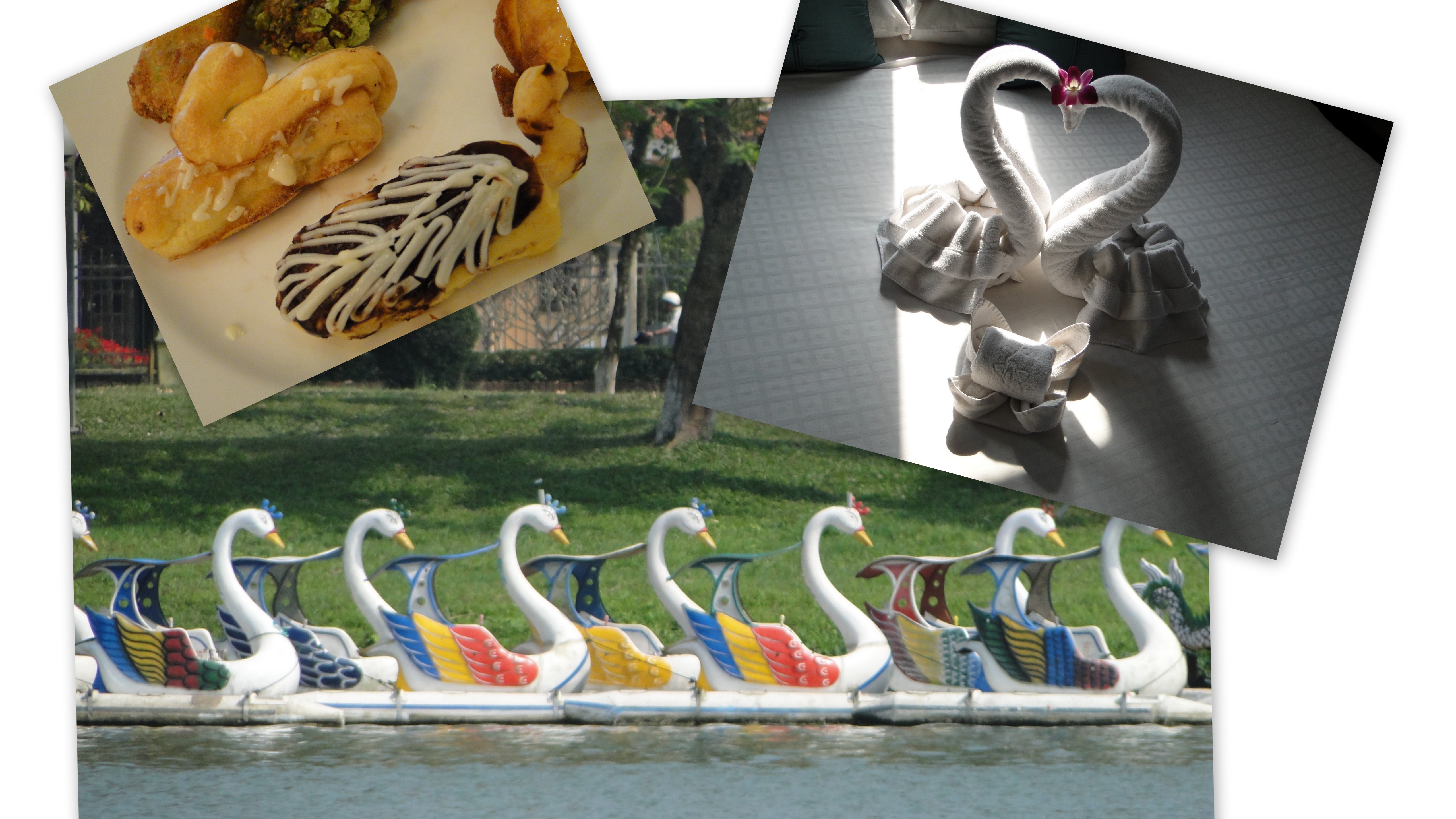
Pastry, towel art and Swan boats on the Perfume River, shade trees and gardens, ancient tombs and palaces, markets and street merchants, mountains and house boats – they were all here 500 years ago and, despite the history Hue’s helped shaped, they’re still here today waiting to be rediscovered.
 Travel with Pen and Palate
You must be logged in to post a comment.