Tag Archives: food

Cuna del Angel is discretely gluten-free in Costa Rica

Tom Nagel, founder & owner, Hotel Cuna del Angel

The fresh butter spread easily onto whole grain bread. Rich in chia seeds, the tender yet appropriately dense bread was yet another tasty creation of Tina, Hotel Cuna del Angel’s pastry chef. If gluten intolerant, everything served at Cuna del Angel is safe to eat and to all other guests it’s simply delicious.

A quick read of the classic European inspired menu at the La Palapa restaurant gives guests not a clue their dining health is being guarded. An array of breads vies with such classics as spinach tagliatelle with artichokes, beef tenderloin accented by porcini mushrooms, and a presentation of greens in the Jungle Salad that’s an evocation of the surrounding forest. Deeper reading reveals the pastas are made from cassava, lentil and garbanzo bean flours and many of the salad’s greens are sustainably harvested.

Gluten free spinach tagliatelle with artichokes

German by birth, Tom Nagel’s passion for natural healthy eating developed over time and was accelerated by organic farm ventures in Spain. Drawn over a decade ago to the climate, business potential and progressive farming methods practiced in Costa Rica, Tom’s vision for Cuna del Angel’s La Palapa dining room was to be a discrete haven of healthy eating. Second hand experience with celiac disease made the 100% gluten-free decision easy.
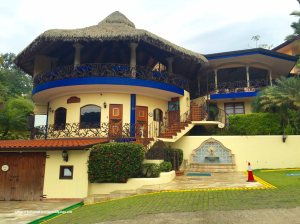
Hotel Cuna del Angel, Costa Rica

The Small Distinctive Hotels of Costa Rica, of which Cuna del Angel’s a member, take pride in living sustainable tourism. Hotel Cuna del Ángel has the highest recognition – five leaves – by the Costa Rica Tourism Board through its Certificate for Sustainable Tourism program. To Tom, caring for the cradle (cuna) of the angels is a reciprocal arrangement with the guardians of human life.

Demonstrating this commitment to local, organic and sustainable foods and sources is as close as Tom Nagel’s own farm. Many of Cuna del Angel’s vegetables, greens, herbs, legumes – and eggs – are grown using hydroponics or permaculture agricultural methods. The farm produces its own natural fertilizer utilizing a bio digester with its methane gas byproduct channeled to other uses. A natural wood vinegar herbicide is made through a distillation process that condenses a smoldering fire of wood and banana leaves.

Tom's organic chocolate, Cuna del Angel
Tom’s organic chocolate, Cuna del Angel

Honey for Cuna del Angel’s kitchen is harvested from the farm’s hives but only from the upper layers so as to minimize disturbance to the colony. Four hundred cocoa trees discovered on the farm produce the dense, smooth dark Tom’s Chocolate Bar, but they’re not for sale. Tom donates the bars for charity fundraisers and uses them as a delicious business card.

La Palapa dining room

All of these techniques take time, but to Tom the alternatives are not debatable. Even the hotel’s design is an expression of a vision that it is possible to find balance in life and space. La Palapa dining room is homage to the traditional indigenous culture’s sense of orienting life according to energy points – the web site has a complete explanation. The soft ambient lighting in the open walled dining room that overlooks the jungle and Pacific Ocean is certainly conducive to calmly enjoying fine cuisine.
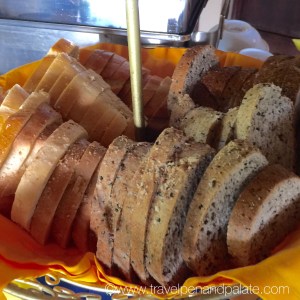
Gluten free bread at Hotel Cuna del Angel

Meals usually start with bread and a gluten-free menu easily complies. Cultures worldwide have been making bread products from non-gluten flours for millenniums. Chef Tina at Cuna del Angel uses corn, rice and yucca flour blends. All baked items, ice creams and other desserts are made in house. Gluten-free hors d’oeuvre bread with a chewy cracker texture was served with a seasoned butter of capers and olives. Whole grain bread speckled with chia seeds was indistinguishable from its wheat flour compatriots. It was simply an excellent slice of bread.

Jungle Salad, Cuna del Angel

The aforementioned Jungle Salad featured kutuk leaf, Jamaica leaf, organic spinach and watercress with oil and balsamic. The variations in texture and color are as interesting as their source. All grow as bushes so harvesting is by trimming as the plant continues to produce.

Fillet of snook in basil sauce

Soups included an earthy cream of porcini and truffle that tasted like the forest after a summer rain. Bright reddish orange cream of pajibaye is a true Central American treat. The fruit of the Peach Palm, cooked pajibaye has a dense butternut squash texture and color. Its flavor has notes of pumpkin with a touch of lemon juice. Classic entrees of baked fillet of local snook was bathed in a bright green basil sauce, while the flavor of pork tenderloin – only prepared well done – was sparked by tangy tamarind sauce.
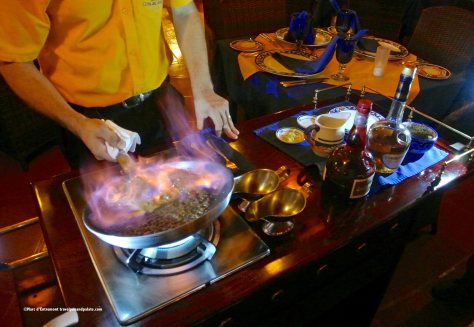
flambé mangoes Cuna del Angel

The imaginative dessert creations are impressive especially given that they are prepared as a component to a balanced meal and not just an extravagant indulgence – but don’t remind your endorphins. Nothing is more iconic of formal dining than French table service and Roberto Bonilla Campos did appropriate justice with flourishes to table side flambé mangoes in brown sugar butter sauce with Grand Marnier and Courvoisier. Gluten-free crepes are available, but the rich mango was terrific with house made vanilla bean ice cream.

Sorbets at Cuna del Angel

Fortunately it was possible to taste the desserts over several meals, so the chocolate, pistachio, passion fruit and honey ice creams are as luscious as the vanilla. Tart Tartin had as flakey and buttery a crust as any Parisian patisserie, and passion fruit pie had a firm but creamy chiffon-like texture with a zing of citrus to compliment its natural perfume.

Hotel Cuna del Angel has sixteen spacious rooms with balconies facing the ocean in the main building and seven in the Jungle Villa. The Jungle Villa has a tree house vibe as the balconied rooms are built into the forest. Wellness at the hotel extends beyond gluten-free foods to the attractive spa and the extensive list of outdoor activities in the southern Pacific coast of Costa Rica.

Guest room, Cuna del Angel

Located in the hills above a quiet and secluded stretch south of Playa Dominical, the hotel is ideally situated for half and full day excursions for a plethora of activities including Corcovado National Park, Manuel Antonio National Park, forest hiking and canopy tours, sport fishing, snorkeling, scuba diving, horseback riding, whale and dolphin watching as well as ten nearby beaches. The front desk will help with any arrangements. Or relaxing at the hotel’s infinity pool surrounded by the jungle with the chirping of birds might be the best prescription for wellness. Active or passive, a guest will be cradled at Hotel Cuna del Angel.

View of the Pacific from Hotel Cuna del Angel


When you go: Juan Santamaría International Airport (
SJO) is served by many airlines worldwide and within an easy 20 minute drive of downtown San Jose. Getting around: Costa Rica has an extensive inter city bus system and many tourist van options. The easiest transportation is renting a car. Costa Rica’s road system is generally in good condition.

Disclaimer: The author was a guest of Hotel Cuna del Angel, Small Distinctive Hotels, ENroute Communications and Revista Ander de Viaje. Transportation within Costa Rica was provided by Toyota Rent a Car of San Jose. A Rav4 made Costa Rica’s mountain roads safe and comfortable.
DSC_5783


Additional articles on Costa Rica by Marc d’Entremont:
It begins with scented hand towels
Monteverde Biological Reserve is a climate change laboratory
Cream of Pejibaye: a Costa Rican national dish
Costa Rica and the vision of Pedro Belmar
You can read more articles by Marc d’Entremont at:

Hellenic News of America

Original World Insights


Save

Save

Save

Cream of Pejibaye: a Costa Rican national dish

Cream of Pejibaye
Cream of Pejibaye

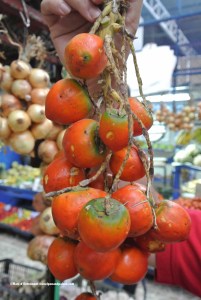
Pejibaye (pronounced pay-hee-by-yay) is the fruit of the Peach Palm tree. It’s indigenous to Central and tropical South America and for centuries has been a staple before and after European invasions in the 16th century. About the size of a plum, the bright reddish orange fruit is packed with vitamins, minerals and carbohydrates and remains wildly popular, especially in Costa Rica.

pejibaye on the vine

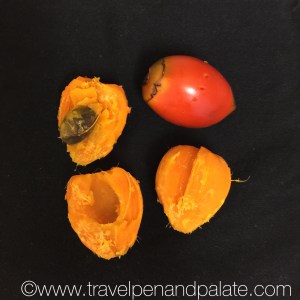
The Peach Palm tree (bactris gasipaes) not only produces large clusters of fruit for 50 to 75 years but also is a major source for heart of palm that’s favored worldwide. From street vendors to top chefs Costa Ricans adore pejibaye. The thick-skinned raw fruit must be simmered in salted water from one to three hours before eating – it’s difficult to over cook the dense butternut squash like textured fruit.

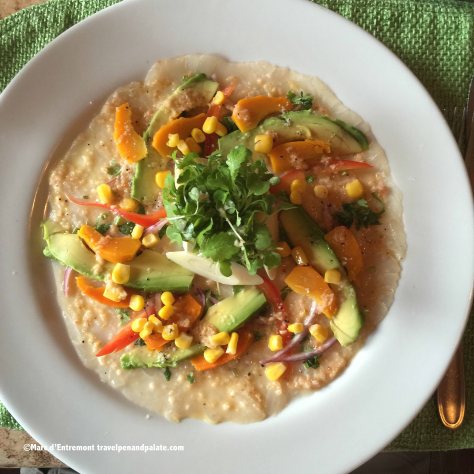
Costa Ricans enjoy cooked pejibaye as a snack sliced and dipped in mayonnaise and sometimes coated in corn meal and fried. Chef Diego Seitour at Peace Lodge adds thin slices to his incomparable Ceviche Tucurrique of sea bass. Chef Francis Canal Bardot of San Jose’s premiere hotel and restaurant Grano de Oro, features the fruit in its most popular incarnation as cream of pejibaye soup.

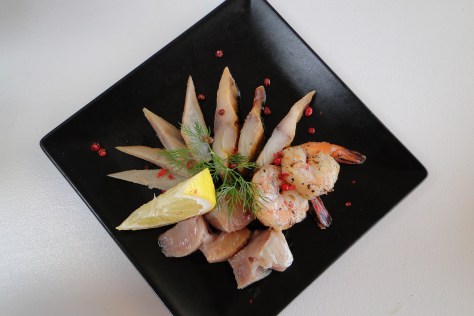
Chef Diego Seitour at Peace Lodge Ceviche Tucurrique of sea bass with garnish of thin slices of pejibaye


pejibaye with mayonnaise
Cooked pejibaye
Cooked pejibaye

The dense texture of pejibaye ideally lends itself to soup. Yet as is common with a national dish, there is no one authentic recipe. The simplest are purees of cooked fruit with onions, water, a little milk and perhaps some garlic and cilantro. Other recipes include chicken or vegetable stock, cream and any number of additions such as celery, bell peppers, butter, carrots, rosemary, thyme and bay leaves.

What I’ve created is in keeping with my culinary belief that a recipe should enhance and not mask the natural flavor of the prime ingredient. I also like the silky mouth feel of adding heavy cream and the depth of flavor from a good chicken stock.

pejibaye
pejibaye

In North America it’s nearly impossible to find fresh pejibaye, even in Latino markets – the raw fruit is little known and perishable. In Florida, where I live, it is available in Latino markets preserved in jars ready to eat – after peeling the skin, splitting the fruit and removing the seed.

Cream of Pejibaye Soup – 4 servings

Ingredients:

  • 12 pejibayes
  • 4 cups of well flavored chicken stock
  • 1 cup of heavy cream
  • 4 tablespoons unsalted butter
  • 1 medium sweet onion, diced
  • ½ cup diced celery
  • 3 cloves of garlic, diced
  • ¼ teaspoon ground white pepper
  • 1 roasted red pepper plus a couple tablespoons cream
  • ¼ cup minced fresh cilantro

Preparation:

  1. If you happen to have raw pejibayes, cover with cold water and add ½ teaspoon salt. Bring to a boil, reduce heat, cover and simmer for at least one hour. Cool enough to handle and peel off the skin with a small sharp knife. Cut the fruit off the seed – the fruit will be dry and easy to separate from its seed. If you’re using ready to eat pejibayes in a jar, drain, rinse in cold water, peel and slice.
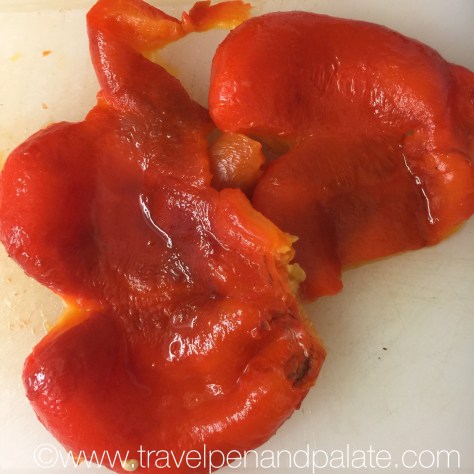
  1. Preheat the oven to 400° and place the whole red pepper in a small baking dish. Roast the pepper for 30 to 40 minutes, turning every 10 minutes, until soft and the skin is slightly brown. Remove the pepper to a small bowl, cover and let cool. When cool enough to handle slip off the skin, remove the seeds, slice in strips and set the roasted pepper aside.
  1. Melt the butter in a heavy four quart saucepan.
  1. Add the diced onion and celery and cook over medium low heat until the onion is soft, transparent but not browned. Add the garlic and cook for two additional minutes.
  1. Add the sliced pejibayes and chicken stock. Raise the heat and bring to a boil. Reduce the heat and simmer for 30 minutes.
  1. While the soup is simmering, heat the heavy cream in a small saucepan over low heat just until small bubbles appear in a ring around the pan. Add the cream and white pepper to the soup and turn off the heat.
  1. Puree the soup with an immersion blender or transfer in batches to a blender and liquefy – I prefer using an immersion blender directly in the pot.
  1. Puree the roasted red pepper in a blender or with an immersion blender adding just enough cream to make a smooth sauce.
  1. Ladle the soup into bowls, garnish with a flourish of red pepper puree and a sprinkle of cilantro.
Roasted sweet red pepper, skin & seeds removed to be pureed with cream

There are conflicting Internet statistics on the caloric content of pejibaye. The calorie counts on sites range from an outrageous 1,100 calories per fruit to a low of 56. On the jar of prepared fruit I’m using the nutritional label indicates 190 calories for three pejibaye – 65 per fruit. Considering the fruit is not sweet, I find it difficult to believe any higher figure. Regardless, it’s an easy, nutritious and flavorful national icon of beautiful Costa Rica – ps: and farm animals love pejibaye.

Chef Francis Canal Bardot cream of pejibaye soup, hotel and restaurant Grano de Oro, San Jose


Disclaimer: The author was a guest of Peace Lodge – La Paz Waterfall Gardens,  Hotel Grano de Oro, Small Distinctive Hotels, ENroute Communications and Revista Ander de Viaje. Special thanks to my guide throughout my stay in Costa Rica Mauricio Aymerich, director Small Distinctive Hotels. Transportation within Costa Rica was provided by Toyota Rent a Car of San Jose. A Rav4 made Costa Rica’s mountain roads, especially the few unpaved, safe and comfortable.

Additional articles on Costa Rica by Marc d’Entremont:
It begins with scented hand towels
Cuna del Angel is discretely gluten-free in Costa Rica
Monteverde Biological Reserve is a climate change laboratory
Costa Rica and the vision of Pedro Belmar


You can read additional articles by Marc d’Entremont at:

Hellenic News of America

Original World Insights


Save

Save

Save

Save

Save

Save

Save

Save

Costa Rica and the vision of Pedro Belmar

“We’ve grown smaller,” Pedro Belmar said quietly as we sampled the crisp organic kale with Parmesan tapas. That would not ordinarily be a hotel’s best business plan, but as a Small Distinctive Hotel of Costa Rica, the Hotel Belmar strives to reduce its carbon footprint while at the same time expanding its hospitality. That sentiment has greater resonance coming from a second generation heir to a hotel that has his name on everything.

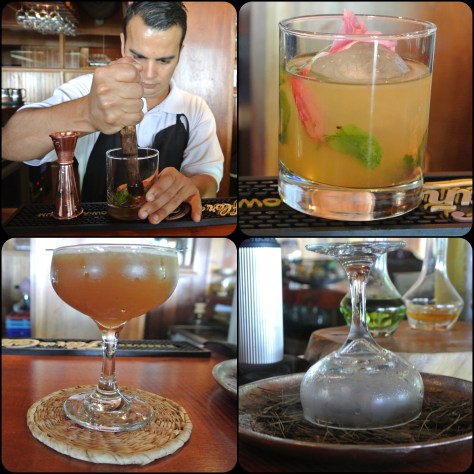
craft cocktails at Hotel Belmar, Monteverde, Costa Rica

A pleasant reminder of Pedro Belmar’s vision for the new look of success is as close as the hotel’s La Chispa cocktail. It’s firmly rooted in the forest and the 21st century cocktail revolution.

  • cedar pine needle smoke
  • premium Sloane’s Gin
  • black tea syrup
  • fresh lime

Crushed ice is swirled in a cocktail glass. Local dry cedar pine needles on a flameproof dish are lit with a torch. Discard the ice and invert the glass over the flame which should extinguish immediately and rest it on the needles capturing the smoke. The gin, syrup and lime are stirred in crushed ice. Upright the glass and strain the cocktail into the captured smoke.

Hotel Belmar (main building), Monteverde, Costa Rica

Sipping a smoky cedar scented La Chispa ensconced in the all-cedar Hotel Belmar overlooking the cloud forest tumbling down to the Gulf of Nicoya is an expression of “growing smaller.” The black tea syrup was made from ingredients in the Hotel Belmar’s organic garden as well as fresh limes. The cedar pine needles are on site. The gin may be imported, but the new craft cocktail menu anchors the Hotel Belmar’s commitment to sustainable growth and 21st century eco-luxe travel.

Cloud Forest, Costa Rica

When his parents, Pedro and Vera Belmar, opened their home as a bed and breakfast in 1985 in the heart of the country’s fabled Cloud Forest, Monteverde was a remote hamlet among lush subsistence farms. Located 85 miles northwest from the capital at San Jose, backpackers and naturalists exploring the cloud forests were the area’s first tourists. Isolation and climate conditions favorable for a plethora of unique indigenous flora and fauna helped Monteverde develop a mystic for natural wellness.

With nary a paved road to what is recognized today as a biological treasure, travelers to the cloud forest grew from just backpackers to seekers of tranquility with comfort. The 13 room all-cedar Hotel Belmar main building is Pedro and Vera’s homage to a love of alpine architecture. The extensive amount of cedar wood made opening a wood shop on site a logical decision. Handling all the work for hotel maintenance, it made sense for the wood shop to design and craft designated tableware for both the dining room and bar such as the sectional plate for the craft beer and tapas tasting.

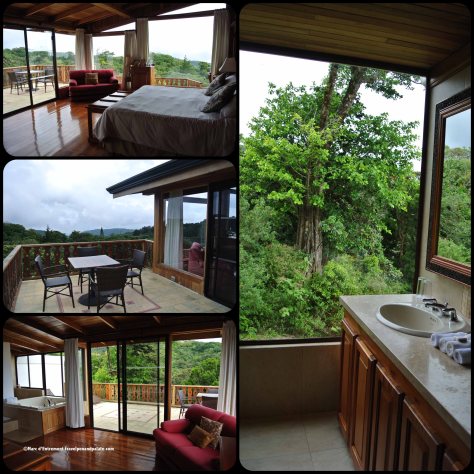
Suite the Chalet, Hotel Belmar

Under the second generation the past five years, Pedro, Jr, and his sister have renovated the hotel and transformed the original home into the sleek wood and glass nine room Chalet. The Chalet is the center of the hotel’s wellness program, spa services and organic juice and tea bar. The juices are made from fruits and vegetables grown on site.

Organic garden, Hotel Belmar

On eight cultivated acres at the nearby Belmar family farm and the compact but expanding hotel organic garden, chickens for eggs, coffee, dairy, sugar cane, bananas, avocados, curly endive, lettuces, kale, watercress as well as sunflowers, nasturtiums, fennel, amaranth seeds and dozens more items supply the hotel’s Celajes Restaurant.

Smoke house, Hotel Belmar

A smoke house made from recycled materials smokes cheese, bacon and churresso sausage with the wood shop supplying the cedar chips. Plans are to grow mushrooms using the farm’s coffee hulls and natural compost.

Methane gas is collected for kitchen use through the hotel’s biological water filtration system. The system uses no energy yet produces methane, which is stored in a tank for the kitchen. Clean water is returned to the mountain stream in exchange for energy.

Gulf of Nicoya, Hotel Belmar

“My parents had the ideas,” says soft spoken Pedro taking little credit for the Hotel Belmar’s successful transition into a 21st century Small Distinctive Hotels retreat that consistently achieves Costa Rica’s highest awards for sustainable tourism. Knowing that the caché of Monteverde and the Cloud Forest is the region’s draw, Pedro wants to position the Celajes Restaurant and bar as the hotel’s unique attraction. It starts with the view: located on the main lobby floor, the spacious Celajes Restaurant and bar commands a sweeping vista of the forest, mountains and Gulf of Nicoya far below.

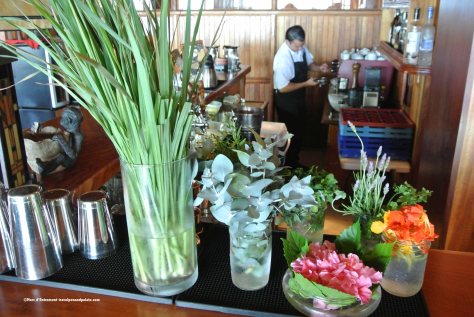
Bar ingredients from the organic garden

The bar reaches deep into the hotel’s organic garden for unique flavors to combine with premium sprits. Bitters and syrups are house made from reduced stout, coffee, eucuplytos and garden plants such as palo santo, a lemony scented herb that has been burned in South America to cleanse spaces of contrarian spirits – like sage. Room mini bar options include excellent house bottled Hotel Belmar cocktails.

Roberto Saenz is the Hotel Belmar’s brew master. The compact brewery just down the hill from the main hotel building was created using recycled equipment. All bottling is done on site. An inventive beer and food tasting is offered to guests at the bar or after the brewery tour.

Beer & tapas tasting on designated cedar plates

The Aura Pale Ale was light with a refreshing hint of citrus and paired well with veggie ceviche: chiote, green bananas, cilantro and lime were fresh and tangy on a small tortilla. The dark, earthy hops of Dos Maros IPA melded with the rich meat of house smoked churesso. A creamy Stout had a great vanilla nose and a lingering molasses flavor. Coffee and chocolate notes in the stout blended well with smoky and lightly candied house made bacon. The small batch brews change often so pairing combinations will vary – that’s fun.

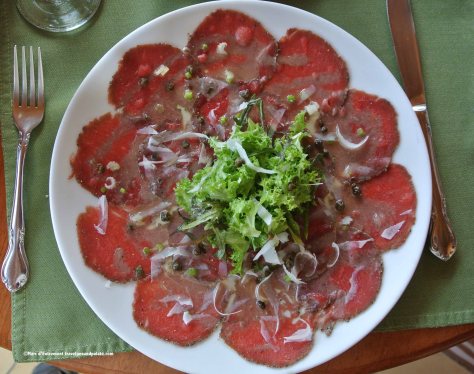
The freshness of both the ingredients and artistry of Celajes Restaurant does not disappoint. Breakfast can include a coconut milk and yogurt with chia seeds, fruit, tarragon and basil accompanied by house made granola. A lunch of beef carpaccio was a visually stunning platter of ultra thin slices of raw beef napped with a caper vinaigrette.

Beef carpaccio, Hotel Belmar

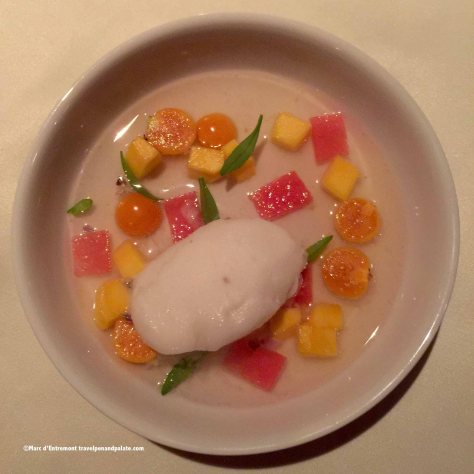
At dinner house baked bread is served with chimichuri sauce harkening back to Pedro, Sr, Chilean roots. Roasted beets, micro greens, grilled carrots, fennel flowers, basil, sunflower seeds with a yogurt dijon vinaigrette made a colorful salad. Beef tenderloin was seasoned with soy sauce, lemon juice, cilantro and fennel flowers. Wild sea bass was gently poached in butter. The perfume of a light dessert of verbana water, lavender flowers, tarragon, tropical fruit and guanabanas sorbet linked the dinner to the scents of a Cloud Forest evening.

The ethos of Hotel Belmar and of all Small Distinctive Hotels of Costa Rica is to succeed by taking less from the Earth. What is taken must be sustainable and is often delicious. Pedro Belmar and his diverse staff enhance the guest experience by living the true meaning of less is more.

Verbana water, lavender flowers, tarragon, tropical fruit and guanabanas sorbet

When you go: Juan Santamaría International Airport (SJO) is served by many airlines worldwide and is within an easy 20 minute drive of downtown San Jose and 3 hours to Monteverde. Getting around: Costa Rica has an extensive inter city bus system and many tourist van options. The easiest transportation is renting a car. Costa Rica’s road system is generally in good condition.

Disclaimer: The author was a guest of the Hotel Belmar, Small Distinctive Hotels, ENroute Communications and Revista Ander de Viaje. Transportation within Costa Rica was provided by Toyota Rent a Car of San Jose. A Rav4 made Costa Rica’s mountain roads, especially the few unpaved, safe and comfortable.

Hot tub, Hotel Belmar
Additional articles on Costa Rica by Marc d’Entremont:
It begins with scented hand towels
Cream of Pejibaye: a Costa Rican national dish
Cuna del Angel is discretely gluten-free in Costa Rica
Monteverde Biological Reserve is a climate change laboratory
You can read all my articles and subscribe to my Examiner columns at:

Hellenic News of America

Original World Insights
 

Save

Save

Save

Save

Save

Chill is one of 20 St. Petersburg Florida restaurants

featured in my new article

Twenty good Florida eats in Saint Petersburg

Chill Restaurant & Bar, St. Petersburg, Florida

With an emphasis on independent ownership, Saint Petersburg chefs have the freedom to experiment or just create the best grilled grouper sandwich on the beach.

Lobster & Mango Salad, Sea Salt Restaurant, St. Petersburg, FL

You can read all my articles and subscribe to my Examiner columns at:

Hellenic News of America

Original World Insights

Culinary Travel Examiner

 International Dining Examiner

International Travel Examiner

Philadelphia Fine Dining Examiner

Food & Recipes Examiner

Save

Save

Save

Since 1954 Gayle’s Restaurant St. Pete Beach

via Instagram http://ift.tt/28JYQ5X
has been serving up hearty #Southern #breakfast in #stpetebeach #catfish #grits #eggs #biscuit #liveamplified #lovefl #Florida #gulfofmexico #breakfastallday

Save

The city cigars built on Tampa Bay

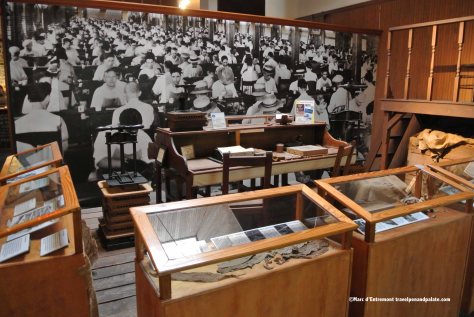
Ybor City Museum, Tampa, FL

In a few square miles parcel of former Tampa marshland over two hundred cigar factories, manned by thousands of immigrant workers, were hand rolling half a billion cigars annually by the 1920s.

casitas
casitas

The fortuitous arrival in the 1880s of Spaniard Vicente Ybor turned a marshland into the cigar capital of the world and created a cultural phenomenon.

read more…

Cigars, Tampa and the revival of Ybor City


The Spanish Social Club, Ybor City


You can read all my articles and subscribe to my Examiner columns at:

Hellenic News of America

Original World Insights
Culinary Travel Examiner

 International Dining Examiner

International Travel Examiner

Philadelphia Fine Dining Examiner

Food & Recipes Examiner

A glimpse at the Hashemite Kingdom of Jordan

Muhammad, Elder of his Bedouin family in Wadi Fayan, Jordan

The Hashemite Kingdom of Jordan may be less than a century old, but like many Bedouins, the Hashemite family share histories stretching back to biblical times.

The Wadi Rum, Jordan

For millenniums the river valleys, highlands and  vast deserts of the Cradle of Civilization were the epicenter of the legendary, lucrative and infamous caravan trade linking Asia with the Mediterranean world. In an age before GPS pictographs were road signs directing caravans that could include up to 700 treasure laden camels.

Travel guide Mohammad Qamhiya explaining pictographs in Wadi Rum, Jordan
Canyon (Siq) entrance to Petra

One enterprising tribe, the Nabataeans, carved the city of Petra (300s B.C.E. – 800s A.C.E.) into sandstone cliffs and created the wealthiest financial center in the ancient world. With only one public entrance at the end of a lengthy, towering, narrow,  canyon road, the Nabataeans made Petra immortal.

Al Khaznch, popularly known as the Treasury, Petra


Ready for ? & fuses with the ancients


part of the Oval Colonnade, Jerash, Jordan

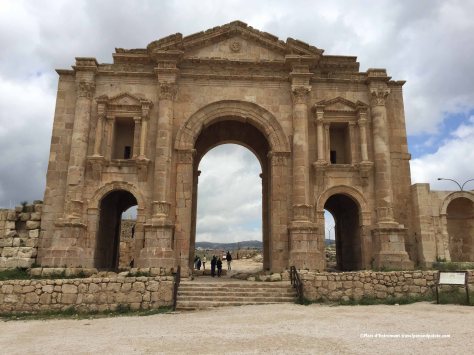
Coupled with its commercially strategic position,  the Jordan region had been fused, either through mutual interest, religion or conquest, with the great powers of the day from Greece to the Ottomans. The Greco-Roman city of Gerasa, founded by Alexander the Great (331 B.C.E.) and continuing as a major city within the Roman Empire,  is one of Jordan’s archeological gems.  Heavily damaged by earthquakes in 749 A.C.E., the city continued, and the remarkably preserved site is surrounded today by Jordan’s modern city of Jerash.


Triumphal Arch of Hadrian, Jerash, Jordan
Site at which John the Baptist baptized Jesus of Nazareth, Jordan River: (left bank) the Hashemite Kingdom of Jordan, (right bank) Israel

The Jordan River of biblical fame still defines a land that has stirred great passions in human history from Moses to today’s conflict concerning the West Bank. People that share an ageless  history are divided by a thin, slow moving stream of brown water.


Present day Christian baptisms, right bank Jordan River (Israel).The site at which John the Baptist baptized Jesus of Nazareth is shared by Jordan and Israel but divided in half.
Present day Christian baptisms, right bank Jordan River (Israel).

Jordan’s storied history has created a legendary cuisine with variations of many dishes it shares with Spice Route neighbors. From breakfast to late night dinner a bounty of mezze (small plates) to aromatic wood grilled lamb and Bedouin ash bread baked in hot sand will be but a few of the dishes in a culinary repertoire as vast as the Kingdom’s deserts.

a mezze "buffet" at Sufra Restaurant, Amman, Jordan
a mezze “buffet” at Sufra Restaurant, Amman, Jordan
fishing in the Red Sea, Aqaba, Jordan

For the modern traveler there has never been a better time to enjoy hospitality as stunning as Jordan’s natural beauty. Despite surrounding turmoil, the Hashemite Kingdom of Jordan enjoys peace  within its borders and goes to great length to ensure security for its citizens and visitors. Tolerant and democratic Jordan allows the 21st century  traveler a rare glimpse at the entire history of the Cradle of Civilization from iconic archeological sites, ageless Bedouin lifestyles, the roots of modern cuisine, phenomenons of nature, accommodations from Bedouin tents to the heights of luxury and even newborn  baby camels.

Mother & newborn camels, Wadi Rum, Jordan
Captain Desert Private Wadi Rum Camp, Jordan
 Kempinski Ishtar Hotel, Dead Sea, Jordan
Kempinski Ishtar Hotel, Dead Sea, Jordan
enjoying a hooka, Aqaba, Jordan
Discover Jordan for yourself.
Dead Sea sunset from the Kempinski Ishtar Hotel, Jordan

Follow Travel with Pen and Palate’s articles on Jordan:

The historic beauty of Jordan

Four serene destinations in timeless Jordan

Not all Jordan almonds are Jordan Almonds

Petra and pizza fuses Jordan with the ancients


(disclaimer: author was a guest of Jordan Tourism Board North America )

You can read all my travel and food articles and subscribe to my Examiner columns at:

Hellenic News of America

Original World Insights


Save

Save

Save

Save

Postcards from seven Greek Islands: have fun this summer

Kythnos island
Kythnos island

It is an undeniable cliché that the islands of Greece are firmly part of the great destinations of the world. It’s an extra pleasure to be a guest on one of the lesser known islands, Kythnos.  The island is ideal for tourists who seek tranquility. Five photo perfect villages dot the island and all are easy to reach by car. Their compact size makes them enjoyable to wander on foot. Kythnos being a classic Cyclades mountaintop, driving the roads means going either up or down until on the spine of the island. The panoramic views are spectacular. Read my article in the Hellenic News of America,  Kythnos: small island with a big Greek heart.


Ios Island
Ios Island

Homer chose Ios as his final resting ground. His tranquil burial site on the herb blanketed north hills of the island offers a panoramic view of the Aegean. In the 21st century thousands of young tourist in July and August choose the island for its clubs, resorts, secluded beaches and music scene. Yet even at the height of the summer season and certainly the remaining ten months of the year, the tranquility Homer enjoyed for millenniums is the genuine character of Ios.  my article in the Hellenic News of America,  Slow down on the Greek party island of Ios   tells you how to still have fun!


Paros Island
Paros Island

Flowering shrubs, trees, herbs and succulents blanket the hillsides while clear Aegean water laps Paros Island’s shore. Classic white villages accented with blue are surrounded by soil envied in the Cyclades. Buildings jumble upon one another like blocks and many pre-industrial stone streets are pedestrian only, too narrow for anything more mechanized than a scooter.  Ancient and protected grape vines thrive along with winter wheat, olives, fruit and produce. Please read about Savor culinary and historic Paros Island in the Hellenic News of America.


Milos, Greece
Milos, Greece

From volcanic cooking at Cafe Restaurant Sirocco on the island of Milos to Barriello’s 150-year-old vaulted  basement in ancient Trypiti, the culinary scene in Milos is part of a trend among young Greek chefs to preserve grandmother’s recipes but tweak them for the 21st century. Read about this gastronomic find in the Hellenic News of America in Eating Milos: culinary stars in a Cycladic galaxy


Sifnos Island
Sifnos Island

The steep Sifnos Island hillsides that rise from the Aegean Sea are crisscrossed by dozens of centuries old foot and donkey paths. These tended rock walled paths still connect island towns. With the decline in the use of donkeys, Sifnos tourism promotes them as ideal walking trails, although a hiker will have to make way for goats and the occasional working donkey. This acceptance that both ancient and every day reality still coexist is the unique pleasure of Sifnos, and in the Hellenic News of America find out why Tradition crafts 21st century Sifnos.


Selene's, Santorini Island
Selene’s, Santorini Island

“Selene is zero distance from farm to table,” Georgia Tsara says with a broad smile obviously as pleased with the restaurant’s location on Santorini as she is with this fabled island’s products. The volcano that blew Santorini into history 3,500 years ago is responsible for sculpting the magnificent and photogenic 800-foot cliffs currently topped by some of the most sought after hotels in all the Greek Islands.It’s responsible as well for some products unique in all of Greece, and my article,  A Santorini lunch with Selene’s Georgia Tsara in the Hellenic News of America will guide you to one of the finest meals you’ll experience in your travels.


Alonissos Island
Alonissos Island

Not all Greek islands are similar, just as the mainland is a patchwork of ecosystems. The Cyclades, the tourist mecca of islands in the south Aegean, tend to be dry with low vegetation and whitewashed villages trimmed in blue shuttered windows and doors. Alonissos, located in the central Aegean, is the most northerly of the Sporades islands with towering pine forests tumbling down the rocky cliffs to the sea. They’re more akin to the northern New England coast of the U.S.A. than southern Greece. Discover why Alonissos Island is a floating spoon sweet.


Santorini Island
Santorini Island

You can read more articles by Marc d’Entremont at:

Hellenic News of America

Travel Pen and Palate Argentina

Original World Insights


Contented canines & humans in Mt. Dora, Florida

Alfajores with dulce de leche at Mr. Cebiche Peruvian restaurant, Mount Dora, FL


Peru is not what comes to mind when wandering Mount Dora’s Victorian and Arts & Crafts streets. Yet among the myriad number of restaurants and cafes Mr. Cebiche Peruvian Cuisine is an innovative addition to the town’s American Modern standards.

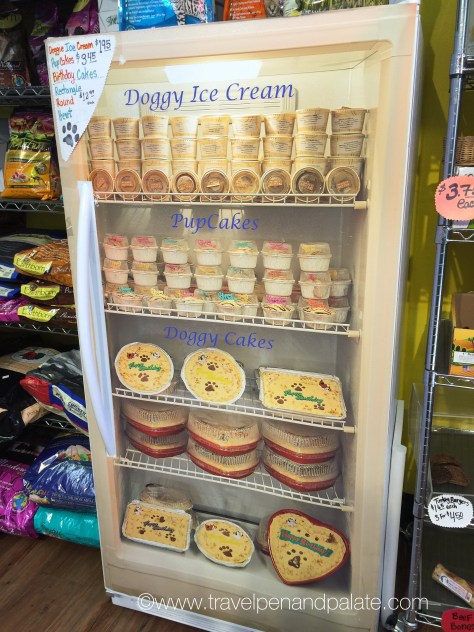
But its culinary choices are not limited to people. Piglet’s Pantry has been baking all-natural dog biscuits for nearly 20 years.

Piglet's Pantry line of doggy ice cream & decorated birthday cakes
Piglet’s Pantry line of doggy ice cream & decorated birthday cakes

Read more about …

Dog friendly Mount Dora has a Peruvian connection


Historic downtown Mount Dora, FL

You can read all my articles and subscribe to my Examiner columns at:

Hellenic News of America

Original World Insights
Culinary Travel Examiner

 International Dining Examiner

International Travel Examiner

Philadelphia Fine Dining Examiner

Food & Recipes Examiner


Christmas 2015 arrives in tropical America

Tern nesting area, Boca Ciega Bay, St. Pete, FL

South Florida is the American mainland tropics and a festival based on a return of the sun – winter solstice/Christmas – seems lost when the sun shines for only a couple hours less during this season. Yet of course Christmas is beyond climate and  all areas of the globe have their own expressions.

Christmas boat parade, St. Pete, FL

Lighted boat parades are a Florida tradition and why not considering the enormous number of privately owned sea craft in the state. Both towns and yacht clubs put on numerous floating displays during December.

DSC03475

Especially for children, St. Petersburg turned North Straub Park into Snowfest 2015 the first December weekend. Complete with 65 tons of snow that created a sledding area under the Banyan trees, the festival boasted an artificial ice skating platform, karaoke Christmas carol singing, crafts and, of course, sno-cones.

Snowfest 2015, St. Petersburg, FL

Traditional decorations on houses and the streets are popping up as if the tropic in all its natural glory does dress up for the holidays.

DSC03378

You can read all my articles and subscribe to my Examiner columns at:

Hellenic News of America

Original World Insights

Culinary Travel Examiner

 International Dining Examiner

International Travel Examiner

Philadelphia Fine Dining Examiner

Food & Recipes Examiner